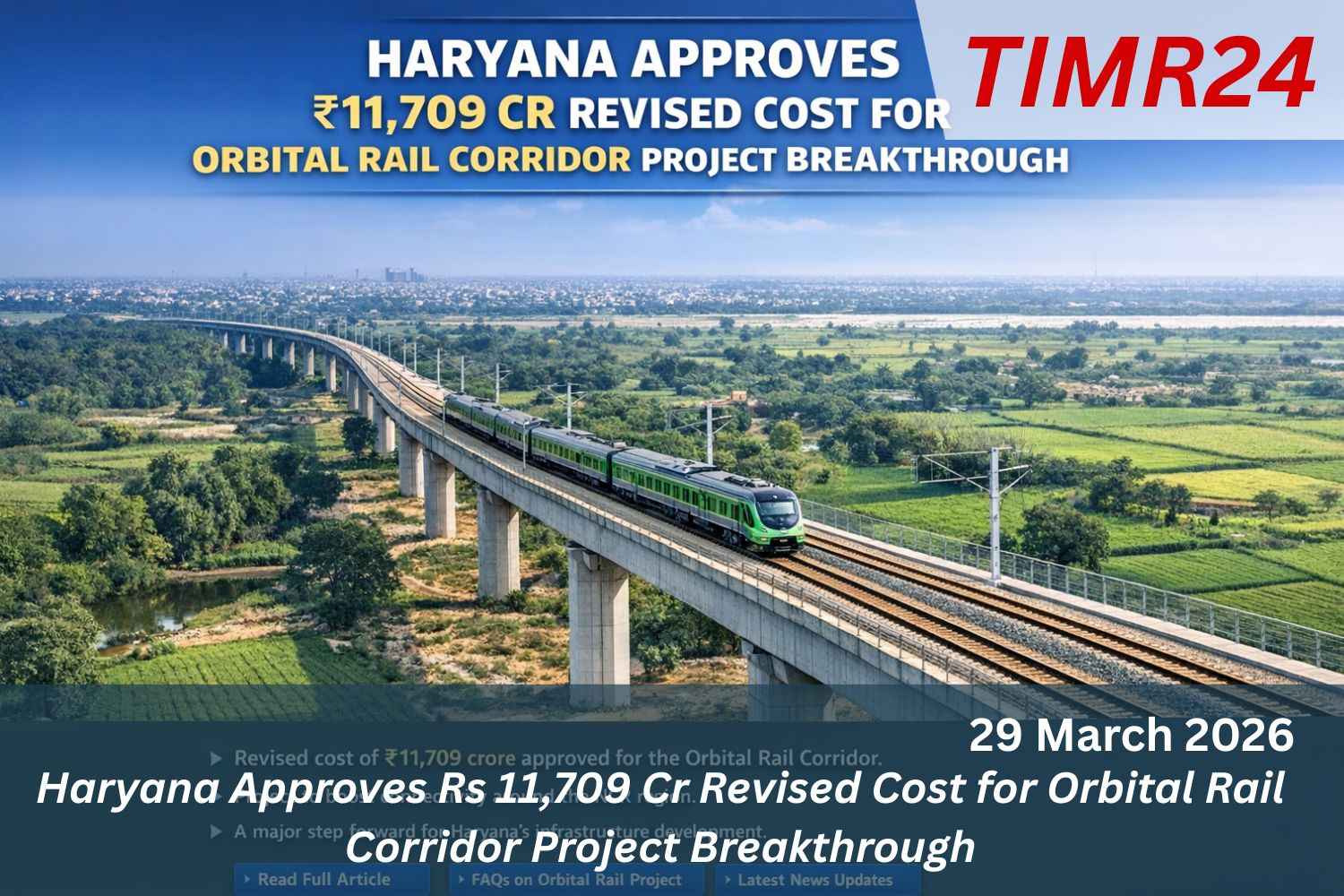




The National Capital Region (NCR) is experiencing rapid infrastructure growth, notably with the proposed Rs 15,000 crore Gurugram–Faridabad–Noida Namo Bharat Corridor. This high-speed, elevated corridor aims to reduce travel times between these urban centers to under an hour, transforming mobility and residential dynamics in NCR. With rising property market stability and increased end-user sales, particularly in Faridabad, the corridor is expected to enhance accessibility to job hubs, making it a more attractive option for homebuyers seeking larger spaces and better living environments. Developers anticipate significant demand for well-planned communities and amenities in light of this project.
Redefining Accessibility Standards Infrastructure
Emphasizing its potential to redefine NCR’s residential landscape and economic integration The National Capital Region has long depended on road networks and metro corridors to support its growing population and economic activity. However, rising congestion (India) and extended commute times have made high-speed regional transit an urgent necessity. The introduction of the Namo Bharat Corridor represents a structural shift in how connectivity will shape urban expansion. By linking major NCR nodes through faster and more efficient rail systems, the corridor is redefining accessibility standards. Infrastructure-led development has historically proven to be.
A catalyst for property growth, and this project is expected to follow a similar trajectory across multiple micro-markets Faridabad, once perceived as a secondary industrial city adjacent to Delhi, has gradually evolved into a diversified urban centre with strong residential demand. The new transit corridor enhances its strategic positioning within NCR by bringing it closer to employment hubs in Delhi and Noida. Travel time reduction plays a critical role in real estate decisions, particularly for working professionals who prefer affordability without compromising connectivity. As improved rail infrastructure reduces commuting stress, Faridabad’s residential appeal increases significantly.
Reasons Faridabad Stands
This shift is already drawing attention from developers planning integrated townships and mid-income housing projects One of the key reasons Faridabad stands out is its availability of comparatively affordable land parcels. While core Delhi markets have limited expansion capacity, peripheral cities benefit from large-scale planned developments. The Namo Bharat Corridor acts as a (India) bridge between affordability and accessibility. Areas near proposed transit stations are witnessing renewed interest from both end-users and investors. Commercial developers are also exploring office and retail projects around anticipated high-footfall zones.
Transit-oriented development models suggest that mixed-use clusters near major corridors often generate sustained economic activity Infrastructure corridors often create ripple effects beyond immediate connectivity improvements. Enhanced transportation networks attract corporate investments, educational institutions, healthcare facilities, and retail chains. As social infrastructure strengthens, property markets experience long-term stability rather than speculative spikes. Faridabad is gradually moving in this direction. Improved intercity mobility makes it viable for companies to consider satellite offices outside Delhi, reducing operational costs.
Faridabad Becomes Better Integrated
While maintaining regional accessibility. Such shifts directly contribute to higher employment generation, which in turn drives housing demand Another important dimension is rental growth. Investors typically evaluate rental yield potential before entering emerging markets. Improved transit connectivity increases tenant preference for well-connected localities. As Faridabad becomes better integrated with Delhi’s commercial districts, rental absorption rates are expected to improve. Professionals working in central business districts may choose to reside in Faridabad due to lower property prices and enhanced connectivity. Over time, this demand can lead to.
A steady appreciation cycle supported by both capital growth and rental income Connectivity corridors also influence urban planning patterns. Governments and development authorities often align zoning regulations and infrastructure upgrades along major transport lines. Roads, drainage systems, public utilities, and civic amenities are upgraded to support increased population density. This coordinated planning approach enhances livability standards. Faridabad’s urban planning framework is likely to evolve in alignment with corridor expansion, ensuring structured growth rather than unplanned sprawl. Such systematic development strengthens investor confidence and attracts long-term institutional interest.
Expanding Consumer Catchment Areas
The impact of the Namo Bharat Corridor is not limited to residential growth. Retail and hospitality sectors are expected to benefit as well. Improved accessibility increases weekend and business travel across NCR cities, expanding consumer catchment areas. Shopping complexes, entertainment zones, and hotels near corridor stations may witness higher occupancy levels. This integrated ecosystem approach transforms Faridabad from a commuter town into a self-sustained urban hub infrastructure-backed growth tends to create psychological confidence among homebuyers. When large-scale government-supported projects progress steadily, market sentiment improves.
Buyers perceive reduced risk and stronger long-term appreciation prospects. This positive outlook encourages earlier investment decisions. Developers often launch new phases or premium inventory once infrastructure milestones are achieved. As construction and operational timelines of the corridor advance, real estate activity is expected to accelerate accordingly Sustainability is another indirect benefit. High-speed regional rail reduces dependence on private vehicles, lowering traffic congestion and carbon emissions. Environmentally conscious homebuyers increasingly prefer locations with reliable public transport. Transit-oriented developments promote walkability and reduce.
Monitor Infrastructure Progress Closely
Long commuting hours, contributing to improved quality of life. As Faridabad integrates sustainable mobility solutions, its urban appeal aligns with modern lifestyle expectations Financial institutions and housing finance companies also monitor infrastructure progress closely. Areas supported by strong connectivity typically receive better lending confidence and valuation stability. This improves access to home loans and encourages broader buyer participation. When financing flows become smoother, transaction volumes increase, further strengthening the property cycle The Namo Bharat Corridor is more than just a transportation project; it is a growth catalyst reshaping NCR’s urban dynamics.
Faridabad’s strategic location, affordability advantage, and evolving infrastructure ecosystem position it as a leading beneficiary of this transformation. As connectivity improves and development accelerates, the city is likely to witness balanced residential, commercial, and retail expansion. For investors and end-users alike, infrastructure-driven growth offers both stability and long-term appreciation potential. The coming years will reveal how effectively the corridor integrates with broader urban planning initiatives, but early indicators suggest a strong upward trajectory for Faridabad’s real estate market.