


















The Andhra Pradesh government is focusing on industrial development, with Chief Minister Nara Chandrababu Naidu launching the Viswasamudra Bio Ethanol Plant in Venkatachalam mandal. This is part of the state’s push to make Nellore district an emerging industrial hub. The administration plans to acquire 5,000 acres of land for industrial development under Special Economic Zones (SEZs). Prominent projects like Apache Shoes, IFFCO, Krishnapatnam Port, Fabric Industries, and Mishra Dhatu Nigam Limited have been initiated under different state governments. The TDP-led NDA government has renewed focus on industrialization in Nellore, with initiatives to establish an airport and expand MIDHANI operations.
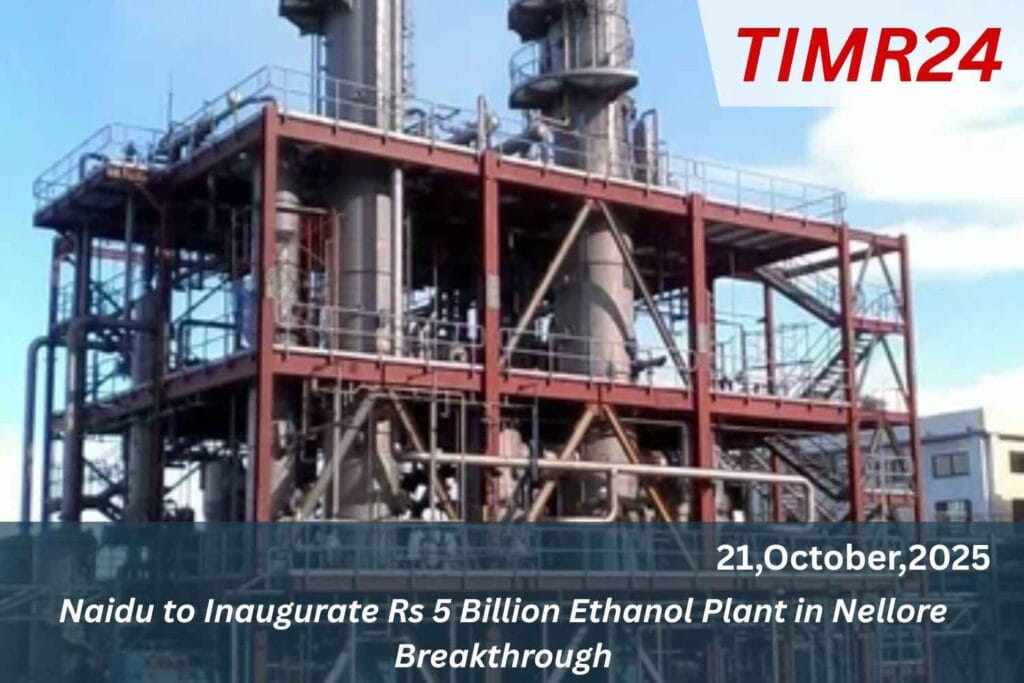
District Collector Himanshu Shukla confirmed plans to acquire 4,800 acres of land for industrial development. Andhra Pradesh Chief Minister N. Chandrababu Naidu is set to inaugurate a monumental Rs 5 billion ethanol plant in Nellore, marking a significant milestone in the state’s journey toward renewable energy adoption and sustainable industrial growth. The plant, strategically located in Nellore district, is designed to enhance the production of ethanol, which serves as a critical component for fuel blending and industrial applications across India. This project is expected to contribute significantly to India’s renewable energy targets, reducing dependency on fossil fuels while promoting cleaner alternatives in the energy sector.
The facility exemplifies the government’s commitment to integrating modern technology with local resources, ensuring environmental sustainability alongside economic development. By sourcing raw materials locally, the plant is poised to directly support the agricultural community, providing a reliable market for crops such as sugarcane, maize, and other biofuel-compatible feedstocks, thereby stabilizing income for farmers in the region The technological infrastructure of the Nellore ethanol plant represents cutting-edge advances in processing and production efficiency. The facility utilizes modern fermentation and distillation methods, ensuring high ethanol yields while minimizing waste generation and energy consumption.
Environmental safeguards, such as water recycling, effluent treatment, and emissions control, have been incorporated to reduce the plant’s ecological footprint. These measures align with India’s broader environmental objectives, such as the National Bio-Energy Mission, which encourages sustainable biofuel production and energy efficiency. By integrating these advanced systems, the Nellore plant not only sets a benchmark for regional biofuel projects but also serves as a model for other states aiming to expand their renewable energy infrastructure. External resources such as MNRE’s and provide further insights into the strategic policies that support initiatives like this, highlighting the role of government.
Incentives and regulations in accelerating biofuel adoption From an economic perspective, the inauguration of this ethanol plant is expected to create a range of employment opportunities, spanning skilled technical roles, operational staff, and administrative positions. The influx of jobs will not only benefit residents of Nellore but also attract talent from surrounding districts such as Chittoor, Prakasam, and Kadapa, fostering regional economic development. Additionally, ancillary sectors including transportation, logistics, and storage are likely to experience a surge in activity, generating further employment and business opportunities. The investment also strengthens the industrial ecosystem of Andhra Pradesh.
Reinforcing its position as a leader in renewable energy and sustainable industrial growth. For readers interested in related developments, internal links to articles on renewable energy projects in Andhra Pradesh and industrial infrastructure investments in southern India provide contextual insights into the state’s broader strategy for economic and energy development The Nellore ethanol plant also promises to enhance India’s biofuel supply chain. With growing demand for ethanol-blended fuels in the automotive and industrial sectors, ensuring consistent production is critical. The facility’s large-scale production capacity will help stabilize the availability of ethanol for.
Blending with petrol, aligning with the government’s Ethanol Blending Programme (EBP), which aims to achieve a 20% ethanol blend in petrol by 2025. By contributing to this target, the plant supports India’s climate action goals, reducing carbon emissions and promoting cleaner fuel alternatives. This development is particularly significant for southern India, where transportation networks and industrial hubs require steady supplies of biofuels to sustain operations. For readers seeking further information on India’s renewable energy and biofuel policies, external resources such as provide global perspectives on the benefits and technological innovations in ethanol production.
The social impact of the ethanol plant extends beyond employment. By promoting the use of locally sourced crops, the project encourages sustainable agricultural practices, incentivizing farmers to adopt high-yield, biofuel-compatible crops. This, in turn, contributes to enhanced food security and sustainable rural livelihoods. Local communities are also expected to benefit from infrastructure improvements and corporate social responsibility initiatives linked to the project, including education programs, healthcare facilities, and skill development workshops. The integration of the plant with the local economy exemplifies how industrial investments can foster holistic development, improving.
The quality of life for communities in and around Nellore. Internal links to features on agriculture-linked industrial projects and rural development initiatives in Andhra Pradesh provide further context to these socio-economic benefits Technologically, the Nellore ethanol plant represents a step forward in India’s efforts to modernize its biofuel infrastructure. Automation and smart monitoring systems are being implemented to enhance operational efficiency, reduce human error, and optimize production. These systems enable precise control over fermentation processes, energy usage, and quality assurance, ensuring that the ethanol produced meets high standards for industrial and automotive applications.
By incorporating these innovations, the plant not only improves productivity but also reduces operational costs, making biofuel production economically sustainable. The facility serves as a reference point for future projects, demonstrating how advanced technology can be successfully integrated with renewable energy goals. Readers can explore internal links on industrial automation in renewable energy and technological innovations in biofuel plants to understand how such advancements are shaping India’s energy landscape The collaboration between government and private investors in establishing the Nellore ethanol plant is another notable aspect.
The public-private partnership model facilitates resource mobilization, risk sharing, and technology transfer, enabling large-scale projects that might otherwise be challenging to implement. Chief Minister Naidu’s leadership highlights the importance of political will and policy support in driving renewable energy initiatives. By combining regulatory guidance, financial backing, and technical expertise, the project demonstrates how multi-stakeholder collaboration can accelerate the adoption of sustainable industrial solutions. Internal references to articles on government-led renewable energy initiatives and private sector participation in biofuel projects illustrate the broader trends in India’s energy policy and industrial planning.
The Nellore ethanol plant also has implications for research and innovation. By leveraging advanced bioprocessing techniques, the facility can serve as a testing ground for process optimization, energy efficiency improvements, and novel biofuel applications. Academic institutions and research centers may partner with the plant for pilot projects, contributing to knowledge creation and technological advancement in bioenergy. Such collaborations not only enhance the scientific understanding of biofuel production but also facilitate workforce training in cutting-edge industrial practices, preparing a skilled labor pool for the growing renewable energy sector. For readers interested in research opportunities, external resources.
In conclusion, the inauguration of the Rs 5 billion ethanol plant in Nellore by Chief Minister Naidu represents a convergence of sustainable energy, economic growth, technological innovation, and social development. The project underscores Andhra Pradesh’s commitment to renewable energy, supporting farmers, creating jobs, and promoting environmentally friendly industrial practices. By integrating modern technology with local resources and fostering public-private collaboration, the plant is set to become a model for future biofuel projects in India. With its potential to stabilize ethanol supply, enhance rural livelihoods, and drive technological advancement.
The Nellore facility marks a pivotal step toward a cleaner, more sustainable, and economically resilient energy future. Internal links to related stories on renewable energy adoption in southern India, biofuel initiatives, and industrial development programs can help readers explore the (Oil Gas) broader context of this landmark development, while external links offer authoritative information on policy, technology, and market trends.
q1. Who is inaugurating the ethanol plant in Nellore?
Andhra Pradesh Chief Minister N. Chandrababu Naidu is set to inaugurate the Rs 5 billion ethanol plant in Nellore.
q2. What is the capacity of the new ethanol plant?
The plant is expected to produce significant quantities of ethanol to support the region’s biofuel initiatives.
q3. How will this plant benefit the local economy?
The project is likely to create jobs, boost local agriculture, and promote renewable energy initiatives in Andhra Pradesh.
q4. Which companies are involved in the project?
Multiple stakeholders including private investors and government bodies have collaborated for the plant’s development.
q5. When is the plant expected to start operations?
The inauguration marks the official commencement, with production expected to ramp up over the coming months.