


















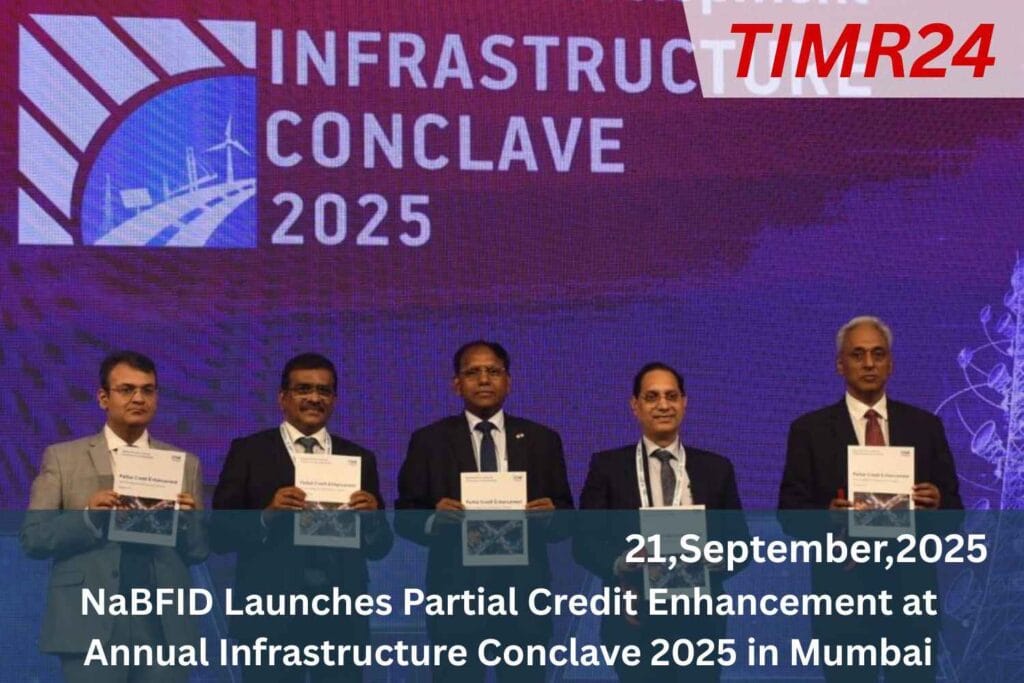
The National Bank for Financing Infrastructure and Development (NaBFID) held the Annual Infrastructure Conclave 2025 in Mumbai, involving government representatives, regulators, and industry leaders. The conclave introduced NaBFID’s Partial Credit Enhancement product, which aims to strengthen the infrastructure bond market and improve access to long-term capital for projects. Two research reports were released, tracing India’s infrastructure journey and analyzing the challenges in infrastructure financing. The conclave emphasized the importance of long-term capital, technology, and urban innovation in shaping India’s infrastructure journey.
The National Bank for Financing Infrastructure and Development (NaBFID) recently unveiled its Partial Credit Enhancement (PCE) scheme at the Annual Infrastructure Conclave 2025 in Mumbai, marking a transformative moment in India’s approach to infrastructure financing. The event brought together policymakers, financial institutions, investors, and project developers to explore innovative mechanisms that can bridge the existing funding gaps in the infrastructure sector. Infrastructure projects, particularly those involving highways, urban mass transit, energy, and industrial corridors, often face significant challenges in raising long-term capital due to perceived risks.
And credit concerns. NaBFID’s PCE initiative directly addresses these challenges by offering partial guarantees on loans, thereby reducing lender risk, improving the creditworthiness of projects, and attracting a broader range of investors The objective of the PCE scheme is to enhance investor confidence and facilitate smooth access to long-term funding. By providing a guarantee that covers a portion of the loan, PCE enables lenders to offer more competitive financing terms while encouraging private sector participation in infrastructure development. This initiative aligns with the government’s broader agenda of promoting sustainable infrastructure.
Financing and complements programs like the (National Infrastructure) and various Public-Private Partnership (PPP) models. During the conclave, experts highlighted that partial credit enhancement is particularly effective for projects with long gestation periods, as it mitigates the uncertainty that often deters institutional investors from committing capital to large-scale infrastructure projects A key feature of the PCE mechanism is its ability to support diverse sectors within infrastructure, including transport, energy, and industrial facilities. For instance, in the urban transport sector, the scheme can be leveraged to secure financing for metro rail networks, bus rapid transit systems.
And urban road upgrades, which are critical to improving mobility and reducing congestion in India’s rapidly growing cities. Similarly, renewable energy projects, such as solar parks and wind farms, can benefit from reduced borrowing costs, making these projects more financially viable and attractive to both domestic and international investors. By aligning financing mechanisms with sustainable development goals, NaBFID’s initiative reinforces the government’s commitment to green infrastructure while ensuring that project developers have the tools to access affordable capital.
The Annual Infrastructure Conclave 2025 provided a platform to discuss the broader implications of PCE on Economic Growth and job creation. Financing constraints have traditionally slowed the execution of large-scale projects, delaying benefits such as improved connectivity, industrial development, and employment opportunities. By partially de-risking loans, PCE encourages faster mobilization of resources, enabling projects to reach completion sooner and delivering tangible economic benefits to communities. Financial experts at the conclave noted that the ripple effect of such projects extends beyond the immediate construction phase, stimulating ancillary industries such.
As materials supply, logistics, and technology services. This integrated growth contributes to regional development while supporting national economic objectives Moreover, NaBFID’s PCE initiative is expected to attract institutional investors, including mutual funds, insurance companies, and pension funds, which are often cautious about infrastructure exposure due to long-term risk profiles. By enhancing creditworthiness, PCE makes infrastructure projects more appealing to these investors, broadening the capital base available for infrastructure financing. This move also facilitates more structured and professional project funding, with clearly defined risk-sharing mechanisms.
Between lenders, investors, and developers. For project developers, this translates into improved liquidity, reduced financing costs, and the ability to undertake more ambitious projects that might have been considered too risky under traditional financing models Another important aspect highlighted at the conclave is the potential of PCE to support Regional Development and equitable growth. Infrastructure projects financed through PCE are likely to focus on areas that are underdeveloped or strategically important, such as industrial corridors, port infrastructure, and renewable energy clusters. By channeling investment into these regions, the scheme contributes to balanced.
Development, reduces regional disparities, and strengthens economic resilience. The role of PCE in supporting government initiatives such as and urban infrastructure development cannot be overstated, as it enables the realization of high-impact projects that improve the quality of life for residents while promoting sustainable urbanization From a policy perspective, the launch of the PCE scheme reflects a proactive approach by NaBFID and the government in addressing systemic challenges in infrastructure financing. Conventional banking models often rely heavily on collateral and short-term lending horizons, which are misaligned with the long-term.
Nature of infrastructure projects. By offering partial guarantees, PCE fills a critical gap, making long-term lending both feasible and attractive. This innovation demonstrates a shift towards more market-oriented solutions, where risk is shared among stakeholders rather than being borne entirely by banks or project sponsors. The initiative also sets a benchmark for transparency, accountability, and professional risk assessment, which are essential for sustainable infrastructure development Furthermore, the integration of PCE with existing financial and regulatory frameworks ensures that projects are both economically viable and compliant with legal requirements.
NaBFID provides detailed guidance and support to project developers and lenders, helping them navigate eligibility criteria, risk evaluation, and documentation processes. Collaboration with public sector banks, private lenders, and international financial institutions strengthens the ecosystem, enabling seamless implementation of PCE-backed projects. This comprehensive approach not only improves access to capital but also fosters a culture of responsible and sustainable infrastructure financing the launch of NaBFID’s Partial Credit Enhancement at the Annual Infrastructure Conclave 2025 in Mumbai represents a landmark development in India’s infrastructure financing.
Landscape By mitigating lender risk, enhancing creditworthiness, and encouraging private investment, PCE is poised to accelerate the execution of critical infrastructure projects across the country. It promotes sustainable and green development, supports regional economic growth, attracts institutional investors, and ensures faster mobilization of resources. For project developers, lenders, and policymakers, the scheme offers a powerful tool to overcome financing barriers, ensuring that India’s ambitious infrastructure goals are met with efficiency and financial prudence. Stakeholders seeking more information can explore (NaBFID’s) and related government resources for.
Insights on eligibility, application processes, and strategic benefits of leveraging partial credit enhancement. As India continues its journey toward modern, sustainable, and inclusive infrastructure, PCE emerges as a critical enabler of progress, providing both financial stability and confidence to all participants in the ecosystem.
Q1 What is NaBFID’s Partial Credit Enhancement (PCE) initiative?
NaBFID’s Partial Credit Enhancement (PCE) initiative is designed to boost investor confidence in infrastructure projects by sharing risk and improving creditworthiness, enabling smoother access to long-term financing.
Q2 Why was PCE launched at the Annual Infrastructure Conclave 2025?
The launch at the Annual Infrastructure Conclave highlighted the government’s commitment to strengthening financial instruments in infrastructure, attracting private investments, and ensuring transparency.
Q3 Who can benefit from NaBFID’s PCE scheme?
Infrastructure developers, project financiers, and government-backed initiatives stand to benefit from PCE, particularly projects requiring large-scale long-term funding.
Q4 How does PCE improve financing for infrastructure projects?
By partially guaranteeing loans, PCE reduces lender risk, lowers borrowing costs, and increases access to institutional investors for infrastructure projects.
Q5 Where can stakeholders learn more about NaBFID’s PCE program?
Detailed information is available on the (NaBFID) and through the Ministry of Finance’s infrastructure finance resources.