












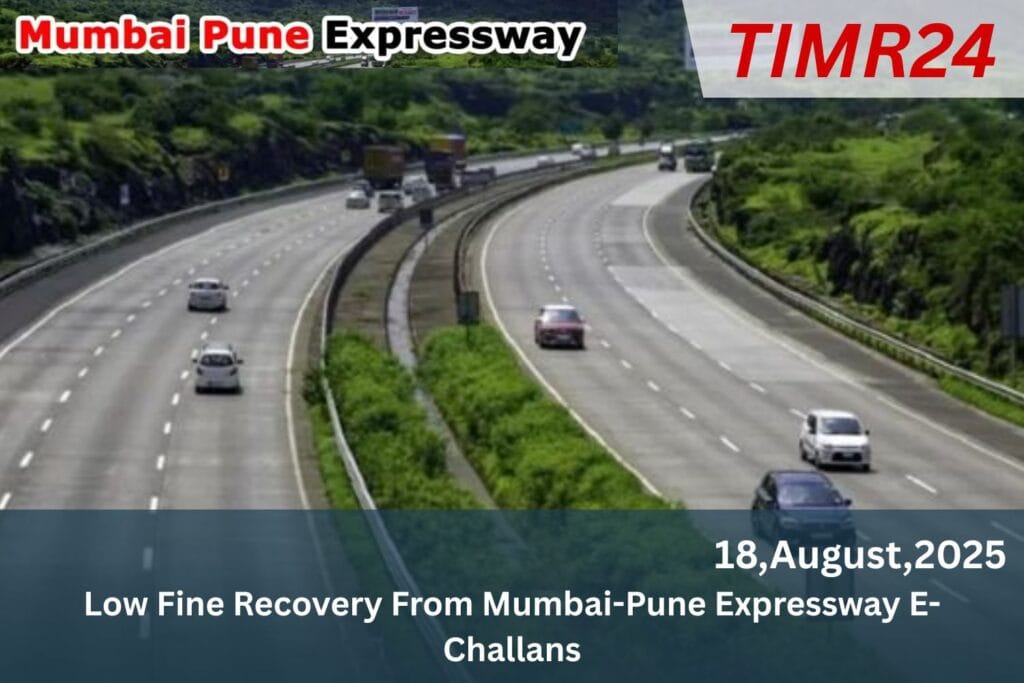
The Low Maharashtra Transport Department has reported that 27.76 lakh e-challans worth Rs 4.7 billion were issued for traffic violations on the Mumbai-Pune Expressway since the rollout of the Intelligent Traffic Management System (ITMS) in July 2024. However, only Rs 470 million in fines have been recovered to date. The ITMS, which uses high-resolution cameras and AI-based detection, aims to enhance compliance and reduce accidents along the 95-km expressway. The issue of low fine recovery from e-challans on the Mumbai-Pune Expressway has become a growing concern for the authorities as traffic violations continue to rise despite advanced digital monitoring systems. The expressway, known as one of the busiest highways in Maharashtra, has seen lakhs of challans being generated
Through automatic number plate recognition (ANPR) and CCTV-based surveillance. However, the recovery rate of these fines remains very low, raising questions about enforcement and compliance. According to the (Road Development), strict measures are being planned to improve fine collection, including linking challans directly with vehicle registration and blocking services for defaulters. For commuters, it is important to regularly check and clear dues through avoid further penalties or legal action. Within our platform, readers can also explore related updates on and detailed coverage to understand the larger picture of how authorities are attempting to improve compliance on highways.
This challenge highlights not just the inefficiency in fine recovery but also the urgent need for awareness and stricter action to ensure that one of India’s busiest expressways remains safe and well-regulated The Mumbai-Pune Expressway has long been a crucial lifeline for commuters and cargo transport, connecting two of Maharashtra’s biggest cities. Over the years, authorities have implemented strict traffic monitoring systems, including speed cameras and automatic number plate recognition, leading to a surge in e-challans for violations such as over speeding, lane indiscipline, and signal jumping. Recently, reports indicate that the government is focusing on low fine recovery rates from these challans, raising concerns about road safety and compliance.
Why Fine Recovery Matters
The Maharashtra State Road Development Corporation (MSRDC) has invested heavily in surveillance systems on the expressway. However, when fines remain unpaid, the effectiveness of enforcement weakens. Low fine recovery not only results in revenue loss but also reduces deterrence, encouraging repeat violations According to (MSRDC’s) 70% of challans issued in the past two years remain unpaid, a worrying trend that calls for stricter enforcement mechanisms. Unpaid challans aren’t just about revenue—they directly affect road safety. The Mumbai-Pune Expressway is notorious for accidents, many linked to over speeding. If drivers ignore fines without consequences, the incentive to drive responsibly diminishes. Initiatives by the Traffic Police and RTO departments aim to tighten enforcement, but public cooperation remains key.
Authorities are considering measures like:
- Blocking vehicle registration renewals until pending challans are cleared.
- Linking challans with FASTag accounts, ensuring automatic deductions.
These steps are expected to significantly boost fine collection rates.
Public Awareness & Compliance
To improve recovery, the government and NGOs are launching campaigns about the risks of traffic violations. Platforms like now allow citizens to check and pay fines conveniently online The Mumbai-Pune Expressway remains a vital infrastructure corridor, but low fine recovery undermines the state’s efforts to ensure safety. By leveraging technology, enforcing stricter penalties, and raising awareness, Maharashtra can strike a balance between revenue collection and road discipline. Timely payment of challans not only helps avoid penalties but also contributes to safer highways for everyone.
Q1. Why is fine recovery low on the Mumbai-Pune Expressway?
Many offenders ignore e-challans, and lack of strict follow-up reduces recovery.
Q2. How are e-challans issued on the expressway?
They are generated through automated cameras detecting speed and violations.
Q3. What happens if an e-challan is not paid?
Unpaid challans may lead to legal notices, higher penalties, or license issues.
Q4. Can I check my pending challans online?
Yes, through the Maharashtra Transport Department or Paravian portal.
Q5. What steps are being taken to improve recovery?
Authorities plan stricter enforcement, linking challans to vehicle services.