




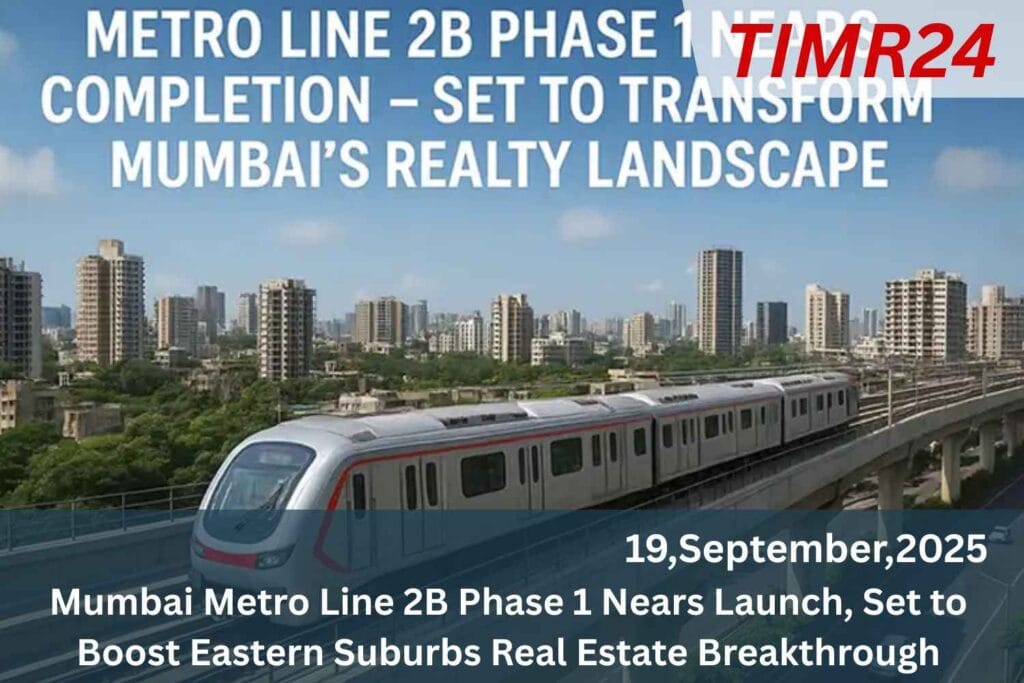
Mumbai’s Eastern Suburbs are set for a real estate surge as Phase 1 of Metro Line 2B nears commercial operations. The new metro line, which spans 5.39 km between Mandale and Diamond Garden, is part of the DN Nagar–Mandale Metro corridor, aiming to ease road congestion and improve suburban connectivity. Passenger services are expected to begin by December 2025, with the full corridor scheduled for completion in 2027. Industry experts predict increased demand for homes and commercial spaces near stations, better rental yields, and renewed interest from developers for transit-oriented projects. Properties around the five Phase 1 stations are expected to command higher prices due to enhanced accessibility and reduced commute times.
The Mumbai Metropolitan Region (MMR) has been undergoing a massive transformation in terms of connectivity and urban infrastructure, and one of the most significant milestones in this journey is the much-awaited launch of Mumbai Metro Line 2B Phase 1. Stretching between D.N.(Deal Swamiraj) Nagar in Andheri and Mandale in Manhood, Line 2B is envisioned as a crucial east-west corridor that connects some of the city’s most densely populated and economically vibrant zones. As Phase 1 nears completion, anticipation is rising not only among daily commuters but also within the real estate and business community of the eastern suburbs. This development is expected to reshape the socio.
Economic fabric of the region, enhancing property values, driving commercial growth, and reducing the burden on the already overstressed road and rail networks The first major impact of Metro Line 2B Phase 1 will be visible in the area of urban mobility. Mumbai has long relied on its suburban railway system as the backbone of daily transport, but overcrowding, delays, and infrastructure fatigue have created an urgent need for alternative mass transit solutions. Metro Line 2B promises to ease this pressure by offering faster, more reliable, and environmentally friendly travel options across some of the busiest zones of Mumbai. With Phase 1 covering critical nodes like Kurla, BKC.
Bandra Kurla Complex, and Chembur, the metro is set to significantly cut down travel time between residential areas of the eastern suburbs and business hubs of western Mumbai. Improved connectivity to BKC alone, which is now regarded as the city’s prime financial district, will have a ripple effect on employment opportunities and housing demand One of the key themes emerging around Metro Line 2B is its influence on real estate trends in the eastern suburbs. Localities such as Chembur, Kurla, Manhood, and even further pockets like Wadala and Govind have historically seen moderate growth compared to their western counterparts. However, infrastructure improvements.
Often act as catalysts for unlocking real estate potential. Developers are already repositioning projects to highlight metro proximity as a selling point, and investors are eyeing the eastern corridor as a future hotspot for both residential and commercial activity. With improved accessibility, the eastern suburbs are likely to witness a surge in demand for mid-segment and premium housing, which will directly contribute to upward movement in property prices. This mirrors the earlier impact seen along Metro Line 1 in Versova–Ghatkopar, where property values jumped significantly once connectivity benefits became tangible The influence of Metro Line 2B on commercial real estate.
And office leasing is equally noteworthy. As companies continue to expand operations in the Mumbai Metropolitan Region, areas like BKC and Lower Parel have faced saturation and rising rental costs. Improved metro connectivity will make eastern suburbs like Kurla, Chembur, and Manhood more attractive for businesses seeking cost-effective alternatives without compromising connectivity. This shift could also bring a wave of co-working spaces, IT parks, and retail outlets to these regions, creating a more balanced distribution of commercial activity across the city. A parallel can be drawn with GCC (Global Capability Centers) expansion trends in India, where connectivity has played a crucial role in shaping office location preferences.
From a socio-economic perspective, the launch of Phase 1 will also benefit thousands of daily commuters from middle-class households. Reduced dependency on private vehicles will not only ease traffic congestion but also cut down on fuel expenses, making daily travel more economical. The eco-friendly nature of metro systems further contributes to reduced carbon emissions, aligning with Mumbai’s long-term sustainability goals. Affordable and faster transport options will also encourage workforce participation from suburban areas, strengthening the overall labor pool of the city’s business hubs. Such developments often create secondary benefits in terms of retail growth.
Hospitality expansion, and cultural exchange, as communities become more seamlessly connected Another critical area influenced by the metro is redevelopment opportunities in older neighbourhoods. With enhanced transport access, builders are likely to intensify redevelopment projects in aging localities of Kurla, Chembur, and Govind. The city has already witnessed success stories in redevelopment-led housing, particularly in Thane and Ghatkopar, and similar patterns could now emerge in the eastern suburbs. The Mumbai Metropolitan Region Development Authority (MMRDA) has also been encouraging sustainable housing projects that align with metro connectivity, offering.
Residents modern amenities and improved quality of It is equally important to examine the economic ripple effect the project will bring. Improved connectivity typically boosts micro-economies around metro stations. Small businesses, retail outlets, eateries, and service providers around Phase 1 stations will see a surge in footfall, which directly translates into increased revenue. This, in turn, improves employment opportunities within local neighbourhoods, giving rise to vibrant, self-sustaining ecosystems. Chembur, for instance, which already has a strong base of cultural and recreational attractions, is poised to emerge as a thriving hub once its metro links make it.
The long-term vision of Line 2B also deserves attention. While Phase 1 is nearing launch, the entire line will eventually connect Andheri to Mandale, seamlessly integrating with other metro corridors like Line 2A and Line 3. This will establish a more holistic network for the city, enabling smooth interchange between eastern, western, and southern zones of Mumbai. The result will be a more balanced urban development model, where congestion is reduced in the western suburbs, and the eastern region emerges as a parallel growth engine. This kind of urban rebalancing is vital for a city like Mumbai, which has traditionally struggled with uneven infrastructure and real estate growth patterns.
Despite its promise, Metro Line 2B has also faced challenges. Land acquisition issues, delays in execution, and coordination between multiple authorities have slowed down progress over the years. However, the nearing completion of Phase 1 highlights the determination of urban planners and policymakers to prioritize mass transit. Lessons from this experience can also help accelerate upcoming infrastructure projects, ensuring smoother delivery timelines in the future the upcoming launch of Mumbai Metro Line 2B Phase 1 is more than just a transport milestone; it represents a pivotal step in the city’s evolution toward becoming a more connected.
Sustainable, and economically balanced metropolis. By enhancing accessibility, reducing travel time, boosting real estate demand, and creating new commercial opportunities, the metro will reshape the identity of the eastern suburbs. For residents, investors, and businesses alike, this project signals the beginning of a new chapter where infrastructure, lifestyle, and growth converge. As Mumbai continues its journey of modernization, Metro Line 2B will stand as a symbol of how visionary infrastructure projects can unlock untapped potential and bring inclusive prosperity to one of the world’s most dynamic urban regions.
Q1 What is Mumbai Metro Line 2B Phase 1?
Metro Line 2B Phase 1 is a crucial metro stretch connecting D.N. Nagar to Mandale, designed to reduce traffic congestion and improve connectivity.
Q2 When is the launch of Mumbai Metro Line 2B Phase 1 expected?
The first phase is nearing completion and is expected to be operational soon, significantly reducing travel time across the eastern suburbs.
Q3: How will this metro line impact Mumbai real estate?
Areas around Chembur, Kurla, and Mandale are already witnessing rising demand for residential and commercial properties due to improved connectivity.
Q4: Which locations will benefit the most?
Key beneficiaries include Bandra Kurla Complex (BKC), Chembur, Mandale, and areas along the eastern corridor with better housing prospects.
Q5 Where can I track official updates about Mumbai Metro projects?
You can follow updates on the (MMRD)