














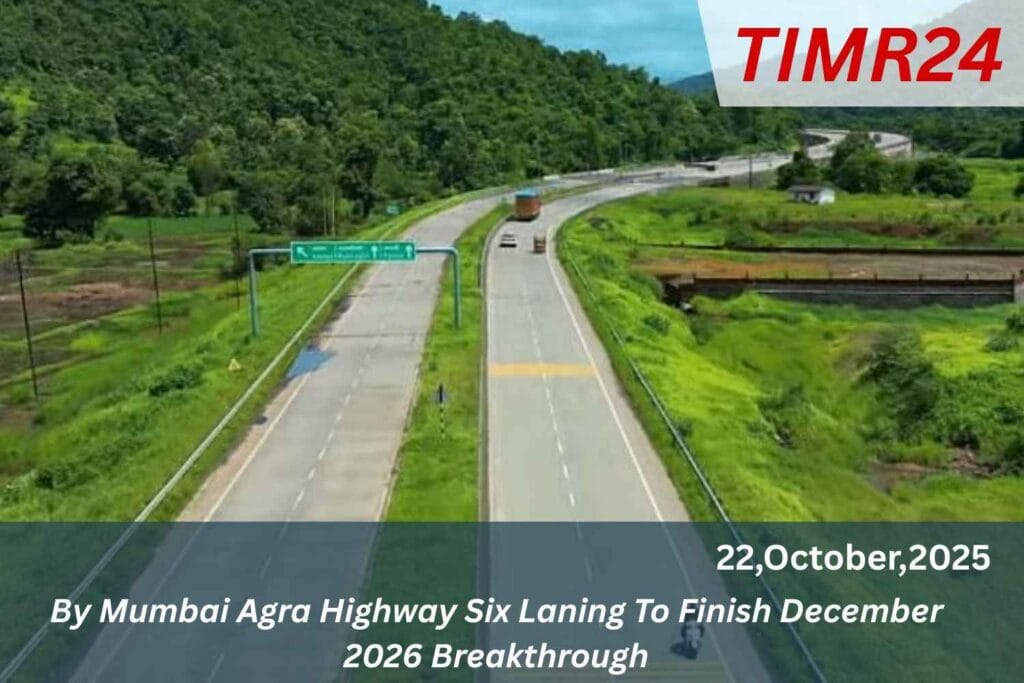
The National Highways Authority of India (NHAI) has announced that a 20-kilometer stretch of the Mumbai-Agra highway between Gonde and Pimpri Sado will be completed by December 2026, three months ahead of its original deadline. The project is being expedited to prepare Nashik for the massive influx of pilgrims during the Simhastha Kumbh Mela, which is expected to peak in August and September 2027. The upgraded highway will ease congestion, provide faster connectivity, and enhance logistics and intercity travel for businesses. The Mumbai–Agra , a crucial transport artery connecting western and northern India, is undergoing a massive six-laning.
Expansion aimed at significantly improving connectivity and reducing travel time across multiple states. Stretching over 1,200 kilometers, this project traverses Maharashtra, Madhya Pradesh, Rajasthan, and Uttar Pradesh, linking some of the country’s key economic and cultural hubs. The six-laning initiative is designed to modernize the highway, improve traffic flow, and enhance road safety, transforming it from a congested route into a high-capacity corridor capable of handling increasing vehicular movement. With a scheduled completion by December 2026, the project represents a strategic step in India’s broader infrastructure development agenda, aimed at fostering economic growth, facilitating trade, and promoting regional connectivity.
Planning and implementation of the highway expansion are being overseen by the National Authority of India (NHAI), which has partnered with several experienced construction and engineering firms. These collaborations ensure that the project adheres to global best practices in highway construction, incorporating advanced techniques such as durable concrete pavements, modern drainage systems, and optimized road alignments for smoother traffic operations. Safety has been prioritized through features like service lanes, reflective signage, pedestrian crossings, crash barriers, and controlled-access toll plazas, ensuring that both.
Freight and passenger vehicles can traverse the route efficiently. For readers interested in broader highway initiatives, the Delhi Expressway offers insights into similar large-scale national projects enhancing regional mobility The economic implications of the six-laning project are substantial. By reducing travel time between Mumbai and Agra, the highway will facilitate faster transportation of goods and services, benefiting industries ranging from manufacturing to logistics and tourism. Cities along the corridor, including Nashik, Indore, Jaipur, and Agra, are expected to witness increased investment, improved trade flows, and expanded employment opportunities.
Local communities will gain easier access to urban centers, educational institutions, and healthcare facilities, while businesses can leverage the improved road network to streamline supply chains. The enhanced highway will also strengthen tourism by connecting historic sites and cultural destinations, enabling travelers to move comfortably and safely across multiple states. Insights into other national infrastructure projects can be explored on the (NHAI) which provides updates on ongoing and completed highways across India Environmental sustainability has been a central consideration in the project’s design. The highway’s construction employs eco-friendly practices, including.
The use of sustainable materials, proper waste disposal, and measures to protect local flora and fauna. Noise barriers, tree plantations, and erosion control mechanisms are integrated into sensitive areas to minimize ecological impact. Additionally, modern stormwater drainage and water management systems help prevent waterlogging during monsoon seasons, ensuring the highway remains functional and safe throughout the year. These efforts align with India’s broader goals of sustainable infrastructure development, balancing economic advancement with environmental stewardship From a safety perspective, the six-laning initiative addresses critical concerns.
That have plagued the existing highway. High traffic density, mixed vehicle types, and narrow stretches have historically contributed to accidents and delays. By widening lanes, separating fast-moving vehicles from local traffic, and installing modern traffic management systems, the project aims to significantly reduce road mishaps. Regular patrolling, proper signage, and emergency response infrastructure are being incorporated to provide travelers with secure and efficient transit. This focus on safety not only benefits commuters but also enhances confidence among freight operators and businesses relying on timely deliveries. The impact of such safety measures can be compared.
With other upgraded corridors like the which similarly emphasized accident reduction and traffic management Construction progress has been meticulously monitored using advanced project management techniques, ensuring adherence to timelines and quality standards. While certain segments have reached advanced stages of completion, others are progressing in alignment with the phased plan established by NHAI. The highway upgrade encompasses bridges, bypasses, flyovers, and toll infrastructure, all integrated into a cohesive network aimed at optimizing travel speed and reducing congestion. Government agencies have committed to completing the project by December.
2026, making it a landmark achievement in India’s transport infrastructure landscape. Regular updates on construction milestones are available through official channels, providing transparency and public awareness about the highway’s development Urban and regional development along the corridor is another critical benefit of the six-laning initiative. Improved accessibility is expected to stimulate growth in satellite towns, industrial clusters, and peri-urban areas. Residential and commercial real estate markets along the highway may experience increased demand, while better connectivity will encourage the establishment of new businesses and service centers catering.
To travelers The expansion also complements other national infrastructure initiatives, creating an integrated network that supports freight logistics, passenger mobility, and regional economic integration. Internal links to related projects like can offer readers additional context about highway-driven regional development in western India The social impact of the project is equally noteworthy. Improved road conditions and reduced travel times make essential services more accessible to rural populations, while employment generated during construction provides temporary but significant income opportunities. By facilitating movement between smaller towns and major cities.
The highway fosters cultural exchange and connectivity, enhancing social cohesion across the regions it traverses. Emergency services, medical logistics, and disaster response capabilities are also expected to benefit from the upgraded corridor, highlighting the multi-dimensional advantages of modern infrastructure Finally, the Mumbai–Agra Highway six-laning project exemplifies India’s commitment to building world-class infrastructure while balancing economic, social, and environmental considerations. By integrating advanced engineering techniques, prioritizing sustainability, and ensuring safety, the project sets a benchmark for future highway developments.
Upon its completion by December 2026, travelers, businesses, and local communities along the corridor will experience enhanced mobility, reduced costs, and improved access to opportunities. The highway will not merely be a road but a conduit for economic growth, regional integration, and sustainable development, reflecting India’s vision for a connected and prosperous future. For readers seeking comprehensive information on similar initiatives, internal links to the (National Highway Development Project) and other NHAI-led corridors provide valuable context and updates.
Q1. When will the Mumbai Agra highway six-laning be completed?
The project is expected to be completed by December 2026.
Q2. How long is the Mumbai Agra highway stretch under expansion?
The highway stretch covers approximately 1,200 km connecting Maharashtra to Uttar Pradesh.
Q3. What are the major benefits of the six-laning project?
Improved traffic flow, reduced travel time, enhanced road safety, and economic growth along the corridor.
Q4. Which agencies are responsible for this highway project?
The project is being executed by the National Highways Authority of India (NHAI) in collaboration with private contractors.
Q5. Will tolls be implemented on the upgraded highway?
Yes, certain sections may have tolls to maintain and operate the upgraded six-lane highway.