




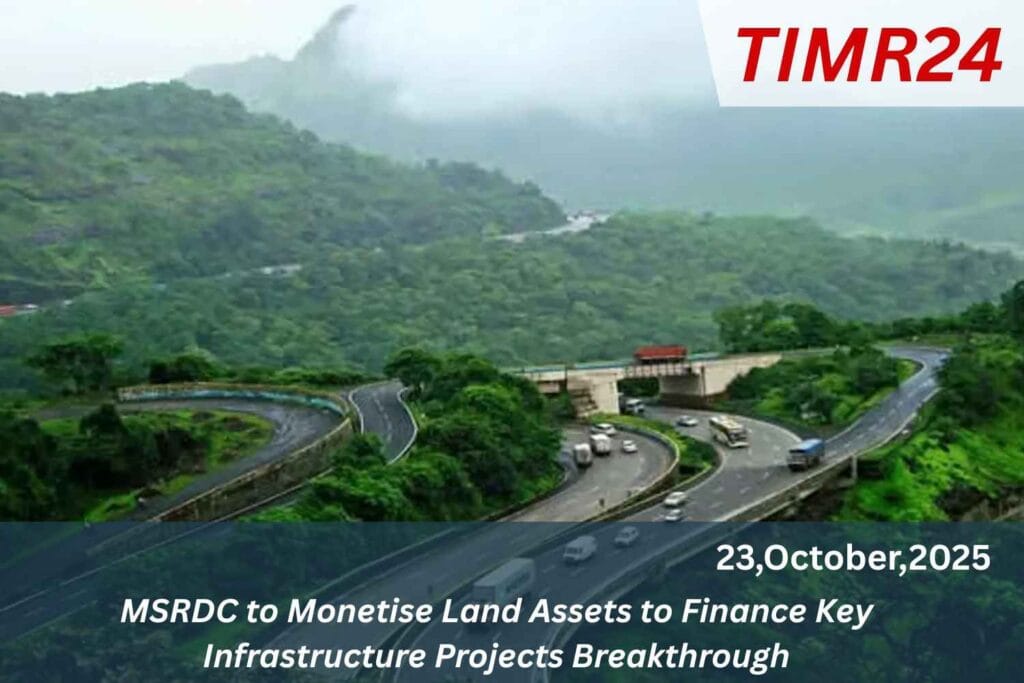
The Maharashtra State Road Development Corporation (MSRDC), led by Chief Minister Eknath Shinde, plans to monetize its land holdings to fund future infrastructure projects. The corporation plans to lease land parcels for up to 99 years, with some earmarked for joint development or sale. The agency is prioritizing six major projects, requiring around Rs 1,700 billion. The Maharashtra State Road Development Corporation (MSRDC) has recently announced a landmark initiative to monetise its land assets, a move that is expected to significantly boost funding for critical infrastructure projects across the state. The decision comes in the context of increasing demands for modern urban.
And intercity transport networks, coupled with the need for innovative financing strategies that reduce reliance on conventional government budget allocations. By unlocking the value of underutilised land parcels, MSRDC aims to generate substantial capital that can be reinvested into the development of highways, expressways, metro projects, flyovers, and other key urban transport infrastructure, ultimately enhancing connectivity and economic growth throughout Maharashtra. The strategy reflects a broader trend in India, where public sector entities are exploring non-traditional financial instruments, such as asset monetisation, public-private partnerships (PPP), and value.
Capture financing, to accelerate infrastructure delivery while maintaining fiscal sustainability. (Infrastructure) provides extensive insights into successful monetisation and PPP models adopted in different states, illustrating how government-owned assets can be leveraged for broader socio-economic benefits One of the core objectives of MSRDC’s land monetisation plan is to create a robust funding mechanism for priority projects without creating additional fiscal pressure on the state government. Historically, large-scale infrastructure projects have often faced delays due to budget constraints, leading to extended construction timelines and cost overruns.
By utilising land resources that are either vacant or underdeveloped, MSRDC can access alternative revenue streams. The monetisation process involves multiple avenues, including long-term leasing, joint ventures with private developers, and strategic development partnerships that ensure mutual benefits. Leasing agreements allow private firms to develop commercial or residential projects on MSRDC land while providing the corporation with steady revenue over a pre-determined period. Joint ventures, on the other hand, enable MSRDC to retain partial ownership and decision-making control over land development, ensuring that public interests are protected while private.
Expertise is harnessed for efficient project execution. This model has parallels with international practices where asset recycling has been successfully employed to finance infrastructure projects without inflating public debt Funding generated through these monetisation strategies will directly support a range of infrastructure initiatives aimed at improving mobility and connectivity within Maharashtra. Highways and expressways are among the primary beneficiaries, with plans to upgrade existing roads, construct new arterial routes, and implement modern traffic management systems. Improved highways not only reduce travel time and congestion but also promote trade.
And economic activity by facilitating faster movement of goods and people. In addition to road projects, urban transport infrastructure forms a crucial part of the investment strategy. MSRDC intends to allocate resources for the expansion of metro rail corridors and the construction of flyovers in congested city areas These projects align closely with the state’s smart city objectives, which aim to create sustainable, efficient, and technology-enabled urban environments. More information on these initiatives can be explored through the which highlights best practices in urban transport and integrated city planning A critical aspect of MSRDC’s approach is the incorporation of social.
And environmental considerations into land development projects. Monetisation is not merely a financial exercise; it is also a means to ensure that infrastructure growth is inclusive and sustainable. Projects will undergo rigorous environmental assessments, with specific attention to green space allocation, ecological preservation, and compliance with environmental regulations. Community engagement is also a central element, as MSRDC seeks to involve local populations in planning processes, ensuring that infrastructure development addresses public needs and creates local employment opportunities. By combining financial innovation with social responsibility.
The corporation is positioning itself as a model for modern infrastructure governance, where economic, environmental, and social goals are harmoniously balanced In addition to immediate project funding, land monetisation by MSRDC serves as a mechanism to attract private sector participation and expertise. Public-private partnerships are expected to play a pivotal role in scaling infrastructure development, allowing private investors to contribute capital, technology, and management proficiency. This collaboration enables faster project execution while promoting accountability and transparency. By adopting such frameworks, MSRDC can ensure that projects meet.
International standards of quality and efficiency. Detailed analysis of successful PPP models in India and abroad can be found in the which highlight how governments can leverage private sector engagement to achieve ambitious infrastructure goals Moreover, the monetisation initiative is likely to have long-term economic implications beyond infrastructure alone. Improved connectivity fosters regional economic development by linking urban and rural areas more efficiently, reducing transport costs, and encouraging investment in new business corridors. In metropolitan regions, metro and flyover projects alleviate traffic congestion, improve air quality, and contribute to more livable.
Cities At the same time, strategic land development can lead to the creation of commercial hubs, office spaces, and residential zones, which further stimulate employment and economic activity. The initiative thus represents a comprehensive approach to infrastructure development that combines immediate project funding with sustainable urban planning and economic growth Transparency and accessibility are central to the successful implementation of MSRDC’s land monetisation strategy. Citizens, investors, and stakeholders can track project progress through the which provides updates on tenders, project timelines, and land development plans.
Open communication ensures that the benefits of monetisation ranging from enhanced transport networks to economic development are visible and measurable, building public confidence in the initiative. Additionally, robust monitoring and reporting mechanisms will help prevent misuse of funds and ensure that monetisation process aligns with the corporation’s broader strategic objectives MSRDC’s plan to monetise its land assets represents a forward-looking, pragmatic approach to addressing the funding challenges faced by large-scale infrastructure projects in Maharashtra. By converting underutilised land into financial capital, the corporation can accelerate.
The development of highways, metro projects, flyovers, and other critical infrastructure while promoting economic growth, social inclusion, and environmental sustainability. The initiative highlights the potential of innovative financial strategies, public-private collaboration, and strategic asset management in shaping modern infrastructure development. As Maharashtra moves toward more connected, efficient, and sustainable urban and intercity transport systems, MSRDC’s land monetisation efforts are poised to serve as a model for other states seeking to optimise public resources for comprehensive development.
Stakeholders, investors, and citizens alike will benefit from increased transparency, improved connectivity, and enhanced economic opportunities as these projects come to fruition, demonstrating the transformative potential of effective public asset management in India’s infrastructure landscape.
Q1. What is the purpose of MSRDC monetising its land assets?
The main goal is to generate funds for priority infrastructure projects, including roads, flyovers, and urban transport networks, without relying solely on government budgets.
Q2. How will MSRDC monetise these lands?
The strategies include leasing, joint ventures with private companies, and long-term development agreements to maximise land value.
Q3. Which projects will benefit from this funding?
Highways, expressways, metro corridors, smart city initiatives, and key urban transport infrastructure will be prioritised.
Q4. How will this affect citizens and local communities?
The projects are expected to improve connectivity and ease traffic congestion while creating job opportunities during construction and operation phases.
Q5. Where can I find official updates on these projects?
Updates and detailed project information can be accessed via the (MSRDC)