










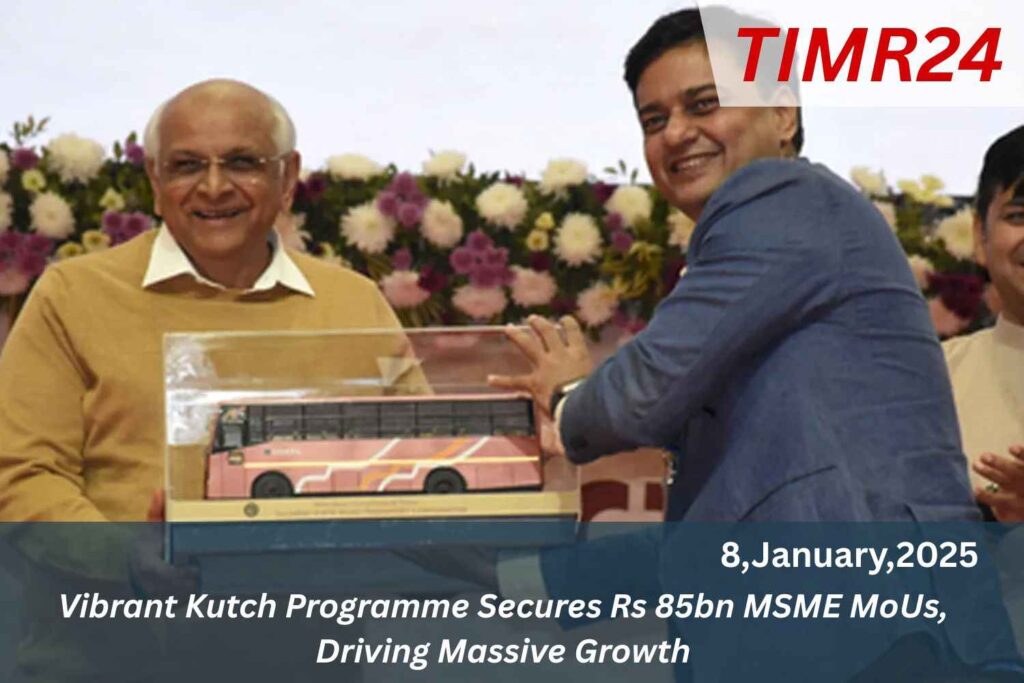
The Vibrant Gujarat Regional Conference inaugurated the Vibrant Kutch District-Level Programme in Gandhidham, led by Minister Arjun Modhwadia. The event resulted in 334 MSME units signing agreements worth Rs 85 billion, showcasing the region’s industrial growth. Modhwadia emphasized Kutch’s potential as a hub for renewable energy and highlighted the state’s efforts in emerging technologies. Trikam B. Chhanga praised the region’s transformation after the 2001 earthquake, promoting opportunities for reverse migration. Additionally, BJP MP Vinod Chavda underlined industrial advancements in Kutch, encouraging young entrepreneurs to engage in local initiatives.
Transformative Milestone In Gujarat’s
The overall sentiment indicated that the Vibrant Gujarat initiative has turned Kutch into a significant development area The Vibrant Kutch Programme securing Memorandums of Understanding (MoUs) worth Rs 85 billion with MSMEs marks a transformative milestone in Gujarat’s regional development strategy. The initiative signals a strong push toward decentralised industrialisation, ensuring that growth is not limited to major urban hubs but extends to strategically important regions like Kutch. Known for its vast land resources, proximity to ports, and renewable energy potential, Kutch is now emerging as a major MSME-driven economic zone that aligns with India’s broader.
Vision of inclusive and sustainable development. This development builds on earlier state-led industrial Vibrant Kutch Programme reflect strong investor confidence in the region’s industrial ecosystem. These agreements span multiple sectors, including manufacturing, renewable energy, logistics, agro-processing, textiles, and engineering services. MSMEs, often described as the backbone of the Indian economy, play a critical role in employment generation and innovation. By attracting such a substantial volume of MSME investments.
Regional Programme, Underlining Effectiveness
Kutch is positioned to become a high-impact growth corridor, supporting both local entrepreneurship and national supply chains. According to industry observers, this scale of MSME participation is rare for a single regional programme, underlining the effectiveness of Gujarat’s investor-friendly governance model One of the key strengths of the Vibrant Kutch Programme lies in its focus on infrastructure-backed growth. The Kutch region benefits from robust road and rail connectivity, access to ports such as Kandla and Mundra, and expanding industrial clusters. These advantages significantly reduce logistics costs for MSMEs, making them competitive in domestic and export markets.
The programme complements national initiatives such as Make in India, which aims to strengthen India’s manufacturing base Employment generation is another major outcome expected from the Rs 85 billion MSME investments. Government estimates suggest that the (India) projects linked to these MoUs could create thousands of direct jobs and a much larger number of indirect employment opportunities in allied sectors such as transportation, services, and raw material supply. This is particularly significant for Kutch, where employment diversification has long been a development priority. The initiative aligns with Gujarat’s long-term vision of balanced regional growth.
Renewable Energy, Clean Manufacturing
The Vibrant Kutch Programme also places strong emphasis on sustainability and green growth. A notable share of the MSME MoUs is linked to renewable energy, clean manufacturing processes, and resource-efficient technologies. Kutch, with its high solar and wind potential, (India) is ideally suited for renewable energy-based MSMEs. This approach supports India’s climate commitments while ensuring long-term economic resilience From a policy standpoint, the success of the Vibrant Kutch Programme demonstrates how targeted regional initiatives can amplify the impact of national MSME schemes. Gujarat’s streamlined approval processes, digital single-window.
Systems, and proactive investor outreach have reduced entry barriers for small and medium enterprises. This governance framework has been previously analysed By combining policy clarity with infrastructure readiness, the state has created a replicable model for other regions Another important dimension of the programme is its role in strengthening local supply chains. MSMEs in Kutch are expected to become key suppliers to larger industries, ports, and export-oriented units This integration enhances value addition within the region and reduces dependency on imports or distant suppliers.
As global supply chains continue to realign, regions like Kutch stand to gain by offering reliable, cost-effective manufacturing and processing capabilitie The Vibrant Kutch Programme also carries strategic importance for Gujarat’s long-term industrial competitiveness. By nurturing MSMEs alongside large enterprises, the state is ensuring a diversified industrial base capable of absorbing economic shocks. MSMEs are often more adaptable and innovation-driven, making them essential for sustaining growth during global uncertainties. This approach resonates with global best practices, where regional clusters and MSME networks form the backbone of resilient economies.
Leveraging Kutch’s Strategic Advantages
The signing of Rs 85 billion worth of MSME MoUs under the Vibrant Kutch Programme represents more than just an investment figure; it signifies a shift toward inclusive, region-centric economic development. By leveraging Kutch’s strategic advantages, strengthening MSME participation, and aligning with sustainability goals, Gujarat has set a new benchmark for regional growth initiatives. (India) As these projects move from agreements to execution, their real impact will be reflected in job creation, industrial diversification, and improved living standards. The programme not only reinforces Gujarat’s leadership in economic governance but also offers.
Q1. What is the Vibrant Kutch Programme?
It is a Gujarat government initiative aimed at accelerating industrial and MSME growth in the Kutch region.
Q2. How much investment was secured under the programme?
MoUs worth Rs 85 billion were signed with MSMEs across multiple sectors.
Q3. Which sectors will benefit the most?
Manufacturing, logistics, renewable energy, textiles, and agri-processing sectors.
Q4. How will this impact local employment?
The programme is expected to generate thousands of direct and indirect jobs in Kutch.
Q5. Why is Kutch strategically important?
Kutch offers strong logistics connectivity, ports, renewable energy potential, and land availability.