



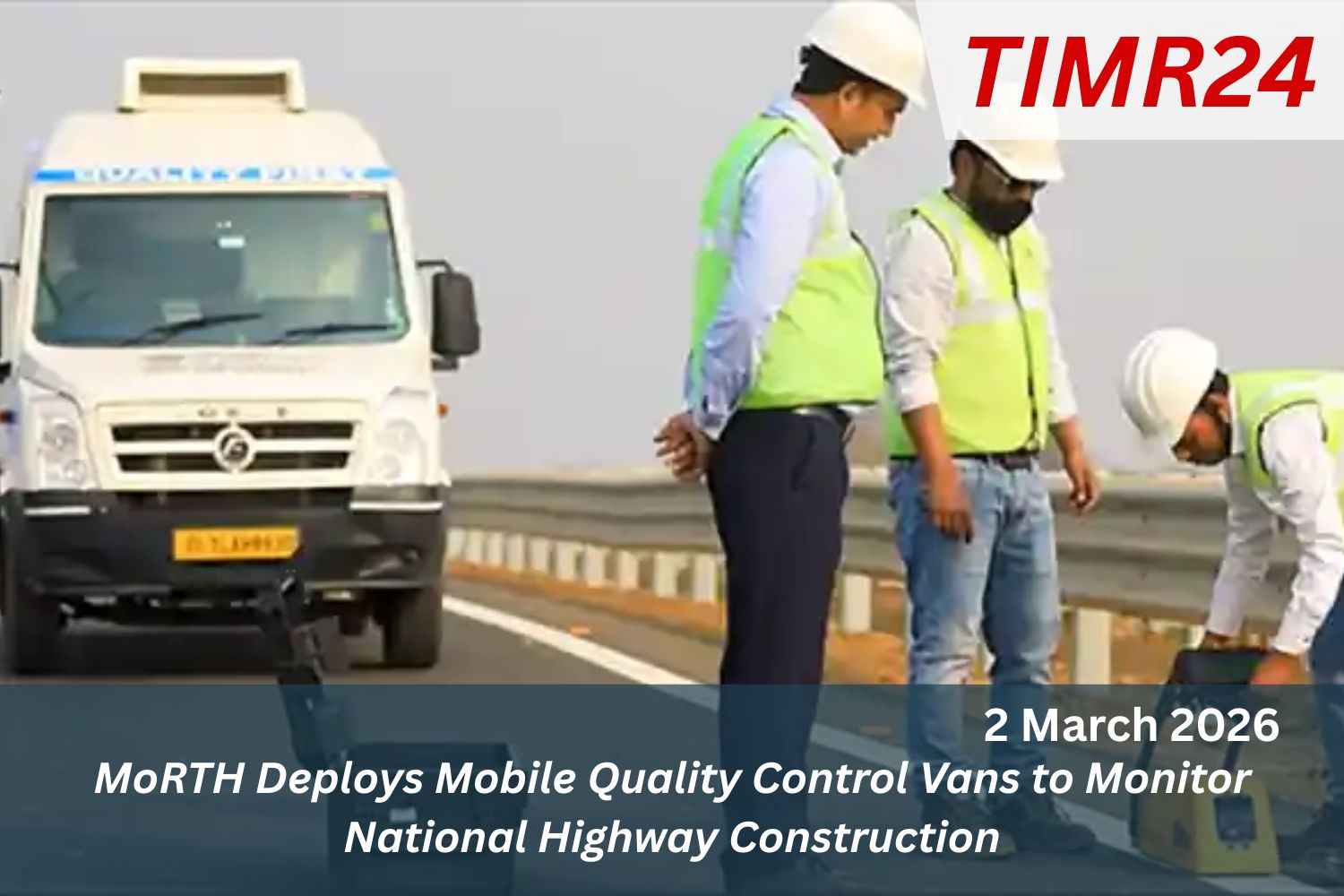














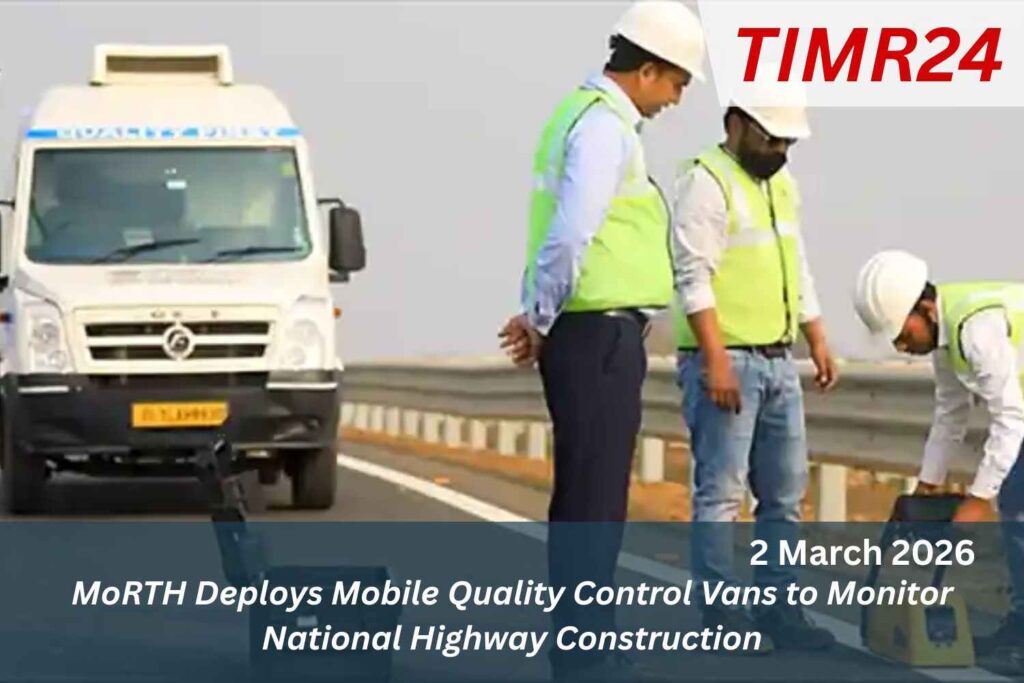
As India rapidly expands its highway network, the Ministry of Road Transport and Highways (MoRTH) has initiated a pilot project utilizing Mobile Quality Control Vans (MQCVs) in Rajasthan, Gujarat, Karnataka, and Odisha. These vans serve as mobile laboratories, conducting on-site, non-destructive tests to monitor the construction quality of National Highway projects, employing advanced tools like rebound hammers and ultrasonic pulse velocity meters. The initiative emphasizes proactive quality control by sharing real-time data with field offices for immediate corrective actions. Moreover, MoRTH is developing a National Highway Quality Monitoring Portal for online access.
Road Infrastructure Sector Is Undergoing
To test reports and GPS tracking of MQCVs, enhancing transparency and accountability. The project will expand to 11 additional states by June 2026, aiming for higher safety and quality standards in highway construction India’s road infrastructure sector is undergoing a major transformation as the Ministry of Road Transport and Highways (MoRTH) introduces mobile quality control vans to monitor national highway construction projects across the country. This initiative represents a significant step toward ensuring higher standards in road construction, enhancing accountability, and improving the durability of highway infrastructure. With India rapidly expanding its road network to.
Support economic growth, logistics efficiency, and regional connectivity, maintaining consistent construction quality has become a top priority for policymakers and infrastructure developers. The deployment of these advanced mobile testing units aims to address long-standing challenges related to quality assurance, project delays, and material compliance in highway development projects. The move aligns with India’s broader infrastructure modernization strategy, which focuses on improving transport efficiency and public safety while strengthening long-term asset sustainability The newly deployed mobile quality control vans are equipped with modern testing.
Equipment designed to perform on-site inspections of construction materials and engineering standards. These vans conduct real-time testing of asphalt composition, soil stability, concrete strength, and other structural parameters essential for highway durability. Traditionally, material testing often required samples to be sent to laboratories, resulting in delays and potential discrepancies in reporting. However, the introduction of mobile testing technology enables immediate verification of construction quality directly at project sites. This ensures that contractors adhere strictly to engineering specifications and regulatory guidelines during the construction process.
Maintaining Consistency In Road Quality
By reducing dependency on centralized laboratories, the initiative also enhances efficiency and enables faster corrective action whenever deviations are detected. Such improvements in monitoring capabilities contribute significantly to maintaining consistency in road quality across different regions of the country Another important aspect of this initiative is its role in enhancing transparency and accountability within the infrastructure sector. Highway construction projects typically involve multiple stakeholders, including contractors, engineers, project consultants, and government agencies. Ensuring compliance across such a complex ecosystem can be challenging without robust monitoring mechanisms.
The mobile quality control vans act as independent inspection units that verify construction standards objectively, minimizing the risk of substandard work or material usage. This helps reduce corruption risks, promotes responsible project execution, and ensures that public funds are utilized efficiently. Increased transparency also strengthens public trust in government infrastructure initiatives, particularly in large-scale projects that require significant financial investment and long-term maintenance commitments The deployment of mobile testing units also contributes directly to improving road safety and long-term infrastructure performance.
Initiative Helps Create Safer Road Networks
Poor construction quality is one of the key factors leading to premature road deterioration, potholes, and structural failures, which can increase accident risks and maintenance costs. By ensuring strict quality checks during construction, the initiative helps create safer road networks that can withstand heavy traffic loads and varying climatic conditions. Better-quality highways also reduce repair frequency, resulting in lower lifecycle costs and improved user experience for commuters and commercial transport operators. This is particularly important for India, where national highways serve as critical economic corridors connecting industrial hubs, ports, and urban centers.
In addition to safety improvements, the initiative is expected to accelerate project completion timelines and enhance operational efficiency. Delays in infrastructure projects often arise due to quality disputes, rework requirements, and compliance issues identified at later stages of construction. By conducting real-time inspections and immediate testing, mobile quality control vans help detect problems early in the construction cycle. This proactive approach allows project teams to address issues promptly, preventing costly delays and ensuring smoother project execution. Faster completion of highway projects not only reduces economic losses associated with delays but also improves.
Mobile Quality Control Vans Also Reflects
Connectivity and regional development outcomes. The initiative therefore supports India’s broader goal of developing world-class transport infrastructure capable of meeting growing mobility demands The implementation of mobile quality control vans also reflects the government’s emphasis on adopting advanced technology in infrastructure development. Modern construction practices increasingly rely on data-driven decision-making, automation, and digital monitoring systems to ensure precision and efficiency. The integration of mobile testing technology into highway construction represents a shift toward more scientific and systematic quality assurance methods.
These vans are expected to generate accurate data on material performance and construction standards, enabling authorities to maintain comprehensive records and evaluate project performance over time. Data collected from inspections can also support policy planning, improve construction guidelines, and enhance future infrastructure projects through evidence-based decision-making The initiative supports sustainable infrastructure development by promoting the use of high-quality materials and efficient construction practices. Durable roads require fewer repairs and consume fewer resources over their lifecycle, reducing environmental impact associated with frequent maintenance activities.
Ensuring proper material usage and structural integrity also contributes to energy efficiency in transportation by providing smoother road surfaces that improve vehicle performance and reduce fuel consumption. As India continues to prioritize sustainable development goals, (India) initiatives such as mobile quality monitoring play a crucial role in balancing infrastructure growth with environmental responsibility The role of implementing agencies and infrastructure authorities is also critical in ensuring the success of this initiative. Organizations responsible for highway.
Construction and management, including national agencies and regional authorities, must coordinate effectively to integrate mobile inspection systems into existing project workflows. Training personnel to operate testing equipment, interpret data, and enforce compliance standards is essential for achieving consistent results. Effective collaboration between government agencies, contractors, and technical experts will help maximize the impact of mobile quality control measures and ensure that the initiative delivers measurable improvements in construction standards the deployment of mobile quality control vans represents a forward-looking approach to infrastructure governance in India.
Government’s Commitment To Adopting
As the country continues to invest heavily in expanding its highway network, maintaining quality standards will remain essential for ensuring long-term economic and social benefits. The initiative demonstrates the government’s commitment to adopting innovative solutions that enhance efficiency, transparency, and safety in infrastructure development. By strengthening monitoring mechanisms and promoting accountability, the program contributes to building a robust and reliable road network capable of supporting India’s future growth and development Overall, the introduction of mobile quality control vans marks a significant milestone in India’s infrastructure modernization journey.
The initiative not only improves construction standards and project efficiency but also reinforces public confidence in national highway development efforts. Through advanced technology, real-time monitoring, and stronger regulatory oversight, the program aims to create durable, (India) safe, and high-quality road infrastructure that supports economic progress and enhances connectivity across the country. As infrastructure development continues to play a central role in national growth strategies, initiatives focused on quality assurance and technological innovation will remain vital for achieving sustainable and efficient transport systems.
Q1. What are MoRTH mobile quality control vans?
Mobile testing units that inspect materials and construction quality of national highways in real time.
Q2. Why has MoRTH introduced these vans?
To improve road quality, ensure compliance, and enhance transparency in highway projects.
Q3. What tests do these vans perform?
They test asphalt quality, soil strength, concrete standards, and structural parameters.
Q4. How will this impact highway construction?
It will reduce delays, improve durability, and ensure safer road infrastructure.
Q5. Who benefits from this initiative?
Commuters, contractors, and infrastructure stakeholders benefit from improved road standards.