














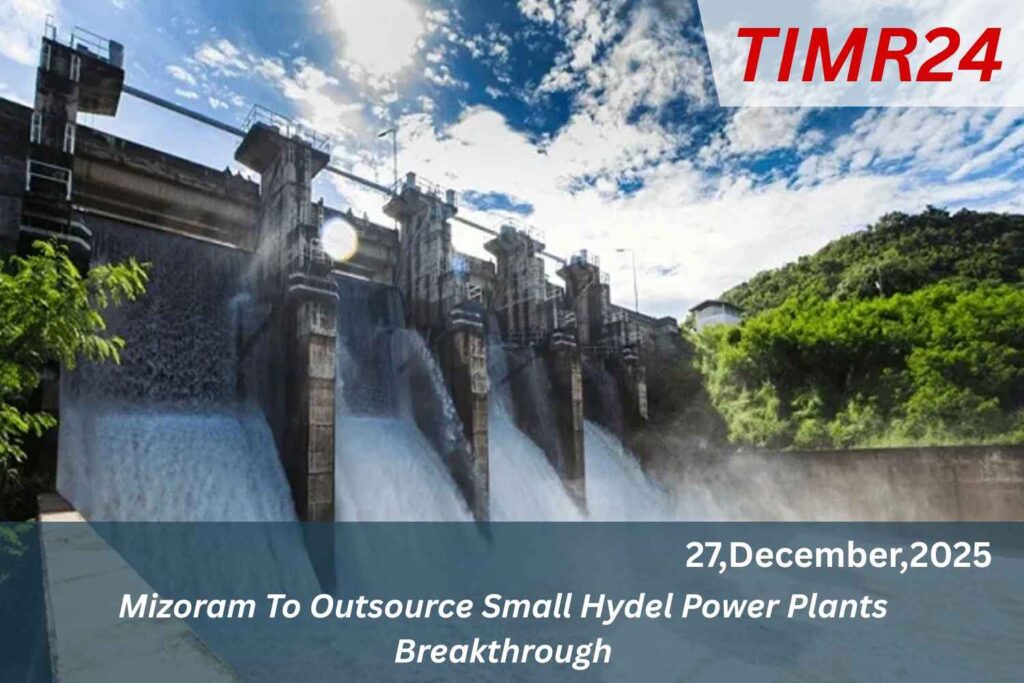
The Mizoram government has decided to privatize seven Mizoram small hydel power plants due to rising maintenance costs, as announced by Chief Minister Lalduhoma during the inauguration of a solar power plant. This decision faces criticism from the opposition, with concerns about long-term impacts on revenue from hydropower assets. Mizoram operates 14 hydroelectric plants and is planning two major projects a 24-MW plant on the Tuirini river and a 132-MW project on the Tuivai river. Additionally, the state plans to develop six new solar parks totaling 66 MW. Currently, Mizoram imports most of its electricity and aims to keep tariffs stable for five years to support economically weaker sections and small businesses.
Small Hydel Projects
Mizoram’s decision to outsource the operation and maintenance of its small hydel power plants marks a significant shift in the state’s renewable energy strategy and reflects a broader trend seen across India’s power sector. Small hydel projects have long been considered a reliable and environmentally sustainable source of electricity for hilly and remote regions, particularly in the North-Eastern states. However, challenges related to technical expertise, aging infrastructure, operational inefficiencies, and financial constraints have limited their full potential. By opening the door to private participation and professional management, Mizoram aims to revitalise.
These assets while ensuring uninterrupted and cost-effective power supply to its citizens Small hydel power plants play a critical role in Mizoram’s energy mix due to the state’s abundant river systems and mountainous terrain. These projects, typically with capacities of up to 25 MW, are well-suited for decentralized power generation and rural electrification. Over the years, several such plants were developed under government ownership to reduce dependence on power imports from the central grid. Despite their strategic importance, many of these facilities have been operating below capacity because of poor maintenance, limited manpower, and outdated equipment.
Maintenance Responsibilities Rather
This has prompted the state government to explore outsourcing as a practical solution rather than investing heavily in direct upgrades The outsourcing model being considered by Mizoram focuses primarily on operation and maintenance responsibilities rather than outright asset sale. Under this framework, private companies with proven technical expertise will manage day-to-day operations, conduct preventive maintenance, and implement efficiency improvements while ownership of the assets remains with the state. This approach allows the government to retain control over strategic infrastructure while benefiting from private sector efficiency.
Similar models have been successfully implemented in other parts of India, especially in thermal and distribution segments, making it a logical extension for hydropower assets as well One of the key drivers behind this move is the financial strain faced by state power utilities. (India) Maintaining hydel plants in difficult terrain requires consistent funding, skilled engineers, and timely equipment replacement, all of which can be challenging under budgetary constraints. Outsourcing shifts a portion of this burden to private operators, who are incentivized to maximize generation and minimize downtime. Improved plant availability can directly translate into higher revenues and reduced reliance.
Mizoram’s Commitment To Clean
On expensive power purchases from outside the state. This aligns closely with ongoing state-level power sector reforms, similar to initiatives discussed From an environmental perspective, revitalising small hydel power plants supports Mizoram’s commitment to clean and renewable energy. Hydropower produces minimal greenhouse gas emissions compared to fossil fuel-based generation and helps states meet national renewable energy targets. The Ministry of New and Renewable Energy continues to promote small hydel projects as a sustainable option for regions with suitable geography, and further policy guidance can be accessed By ensuring these plants operate at.
Optimal efficiency, Mizoram can increase its renewable share without constructing new infrastructure that may impact local ecosystems The outsourcing initiative is also expected to generate employment opportunities, both directly and indirectly. While private operators may bring in specialized professionals, local technicians and workers are likely to be engaged for routine operations and support services. This knowledge transfer can enhance local skill development and create a more resilient workforce for future energy projects. In the long term, improved operational standards may encourage further investments in hydropower.
Failure To Meet These Benchmarks
Another important aspect of outsourcing is the introduction of performance-based contracts. These agreements typically include defined benchmarks for plant availability, generation efficiency, safety compliance, and environmental standards. Failure to meet these benchmarks can result in penalties, while exceeding them may offer incentives. Such accountability mechanisms are often more effective than traditional government-run models, where performance evaluation can be less stringent. Regulatory oversight by agencies like the Central Electricity Authority ensures that technical and safety standards are upheld, with reference material available at.
For consumers, the benefits of outsourcing small hydel power plants may be reflected in improved reliability and potentially lower tariffs over time. Reduced outages and stable local generation can ease pressure on the state grid, particularly during peak demand or adverse weather conditions. While immediate tariff reductions may not be guaranteed, long-term efficiency gains can contribute to more predictable and sustainable power pricing. This supports broader national objectives of affordable and reliable electricity for all Despite its advantages, the outsourcing plan is not without challenges. Ensuring transparency in the bidding process, selecting competent.
International Energy Markets
Operators, and safeguarding public interest will be crucial for success. Clear contractual terms, strong regulatory monitoring, and community engagement are essential to prevent potential conflicts or service disruptions. Lessons from international energy markets, including best practices promoted by organisations like Mizoram’s move to outsource small hydel power plants represents a forward-looking approach to managing renewable energy assets in a resource-constrained environment. By combining public ownership with private sector efficiency.
The state aims to unlock the full potential of its hydropower resources while supporting sustainability, economic development, and energy security. If implemented effectively, (India) this initiative could serve as a model for other hill states seeking innovative solutions to strengthen their renewable energy infrastructure without compromising public control or environmental responsibility.
Q1. Why is Mizoram outsourcing small hydel power plants?
Mizoram aims to improve efficiency, reduce operational losses, and ensure better maintenance by involving experienced private operators.
Q2. Will the hydel plants be sold to private companies?
No, the state will retain ownership while outsourcing only operation and maintenance activities.
Q3. How will this impact electricity consumers in Mizoram?
Consumers may benefit from improved reliability and more stable power supply over time.
Q4. Is outsourcing hydel power plants common in India?
Yes, similar public-private models are increasingly used across India’s power sector.
Q5. Does this support renewable energy goals?
Yes, efficient hydel operations strengthen renewable capacity and reduce dependence on fossil fuels.