













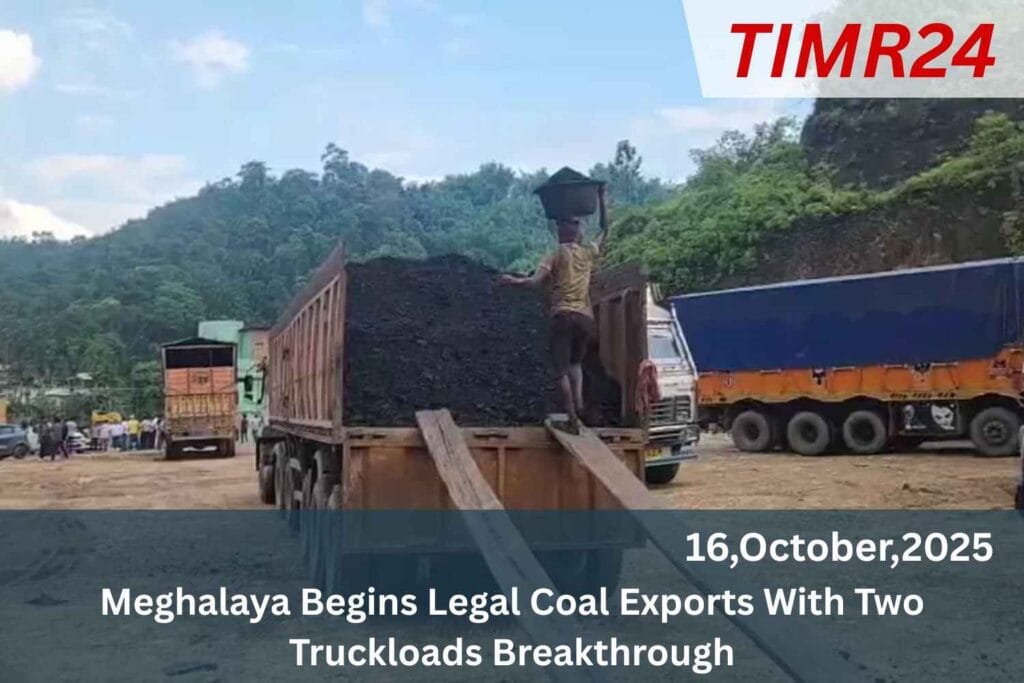
Meghalaya has successfully transported scientifically mined coal for the first time, marking a significant milestone in the country’s coal industry. The coal, originating from the Stringham-A mine in Byndihati, was flagged off by a traditional Khasi king. The move follows tripartite agreements signed in January 2024 between the central government and three miners from the state. The new scientific coal mining framework aims to reduce India’s dependence on imported coal and boost the regional economy. The adoption of GST-compliant documentation is expected to eradicate illegal practices The recent commencement of legal coal exports from Meghalaya represents.
A landmark moment in the state’s mining history, symbolizing a transition from unregulated, hazardous mining methods to scientifically controlled and environmentally conscious practices. On August 4, 2025, the state flagged off its first legal shipment of coal, consisting of two truckloads, one destined for Bihar and the other for Uttar Pradesh, marking the beginning of Meghalaya’s formal entry into India’s regulated coal market This event was celebrated as a historic milestone, attended by local dignitaries, mining officials, and traditional Khasi leaders, emphasizing the socio-cultural importance of coal mining in the region and signaling a new chapter for the state’s economy.
The history of coal mining in Meghalaya has been fraught with challenges, primarily due to the practice of rat-hole mining, a method that involves digging narrow tunnels to extract coal manually. Rat-hole mining, which had been prevalent for decades, posed severe risks to miners’ health and safety, as well as to the environment, leading to frequent accidents and long-term ecological degradation. The National Green Tribunal (NGT) intervened in 2014, imposing a ban on unregulated coal extraction, thereby halting mining activities across the state. The ban, while necessary for safety and environmental protection, had significant socio-economic consequences.
Leaving many families and communities who relied on coal mining for their livelihoods in financial uncertainty. The decade-long halt in mining also drew attention to the need for comprehensive regulatory frameworks that could balance economic needs with environmental sustainability After years of consultation with the Ministry of Coal, state authorities, environmental experts, and local communities, Meghalaya introduced scientific mining practices designed to minimize hazards and promote sustainable resource utilization. Scientific mining differs substantially from traditional methods in its use of mechanized processes, well-defined safety protocols, and structured extraction.
Plans The state’s two primary mining blocks, Saryngkham-A in East Jaintia Hills and PyeongChang in West Khasi Hills, were developed under stringent environmental and safety guidelines, receiving statutory approvals for production in early 2025 (coal) These blocks were equipped with proper ventilation systems, mechanized coal removal equipment, and monitoring frameworks to prevent ecological damage and ensure that local water resources and forests are protected. Scientific mining also emphasizes post-extraction land rehabilitation, a key step in restoring areas affected by coal mining, which contrasts sharply with the environmental neglect associated.
With rat-hole methods. Through these measures, the state aims to ensure that coal mining is not only economically viable but also environmentally responsible, providing a model for other mining-dependent regions in India The inaugural coal shipment carries both symbolic and practical significance. Symbolically, it represents the culmination of regulatory reforms, environmental planning, and community engagement, reflecting Meghalaya’s commitment to integrating tradition with modernity. Practically, the coal exported will support energy needs in other states, contributing to India’s broader energy security framework. The transportation of coal under formal documentation.
Ensures traceability, adherence to quality standards, and compliance with taxation and trade regulations. This move also opens avenues for the state to explore international coal trade in the future, should infrastructure and policy conditions permit. The export process was meticulously planned, from extraction to transportation, highlighting the importance of logistics in ensuring smooth operations. Coordination between mining companies, transport authorities, and local administrative bodies played a crucial role in avoiding delays and maintaining safety standards during the inaugural dispatch Economically, the revival of legal coal exports is expected to boost Meghalaya’s GDP.
And create employment opportunities across mining, transportation, and ancillary industries. Mining companies engaged in scientific coal extraction are hiring trained personnel, providing skill development programs for local youth, and fostering entrepreneurship in supporting sectors such as logistics, equipment maintenance, and coal processing. The state government has also committed to reinvesting part of the mining revenue into community development initiatives, including education, healthcare, and infrastructure, ensuring that the benefits of coal mining extend beyond corporate profits to local populations. By formalizing coal exports, Meghalaya positions itself as.
A contributor to India’s energy supply chain while addressing long-standing socio-economic disparities within the region Environmental considerations remain at the forefront of Meghalaya’s mining strategy. Unlike previous unregulated mining, scientific mining integrates real-time environmental monitoring, periodic audits, and adherence to pollution control measures. Mines are required to manage water runoff, prevent deforestation, and rehabilitate mined land through afforestation projects. These measures reduce the risk of ecological degradation and preserve biodiversity, aligning with national and global sustainability goals. Environmental experts have praised Meghalaya’s.
Approach for balancing resource extraction with ecological stewardship, providing a model for sustainable mining practices that other states may emulate (Coal Mining). Community participation has been encouraged through local monitoring committees, which help ensure transparency and compliance with environmental norms, fostering trust between mining companies and residents The resumption of coal mining also interacts with broader policy frameworks. India’s energy sector has seen increasing demand for coal, especially for thermal power generation, and Meghalaya’s scientifically mined coal provides a secure and traceable source to meet these needs.
By integrating state-level mining policies with national energy strategies, Meghalaya contributes to overall energy security while demonstrating responsible resource management. Regulatory alignment with the Ministry of Coal, environmental authorities, and trade departments ensures that all aspects of coal production, transport, and sale are legally compliant, reducing the risk of disputes and litigation Culturally, coal mining remains intertwined with the traditions of the Khasi and Jaintia communities. Local leaders and traditional authorities were actively involved in consultations before the resumption of mining, ensuring that mining activities respect cultural sites and customary.
Rights By combining modern scientific methods with respect for local traditions, Meghalaya has created a mining model that acknowledges social, economic, and environmental dimensions simultaneously. This inclusive approach strengthens community acceptance, reduces conflicts, and fosters long-term stability in the mining sector Meghalaya’s launch of legal coal exports with the first two truckloads reflects a comprehensive transformation of the state’s coal mining sector. The transition from hazardous rat-hole mining to scientifically managed operations demonstrates a successful integration of safety, environmental responsibility, and economic growth.
By adhering to structured regulatory frameworks, ensuring community engagement, and implementing advanced mining technologies, Meghalaya is not only securing its position in India’s coal trade but also establishing a sustainable model for resource extraction. The economic benefits, coupled with environmental safeguards and social inclusivity, present a forward-looking approach to mining that other regions can study and emulate. As the state continues to expand its scientifically mined coal production, it is likely that further legal exports will strengthen Meghalaya’s role in regional and national energy markets, supporting India’s energy needs while promoting.
Sustainable development, social equity, and environmental stewardship The historic shipment of two truckloads may seem modest in quantity, but its significance lies in the symbolic and practical affirmation of Meghalaya’s commitment to regulated, responsible, and forward-looking coal mining.