









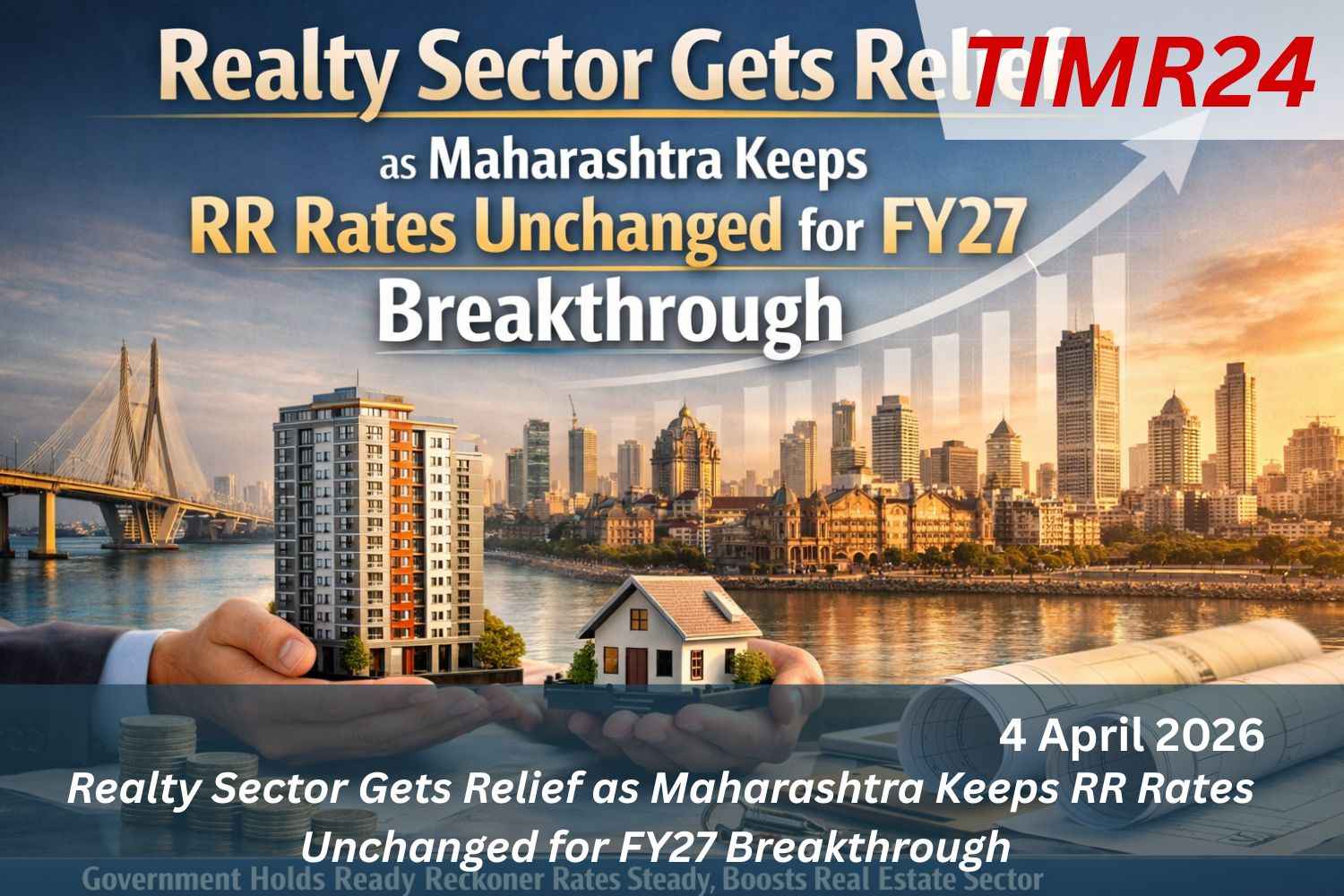



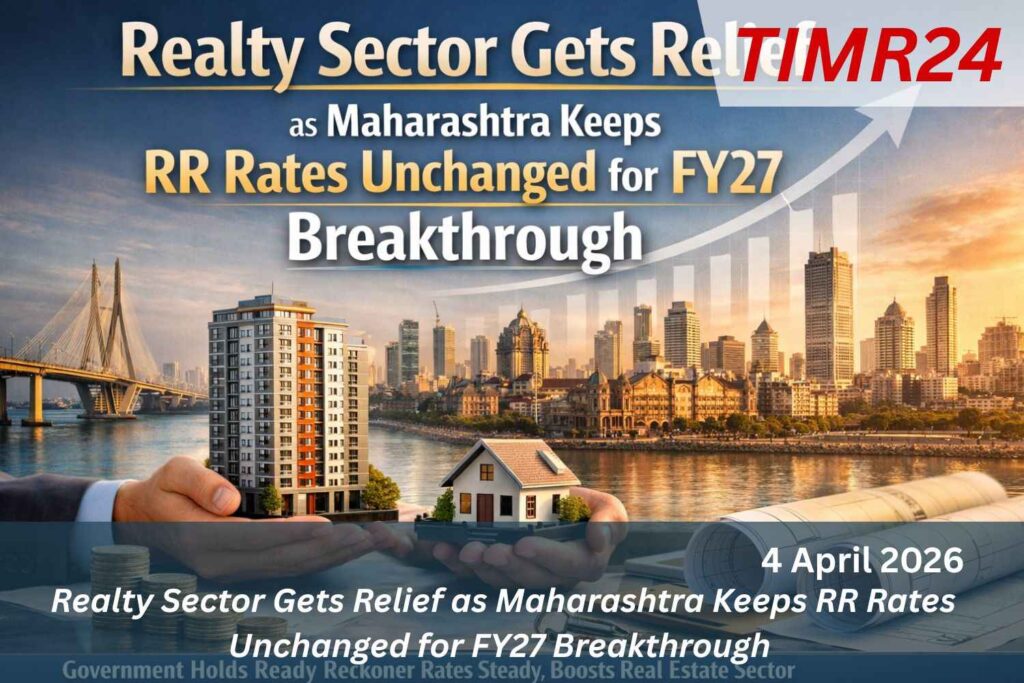
Maharashtra’s government, led by Shri Devendra Fadnavis, announced that Ready Reckoner (RR) rates will remain unchanged for the financial year 2026–27, as stated by Minister Shri Chandrashekhar Bawankule. This decision, made in light of global economic uncertainties and rising construction costs, aims to support both developers and homebuyers by stabilizing property valuations and stamp duty. Industry leaders welcomed the move, highlighting its importance for sustaining demand and affordability in Maharashtra’s real estate market. They emphasized that maintaining RR rates prevents additional financial strain on developers and encourages potential buyers to make purchase decisions amidst economic challenges.
The Maharashtra government has decided to keep Ready Reckoner (RR) rates unchanged for the financial year 2026–27, with rates effective from April 1, 2026 remaining at the same level as 2025–26 a decision announced by the Office of the Inspector General of Registration and Controller of Stamps This is one of the most significant policy interventions the state government has made in recent years for the real estate industry, coming at a time when both global and domestic pressures were threatening to slow the momentum in property transactions. The decision was taken by Revenue Minister Chandrashekhar Bawankule following directions from Chief Minister.
What Are RR Rates and Why Do They Matter?
Devendra Fadnavis developers, and investors watching the Maharashtra real estate market closely, this announcement has brought tangible comfort and renewed confidence heading into the new financial year. Reckoner rates are the minimum rates based on which the government charges registration fees and stamp duty on a property transaction. They are also used to calculate capital gains for income tax. RR rates are linked to all premiums, charges, and floor space index (FSI) rates payable by real estate developers to municipal corporations. if you are buying a flat in Pune, a plot in Nashik, or a commercial space in Mumbai, the stamp duty you pay is directly tied to.
The RR rate applicable to that location. The RR rate is also known as the ‘circle rate’ or ‘guidance value’ in several parts of the country, and is the minimum per sq ft rate of a property or land fixed by the state government These rates are released at the beginning of every financial year in Maharashtra, making the annual announcement a closely watched event for all stakeholders in the real estate ecosystem. Developers factor RR rates into their project pricing, FSI calculations, and financial planning, which is why even a modest hike of 4–5% can cascade into significantly higher property prices for end consumers.
Historical Context A Pattern of Periodic Revisions
To appreciate the scale of this relief, one must look at how RR rates have moved over the years. In 2017–18, an average increase in Ready Reckoner rates was 5.86 per cent. In 2020–21, there was a marginal hike of 1.74 per cent due to the COVID-19 pandemic. In 2022–23, a 4.81 per cent increase was implemented, which remained unchanged for the following two years. In 2025–26, rural areas saw a 3.36 per cent hike, municipal councils saw 4.97 per cent, and municipal corporations saw 5.95 per cent, while the Mumbai Municipal Corporation area saw a 3.39 per cent rise. Against this backdrop, there were growing expectations entering FY27 that another round of revisions was imminent.
Earlier speculation suggested that RR rates could be increased by an average of 4–5 per cent, particularly in regions like the Mumbai Metropolitan Region, Nashik, and other fast-developing areas witnessing major infrastructure projects such as the Shaktipeeth Corridor and the Samruddhi Expressway extension government’s decision to override these expectations with a full freeze has therefore come as a welcome surprise for the market.
Why The Government Chose Stability Over Revenue
The rationale behind this decision is multi-layered and reflects a matured, market-sensitive policy approach. Officials pointed out that global market instability caused by the West Asia conflict has created uncertainty in financial markets, and to prevent any negative impact on property transactions, the state decided to hold RR rates steady for another year the same time, the decision follows industry representations, including inputs from CREDAI, and is expected to support demand stability, maintain affordability, and prevent disruptions in transaction volumes, particularly in price-sensitive urban markets such as Mumbai and the Mumbai Metropolitan Developers across.
Maharashtra had also flagged the rising costs of construction materials, labour, and financing as factors making it untenable to absorb any further regulatory cost escalation. For 2026–27, the government has opted for a complete freeze on rates across rural, urban, and influence zones, indicating a cautious approach in the current economic environment.
Industry Reaction Developers And Advisors Speak Out
The reaction from the real estate industry has been overwhelmingly positive. Kamlesh Thakur, Co-Founder and Managing Director of Srishti Group, stated that at a time when construction costs continue to rise, maintaining the existing RR rates helps avoid additional financial strain on developers and preserves affordability for end-users, which remains critical to sustaining housing demand and supporting overall market momentum Kaushal Agarwal, Chairman of The Guardians Real Estate Advisory, called it a significant relief for both homebuyers and developers, noting that any upward revision at.
This juncture could have impacted transaction volumes, especially in a price-sensitive market like Mumbai Prashant Sharma, President of NAREDCO Maharashtra, termed the move “timely and pragmatic,” adding that stable RR rates will support market sentiment amid global uncertainties. the ground reinforce that the freeze is not just a symbolic gesture but a practical intervention with real implications for millions of property buyers and the hundreds of developers working across Maharashtra.
Record Stamp Duty Revenue Stability Doesn’t Mean Stagnation
One of the most remarkable aspects of this story is that the government’s decision to freeze rates has not come at the cost of revenue. Despite no increase in rates, the state has witnessed a substantial rise in revenue from stamp duty and registration. As of March 30, 2026, total revenue stood at ₹60,568.94 crore, with the I-Sarita system contributing the largest share at ₹49,534.24 crore, followed by Adjudication 2.0 at ₹4,429.70 crore, e-filing at ₹1,238.26 crore, online leave and licence at ₹316.69 crore, and other sources at ₹5,050.05 crore.
Over the past three years, Maharashtra has witnessed strong growth in revenue from property registrations the state earned ₹50,000 crore in 2023–24, which rose to ₹55,000 crore in 2024–25, and further climbed to approximately ₹63,500 crore in 2025–26. government has set an even more ambitious mobilisation target of ₹68,600 crore through stamp duty and registration fees for FY2026–27, that the administration is confident that transaction volume growth will more than compensate for the absence of a rate hike.
Technical Updates Alongside Rate Freeze
While the rates remain unchanged, the government has also introduced important technical corrections to the Annual Statement of Rates. These include alignment with development plans, inclusion of new survey numbers, and corrections in village records ensuring that the rate document accurately reflects ground realities as cities expand and new zones come under the development radar. Although the rates remained unchanged.
The government incorporated revisions aligned with development plans and zoning changes in urban areas to better reflect on-ground realities, along with (India) corrections in survey numbers, village boundaries, and valuation zones to maintain accuracy in property assessments combination of rate stability with administrative accuracy is a sign of an increasingly mature and responsive regulatory framework in Maharashtra’s real estate governance.
What This Means For You As a Homebuyer or Investor
By keeping RR rates unchanged, the government has effectively ensured that buyers will not face any additional financial burden while purchasing property. This move is especially significant in cities like Mumbai and across the MMR region, where even small increases in rates can significantly raise overall property costs. this is an ideal window to evaluate purchases without the anxiety of escalating statutory costs.
For real estate investors tracking capital gains implications, frozen RR rates also mean more predictable tax liabilities. For prospective homebuyers, especially those evaluating purchases in urban markets, the stability in RR rates may encourage decision-making by (India) ensuring that stamp duty outflows remain consistent with previous levels you are looking at affordable housing in Nashik, mid-segment apartments in Thane, or premium real estate in South Mumbai, the FY27 rate freeze creates a favourable environment to act.
Q1. What are Ready Reckoner (RR) rates?
RR rates are government-defined property values used to calculate stamp duty and registration charges.
Q2. What decision has Maharashtra taken for FY27?
The state has kept RR rates unchanged for the financial year 2026–27.
Q3. How does this benefit homebuyers?
Buyers will pay lower transaction costs as property valuation remains stable.
Q4. What impact will this have on developers?
It improves sales momentum and reduces pricing pressure on new projects.
Q5. Will this decision affect property prices?
It may help stabilize or slightly reduce effective purchase costs, boosting demand.