













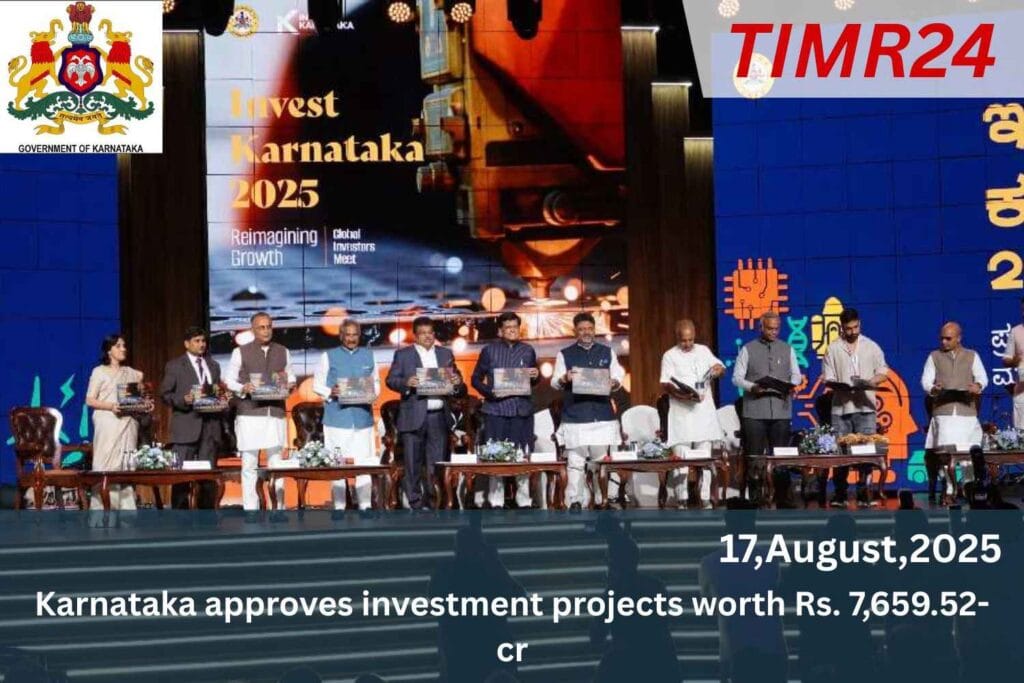
The Karnataka government has approved 91 industrial investment proposals worth Rs 7,659.52 crore, with 26 projects exceeding Rs 50 crore, totaling Rs 5,750.73 crore. These projects are expected to create 13,742 jobs. Major projects include Pratibha Patil Sugar Industries, Aequs Consumer Products Unit-3, Tata Semiconductor Assembly and Test, Maruti Suzuki India, South West Mining, and Tangalle Village. Eight additional projects have been approved. In a significant stride towards bolstering its industrial landscape, Karnataka has sanctioned 91 investment projects amounting to ₹7,659.52 crore. This initiative, approved by the State Level Single Window Clearance Committee (SLSWCC), is poised to generate approximately 18,146 employment opportunities across the state.
The projects encompass a diverse array of sectors, including manufacturing, renewable energy, and infrastructure, reflecting Karnataka’s commitment to sustainable economic growth Among the notable investments, Maruti Suzuki India has committed ₹137.6 crore for a project in Nelamangala Taluk, Bengaluru Rural District. Aequs Consumer Products has pledged ₹456 crore for its third unit in Dharwad District (Manufacturing) while Tata Semiconductor Assembly and Test Private Limited plans to invest ₹200 crore in Kolar Taluk. Additionally, South West Mining Limited has proposed an investment of ₹411 crore in Bellary district. These ventures are expected to significantly enhance the state’s industrial output and employment prospects. Infrastructure development remains a cornerstone of Karnataka’s economic strategy.
The Bengaluru–Chennai Expressway project is set to drastically reduce travel time between the two cities, enhancing connectivity and fostering economic integration. Similarly, the Bengaluru Suburban Railway project, with an expected operational date of 2027, aims to alleviate urban congestion and improve public transportation efficiency. In the realm of tourism, Karnataka has initiated a ₹100 crore development plan under the Centre’s Swadesh Darshan scheme. However, progress has been impeded by bureaucratic and regulatory challenges. Proposals such as a 12 km coastal cycle lane in Udupi and new tourism infrastructure in Bidar fort are awaiting clearances from environmental and heritage authorities. The state is actively working to resolve these issues to unlock the full potential of its tourism sector.
Collectively, these initiatives reflect Karnataka’s strategic focus on fostering industrial growth, enhancing infrastructure, and promoting sustainable development (Shivtek Spechemi) The state’s commitment to creating a conducive environment for investment and innovation positions it as a formidable player in India’s economic landscape. In the realm of tourism, Karnataka has initiated a ₹100 crore development plan under the Centre’s Swadesh Darshan scheme. However, progress has been impeded by bureaucratic and regulatory challenges. Proposals such as a 12 km coastal cycle lane in Udupi and new tourism infrastructure in Bidar fort are awaiting clearances from environmental and heritage authorities.
Infrastructure development remains a cornerstone of Karnataka’s economic strategy. The Bengaluru–Chennai Expressway project is set to drastically reduce travel time between the two cities, enhancing connectivity and fostering economic integration. Similarly, the Bengaluru Suburban Railway project, with an expected operational date of 2027, aims to alleviate urban congestion and improve public transportation efficiency. The state is actively working to resolve these issues to unlock the full potential of its tourism sector Collectively, these initiatives reflect Karnataka’s strategic focus on fostering industrial growth, enhancing infrastructure, and promoting sustainable development. The state’s commitment to creating a conducive environment for investment and innovation positions it as a formidable player in India’s economic landscape.
q1. What is the total investment approved by Karnataka?
Karnataka has approved projects worth Rs. 7,659.52 crore.
q2. Which sectors will benefit from these investments?
Key sectors include infrastructure, manufacturing, IT, and renewable energy.
q3. How will these projects impact employment?
The projects are expected to create thousands of new jobs across the state.
q4. Who will oversee the implementation of these projects?
The Karnataka government, along with relevant state departments, will monitor progress.
q5. When will these projects be completed?
Timelines vary by project, with most expected to be operational within the next 2–5 years.