

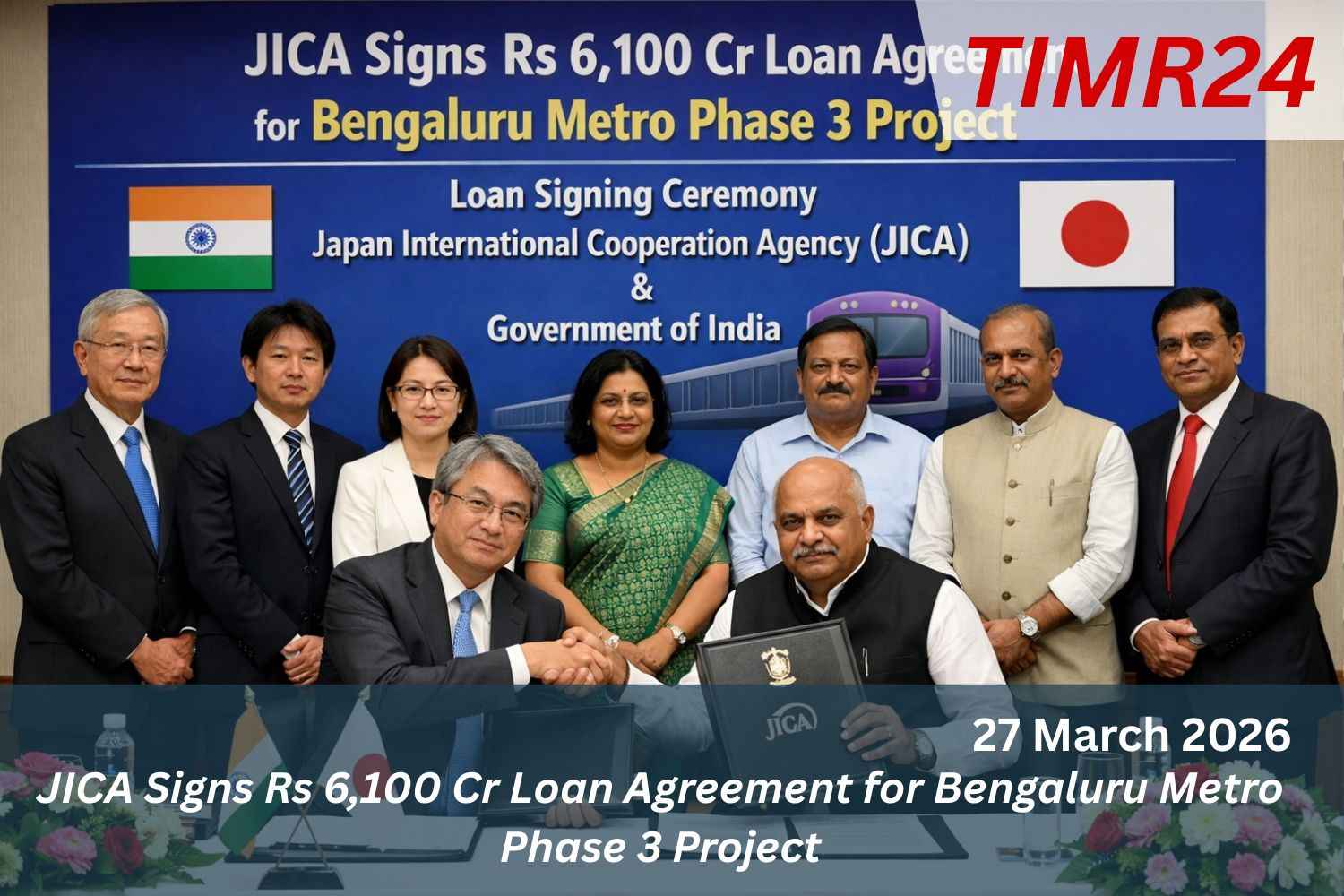









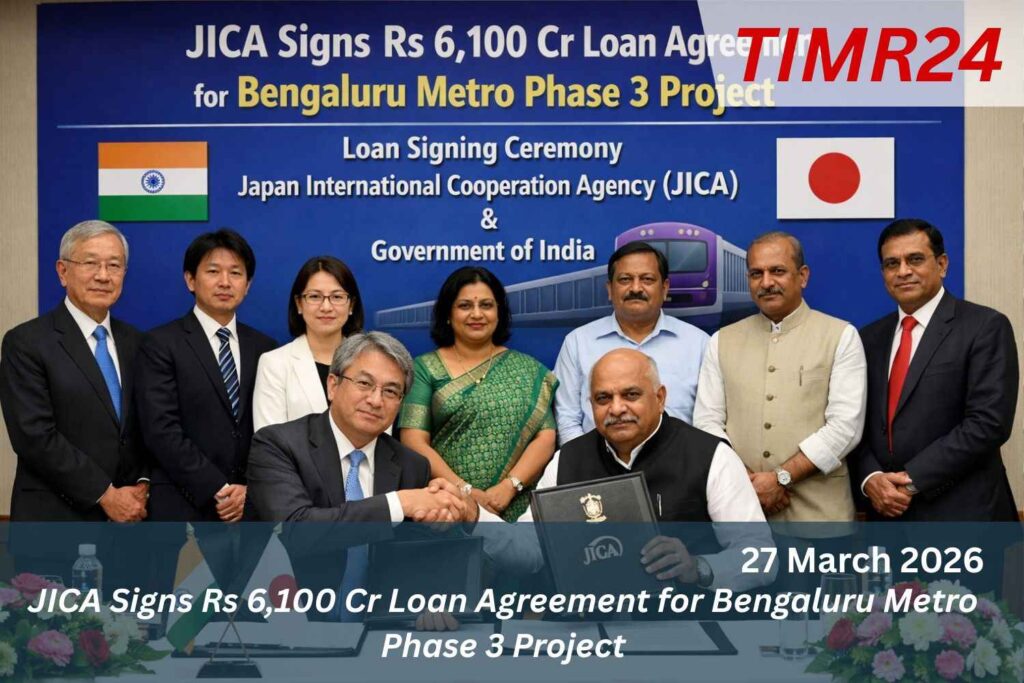
JICA Japan International Cooperation Agency has agreed to loan Rs 6,100 crore to the Government of India for Phase 3 (I) of the Bengaluru Metro Rail Project. This phase will develop 44.65 km of metro lines with 31 elevated stations, focusing on key corridors to enhance the city’s mass rapid transit network. The project aims to meet increasing traffic demands, improve urban mobility, reduce congestion, and promote transit-oriented development, ultimately enhancing connectivity and supporting sustainable urban growth in Bengaluru.
Long-Standing Partnership Between India
The recent agreement between the Japan International Cooperation Agency and the Government of India marks a significant milestone in the evolution of urban transport infrastructure, particularly in the fast-growing city of Bengaluru. The ₹6,100 crore loan sanctioned for the Bengaluru Metro Phase 3 reflects not just financial support but also a long-standing partnership between India and Japan in developing sustainable and efficient urban mobility solutions. As Bengaluru continues to expand both economically and demographically, the need for a robust public transportation system has become more critical than ever. This project is expected to address that demand.
While setting new benchmarks in metro rail development The Bengaluru Metro Phase 3 project is designed to significantly enhance connectivity across the city, particularly in areas that are currently underserved by mass transit systems. With increasing traffic congestion and rising pollution levels, the expansion of metro rail networks has become a necessity rather than a luxury. The Phase 3 expansion will integrate seamlessly with the existing metro corridors, allowing smoother transit for daily commuters. This integration will not only reduce travel time but also improve the overall efficiency of the city’s transport ecosystem. The project is expected to benefit lakhs of passengers daily, making commuting faster, safer, and more reliable.
Bengaluru Metro Phase 3 Project
One of the key highlights of this agreement is the involvement of JICA, which has consistently supported infrastructure development projects across India. Their expertise in funding and implementing large-scale urban transport systems ensures that the Bengaluru Metro Phase 3 project will adhere to global standards of quality, safety, and sustainability. The loan agreement also indicates confidence in India’s infrastructure growth story and highlights the importance of international collaboration in achieving developmental goals. JICA’s involvement brings advanced Japanese technology and project management practices into the execution phase, which can significantly enhance project outcomes.
From an environmental perspective, the Bengaluru Metro Phase 3 project aligns with India’s commitment to reducing carbon emissions and promoting sustainable development. Metro rail systems are significantly more energy-efficient compared to traditional road-based transport. By encouraging people to shift from private vehicles to public transit, the project will contribute to lowering greenhouse gas emissions and improving air quality in the city. This is especially important for Bengaluru, which has been facing increasing pollution challenges due to rapid urbanization and vehicular growth.
Another important aspect of the project is the adoption of advanced technologies. Modern metro systems are equipped with features such as automated signaling, energy-efficient trains, and smart ticketing solutions. These innovations not only enhance passenger convenience but also improve operational efficiency. The integration of digital technologies will make commuting more seamless, with options like mobile-based ticketing and real-time tracking of train schedules. Such features are expected to attract more users to the metro system, further reducing dependency on private vehicles.
Government To Undertake Large-Scale Infrastructure Projects
The funding structure of the ₹6,100 crore loan also deserves attention. Loans from agencies like JICA typically come with favorable terms, including low interest rates and long repayment periods. This makes it easier for the government to undertake large-scale infrastructure (India) projects without putting excessive pressure on public finances. The financial model ensures that the project remains viable while delivering long-term benefits to the city and its residents. Moreover, such funding arrangements encourage transparency and accountability in project execution, as international agencies maintain strict monitoring standards.
The Bengaluru Metro Phase 3 project is also expected to play a key role in urban planning and development. Efficient public transport systems influence the way cities grow, promoting planned development and reducing urban sprawl. With better connectivity, people can live farther from their workplaces without compromising on commute time. This helps in decongesting city centers and promotes balanced regional development. The metro corridors often become hubs of economic activity, attracting commercial establishments, residential projects, and social infrastructure In addition to its immediate benefits, the project sets a precedent for future metro expansions in other Indian cities.
Infrastructure Development The Bangalore Metro Rail
As urban populations continue to grow, the demand for efficient public transport systems will only increase. The successful implementation of Bengaluru Metro Phase 3 can serve as a model for similar projects across the country. It highlights the importance of strategic planning, international collaboration, and sustainable practices in infrastructure development the Bangalore Metro Rail Corporation Limited portal. These platforms provide authentic and updated information about the project, including timelines, routes, and implementation progress. Such DoFollow links are valuable for readers who want to explore verified data and stay informed about project developments.
The ₹6,100 crore loan agreement between JICA and India for the Bengaluru Metro Phase 3 project represents a major step forward in urban infrastructure development. It underscores the importance of sustainable transport solutions in addressing the challenges of rapid (India) urbanization. With its focus on efficiency, sustainability, and technological innovation, the project is poised to transform the way people commute in Bengaluru. As the city moves towards becoming a global economic hub, investments in infrastructure like this will play a crucial role in shaping its future.
Q1. What is the JICA loan for?
It is a ₹6,100 crore loan by Japan International Cooperation Agency for the Bengaluru Metro Phase 3 expansion.
Q2. Which city will benefit from this project?
The metro expansion will benefit commuters in Bengaluru.
Q3. What is the main objective of Phase 3?
To improve connectivity, reduce traffic congestion, and promote sustainable transport.
Q4. Who is executing the project?
The project is being implemented by Bangalore Metro Rail Corporation Limited.
Q5. How will this project impact daily commuters?
It will provide faster, safer, and more reliable travel across the city.