

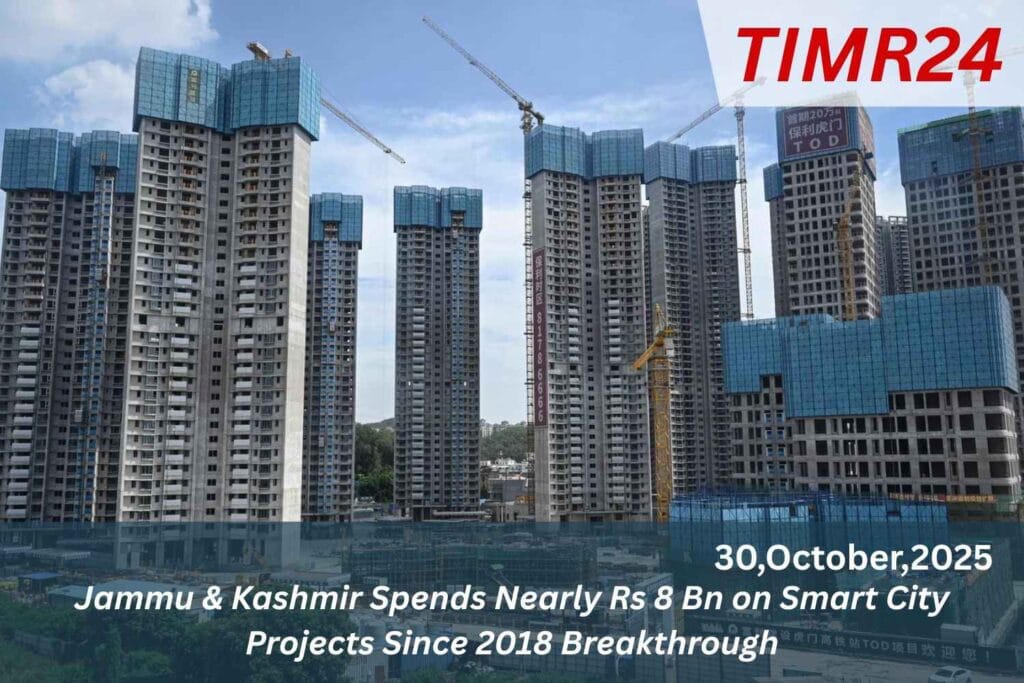
The Jammu and Kashmir Government has invested Rs 7.92 billion in Smart City projects over seven years, with annual spending rising from Rs 80.86 million in 2018-19 to Rs 2.65 billion in 2024-25. The Smart City Mission aims to establish sustainable urban centers with advanced infrastructure and quality public services. It prioritizes key areas such as water, sanitation, mobility, and affordable housing while promoting gender safety and improved healthcare. Projects emphasize mixed land use and walkable neighborhoods, fostering resilience and resource efficiency in cities Since 2018, Jammu and Kashmir have been steadily moving toward a new phase of urban.
Modernization, fuelled by the Smart Cities Mission initiated by the Ministry of Housing and Urban Affairs (MoHUA). The region, known for its breathtaking landscapes and cultural heritage, has now also become a symbol of innovation and digital transformation. Over the past few years, an estimated ₹8 billion has been invested in the ambitious Smart City projects spread across Srinagar and Jammu, the twin capitals of the Union Territory. These projects focus on improving infrastructure, mobility, governance, sustainability, and digital connectivity, marking a significant milestone in the evolution of J&K’s urban development journey.
Q1. What is the total cost of Smart City projects in Jammu & Kashmir?
Nearly ₹8 billion has been invested since 2018 in developing both Jammu and Srinagar under the Smart Cities Mission.
Q2. Which are the key focus areas of these Smart City projects?
Key focus areas include transport, digital infrastructure, waste management, and sustainable energy.
Q3. How have these projects benefited local residents?
Citizens enjoy improved mobility, cleaner surroundings, and digital access to civic services.
Q4. Are there tourism-focused Smart City projects?
Yes, projects like the Jhelum Riverfront and heritage site revitalization aim to boost tourism.
Q5. What’s next for the Smart City Mission in J&K?
Future projects target AI-driven management, eco-friendly transport, and increased digital participation.