


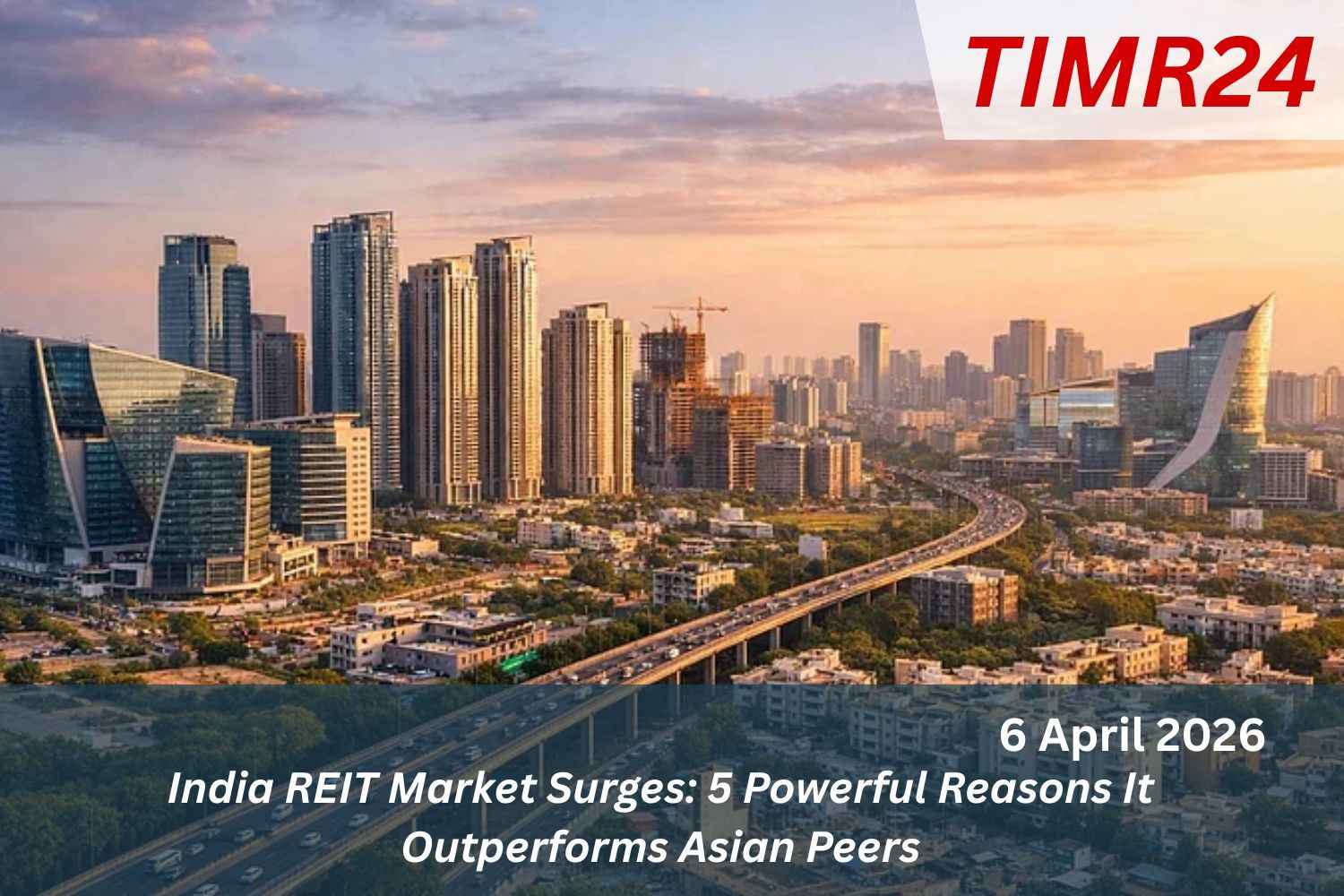









India’s real estate sector is expected to experience rapid growth across asset classes due to demographic shifts, infrastructure development, innovation, and a growing focus on technology and sustainability. The report, “Indian real estate: Fostering equity and fueling economic growth,” by Colliers and the Confederation of Real Estate Developers’ Association of India (CREDAI), outlines five structural forces: urban expansion, infrastructure development, demographic shifts, digital transformation, and sustainability imperatives. The report forecasts the trajectory of growth from the 1990s to 2047, the centennial year of India’s independence. The sector is positioned to reimagine.
India’s urban future, designing climate-resilient cities, building affordable homes, and nurturing ecosystems that foster innovation and inclusivity. The sector is expected to scale into a USD 5-10 trillion market by 2047. India’s real estate sector is on the brink of an unprecedented transformation, with projections indicating that office and industrial assets in India will surpass 2 billion square feet by 2047, as reported by (CREDAI) in collaboration with This remarkable growth trajectory is driven by a combination of economic expansion, urbanization, technological adoption, and increasing foreign direct investment (FDI). Metropolitan regions such as Delhi-NCR.
Mumbai, Bengaluru, Hyderabad, and Pune are expected to see the lion’s share of office development, catering to the rising demand from IT, financial services, co-working spaces, and other corporate sectors. As India positions itself as a global hub for innovation and business, developers are designing modern, sustainable, and technologically advanced office spaces to meet evolving corporate requirements. The increasing preference for hybrid and flexible workspaces post-pandemic has also reshaped the design, functionality, and location strategies of office developments Industrial real estate, meanwhile, is witnessing a dynamic surge fuelled by logistics, manufacturing.
And warehousing needs. Strategic initiatives such as have significantly enhanced connectivity and reduced operational costs for industries, encouraging large-scale industrial park development. States like Gujarat, Maharashtra, Tamil Nadu, and Karnataka are emerging as preferred destinations for industrial investment due to their established infrastructure, policy support, and proximity to ports and transport hubs. Tier-2 and tier-3 cities including Lucknow, Jaipur, Coimbatore, and Surat are gradually gaining attention for industrial development as businesses look to optimize costs while accessing growing regional markets. With India’s manufacturing sector.
Expanding under the Make in India initiative, industrial real estate is becoming an essential pillar of the country’s economic growth story The evolution of office spaces in India is no longer limited to square footage alone. Modern corporate tenants now seek smart buildings, energy-efficient infrastructure, integrated amenities, and wellness-focused environments. Developers are increasingly implementing green building practices, integrating solar energy, efficient HVAC systems, and rainwater harvesting, in line with the standards set by These sustainable practices not only reduce operational costs but also enhance corporate social responsibility credentials, making.
Properties more attractive to global tenants. Furthermore, co-working solutions, flexible office layouts, and community-centric designs are reshaping the way businesses approach space utilization, ensuring adaptability in a rapidly changing work culture Investment in India’s office and industrial real estate is buoyed by a supportive regulatory environment and favourable government policies. The introduction of the Real Estate Regulatory Authority (RERA) has significantly increased transparency, accountability, and trust between developers and investors. FDI reforms, along with tax incentives and streamlined approval processes, have further enhanced India’s.
Attractiveness as a destination for international real estate investors. Global institutional investors are increasingly exploring joint ventures with domestic developers, facilitating knowledge transfer, adherence to international standards, and innovative design solutions. For comprehensive data on investment trends, the provides detailed insights into sectoral growth and policy updates Urban planning and infrastructure development are crucial factors driving the real estate landscape. India’s urban population continues to expand, necessitating modern office and industrial spaces integrated with robust transport and logistics networks.
Cities like Bengaluru and Hyderabad are emerging as tech and innovation hubs, attracting significant office space demand. Similarly, Mumbai’s financial districts and Delhi-NCR’s commercial corridors remain pivotal for office development, with a focus on smart city initiatives and enhanced public infrastructure. The expansion of metro networks, expressways, and industrial clusters ensures seamless connectivity, improving the overall investment climate. For more information on urban development policies, refer to The synergy between developers, industry bodies, and consultancies like CREDAI and Colliers ensures that India’s real estate growth aligns with international.
Benchmarks in design, sustainability, and operational efficiency. Collaborative efforts are focusing on creating integrated townships, business parks, and industrial clusters that incorporate digital technologies, smart logistics, and environmentally responsible practices. This holistic approach is expected to generate employment opportunities, attract foreign investment, and support the long-term economic objectives under Viksit Bharat 2047, India’s vision for a developed and sustainable economy. Internal link reference: learn more about similar initiatives on our (Real Estate) Regional diversity continues to shape the real estate sector’s evolution. While metropolitan cities dominate.
Office development, industrial expansion is widely distributed across several states. Gujarat’s industrial hubs, particularly around Ahmedabad and Surat, are growing rapidly due to favourable policies and strong logistics connectivity. Maharashtra, with regions like Pune and Navi Mumbai, is attracting both office and industrial investments. Tamil Nadu and Karnataka offer strategic advantages for manufacturing and warehousing, further diversifying the industrial footprint. Tier-2 cities are also emerging as attractive destinations for cost-effective industrial and logistics projects, ensuring balanced regional growth. Internal link reference: explore our.
Technological adoption plays a key role in shaping India’s real estate growth trajectory. The integration of protect solutions, including smart building management, IoT-enabled infrastructure, predictive analytics, and digital leasing platforms, is streamlining operations and enhancing asset efficiency. Industrial parks increasingly leverage automation, robotics, and AI-powered logistics to optimize productivity and reduce operational risks. Similarly, office developments are integrating advanced security systems, energy management tools, and tenant experience apps, creating a seamless ecosystem for businesses and workers. External resource for technology integration in real estate.
Sustainability, resilience, and long-term economic planning are central to India’s vision of scaling its real estate assets beyond 2 billion square feet by 2047. The alignment of government initiatives, private sector investment, and international collaboration is fostering a dynamic ecosystem conducive to growth, innovation, and environmental stewardship. India’s ability to balance rapid urbanization with sustainable design, efficient infrastructure, and high-quality industrial and office spaces positions the country as a leading real estate growth destination globally. Internal reference: check our for strategies implemented across commercial and industrial sectors.
In conclusion, India’s real estate sector is set to undergo a transformative journey over the next two decades, driven by economic growth, policy support, technological innovation, and sustainability imperatives. The target of exceeding 2 billion sq ft in office and industrial assets by 2047 reflects not only the scale of opportunity but also India’s commitment to creating a modern, resilient, and globally competitive real estate ecosystem. With metropolitan hubs leading the office space boom and industrial corridors expanding across strategic regions, the sector is poised to deliver immense value to investors, developers, and businesses alike, while contributing significantly to India’s broader vision of Viksit Bharat 2047.
Q1. What is the projected growth of India’s office and industrial real estate by 2047?
India is expected to surpass 2 billion sq ft in combined office and industrial assets by 2047, reflecting rapid urban and industrial expansion.
Q2. Which cities are leading India’s office real estate growth?
Delhi-NCR, Mumbai, Bengaluru, Hyderabad, Pune, and Chennai are key hubs driving office space development.
Q3. Which regions are driving industrial real estate in India?
Strategic industrial corridors like DMIC, Gujarat, Maharashtra, Tamil Nadu, and Karnataka are emerging as industrial growth hubs.
Q4. How is sustainability influencing India’s real estate sector?
Developers are prioritizing green buildings, energy-efficient systems, and ESG-compliant infrastructure for long-term growth.
Q5. What role do global investors play in India’s real estate market?
Foreign investors are actively collaborating with domestic developers, bringing capital, global practices, and technological expertise.