










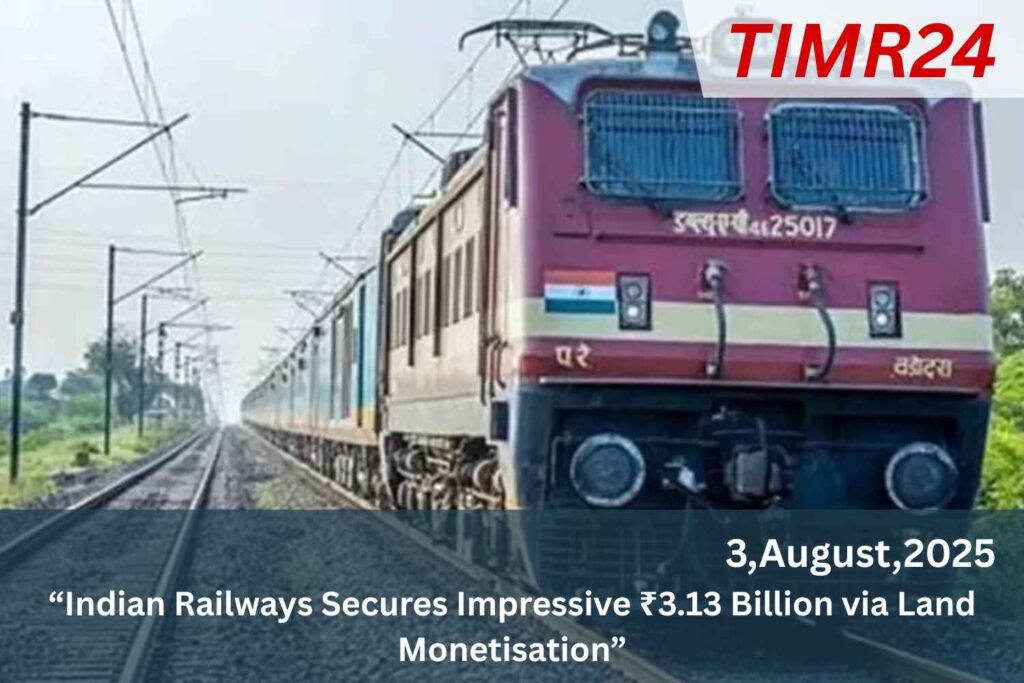
Indian Railways earned Rs 3.13 billion in FY25 from monetizing its land for commercial use, a 16% increase from the previous year. The company owns around 490,000 hectares of land, with only 1% being used for commercial purposes. However, income from land and other sources makes up only 1.1% of total revenue. The Rail Land Development Authority faces criticism for slow execution and coordination challenges with state governments and local bodies. A 2023 parliamentary committee recommends increased private sector involvement, a phased redevelopment strategy, and prioritization based on passenger footfall and connectivity.
Indian Railways has earned a significant ₹3.13 billion through land monetisation as part of its asset monetisation strategy under the National Monetisation Pipeline (NMP). The initiative, led by the Railway Land Development Authority (RLDA), focuses on leasing surplus land for commercial and infrastructure development, thereby generating non-fare revenue and reducing dependency on passenger and freight income. This strategy is aligned with the government’s broader plan to unlock the value of public assets to support infrastructure investment. For more on the National Monetisation. (NITI Aayog’s).
Mechanism of Land Monetisation
The ₹3.13 billion was earned primarily through the long-term leasing of railway land parcels to private and public sector entities for real estate, warehousing, and logistics development. RLDA has been conducting e-auctions and inviting bids for land across metro cities and tier-2 towns. These leased plots are typically allotted for 45 to 99 years, depending on project nature. Details about ongoing RLDA land tenders and auction results are available on.
Key Locations and Projects
Major parcels monetised were located in strategic railway towns such as Delhi, Lucknow, Secunderabad, and Chennai. Several of these lands are being developed into commercial hubs, office spaces, and multi-modal logistics parks. This not only ensures optimal use of idle land but also supports the growth of urban infrastructure and job creation in these regions. For example, a significant lease deal was finalized for land near New Delhi Railway Station under the Smart Station redevelopment scheme.
Revenue Diversification and Future Plans
This ₹3.13 billion is just the beginning, as Indian Railways has a larger plan to monetise over 3,000 acres of land in phases. With more than 43,000 hectares of surplus land across the country, the monetisation program is expected to become a major revenue stream. The plan includes leasing land for renewable energy projects, public-private partnership (PPP) infrastructure, and transit-oriented development. Updates on monetisation targets can be tracked.
Private Sector Participation and Policy Support
The initiative has received keen interest from private developers, real estate firms, and warehousing companies. Policy reforms such as revised General Conditions of Lease (GCL) and single-window clearance systems have further eased the process. These reforms aim to attract credible investors and improve transparency in land allocation. Additionally, monetisation is being promoted in conjunction with urban transport projects and freight corridor expansions. (Railways)
Conclusion
Indian Railways’ ₹3.13 billion earning through land monetisation marks a significant step in its journey toward self-sustainability. By transforming idle land into productive assets, the railways are not only boosting revenues but also contributing to urban development and economic activity. With policy clarity and digital auctioning in place, the momentum is expected to grow in coming years.
Q1. What is land monetisation by Indian Railways?
It involves leasing surplus railway land to private or public entities for commercial, infrastructure, or logistics development.
Q2. How much revenue has Indian Railways generated through this initiative?
Indian Railways has earned ₹3.13 billion so far through its land monetisation efforts.
Q3. Who manages the land monetisation process?
The Railway Land Development Authority (RLDA) is responsible for planning and executing land monetisation.
Q4. What types of projects are developed on leased railway land?
Projects include commercial complexes, office spaces, logistics parks, and station redevelopment zones.
Q5. How long are the lease terms for monetised railway land?
Lease terms typically range from 45 to 99 years, depending on the type and purpose of the project.