













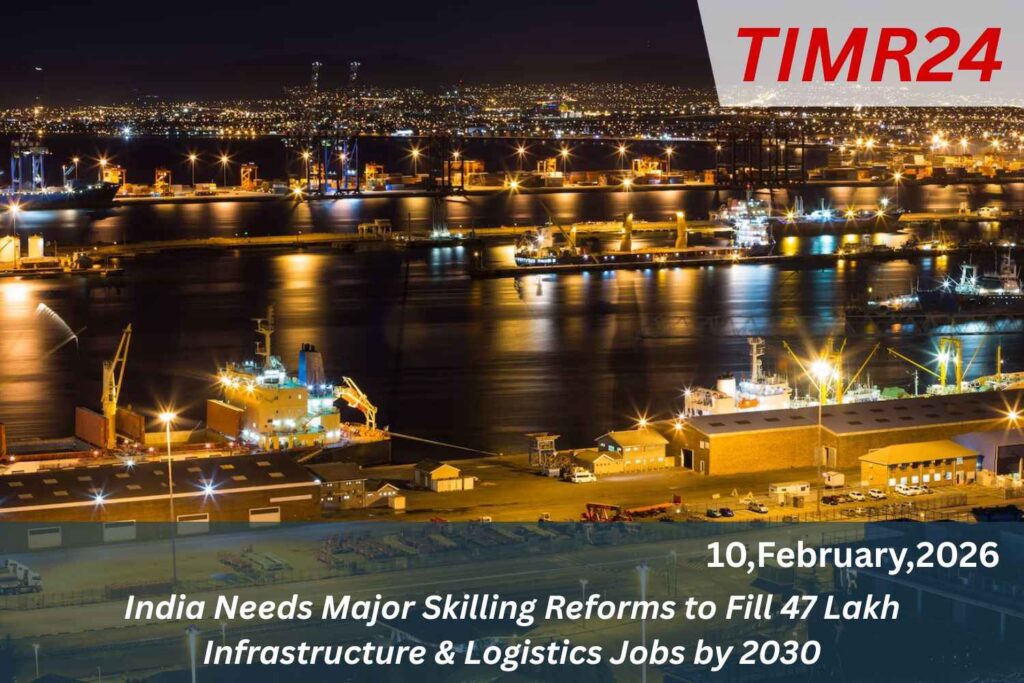
India’s logistics sector experienced a 10.8% net employment growth in the latter half of 2025, with a projected need for an additional 4.7 million workers by 2030 due to expansion in freight, warehousing, and supply chain functions. Ravikanth Yamarthy, CEO of the Logistics Sector Skill Council (LSC), highlighted the necessity for significant skilling reforms to develop a digitally savvy workforce at LogiMAT India 2026. Furthermore, Shyam Jagannathan, Director General of Shipping, stressed the importance of increasing employment opportunities for women in logistics, recognizing their potential to drive sector growth. The event, backed by over 15 international associations, aims to bridge.
Rapid Modernization And Global
The skills gap by encouraging upskilling through certification programs and hands-on training, while showcasing over 350 global brands from 10 countries India stands at a pivotal moment in its economic journey where the promise of rapid modernization and global competitiveness hinges not just on capital investment but on the availability of a skilled workforce ready to meet emerging demands, and nowhere is this more evident than in the ambitious projection that by 2030, the Infrastructure & Logistics sector will require an estimated 47 lakh skilled professionals to build and sustain the nation’s transportation networks, industrial corridors, and supply chain.
Ecosystems yet the urrent India reveals a stark mismatch between the skills produced by educational and vocational systems and the specific competencies required by modern infrastructure and logistics jobs, from advanced machinery operation and project management to digital tracking systems and sustainable logistics planning, forcing employers to either settle for sub-optimal talent or outsource to foreign specialists, which ultimately undermines India’s competitiveness. The root of this skills gap ties back to systemic issues in primary and secondary education, where curricula have traditionally emphasized theoretical learning over practical.
Increasingly Central
Application a problem that permeates into higher education and vocational training, leaving many graduates unprepared for the real-world challenges of project execution, safety regulation compliance, and the integration of digital tools that are increasingly central to warehouse automation, GPS-enabled fleet management, IoT sensors for inventory tracking, and analytics for supply chain optimization are no longer futuristic add-ons but core requirements for efficient logistics management, yet there remains a dearth of certified professionals trained in these technologies across.
The country Compounding this issue is the fragmentation of existing vocational programs, which are often delivered in silos by disparate institutions with varying standards, making it difficult for employers to assess skill quality and for trainees to navigate pathways from classroom to career a gap that the upcoming by proposing a unified framework that aligns curricula with industry needs and introduces standardized certifications recognized across sectors, including infrastructure development, transportation engineering, and multimodal logistics hubs. Without a coordinated approach to skilling.
Trillion Economy May Fail To Ensure
India risks a dual challenge: while infrastructure projects may be sanctioned and funded, they may stall or suffer inefficiencies due to a lack of capable human capital, and logistics networks which are central to India’s goal of becoming a $5 trillion economy may fail to ensure the speed, reliability, and cost-competitiveness that global trade demands. The consequences of inaction extend beyond numbers on a balance sheet; millions of job opportunities worth upward of 47 lakh roles could translate into chronic unemployment or underemployment if workers are not equipped with the right skills at the right time, intensifying socioeconomic disparities and slowing.
Inclusive growth A significant part of the solution lies in redesigning the skill development ecosystem to promote educational institutions and training providers co-create programs with logistics companies, construction firms, port authorities, and tech service providers so that learners receive hands-on exposure to real projects, technologies, safety protocols, and performance expectations from day one. This collaboration can also support the development of apprenticeship pipelines that serve as bridges from training to employment, particularly for young adults entering the workforce and mid-career workers seeking reskilling.
Low-Growth Opportunities
Opportunities in response to automation and digital transformation. Another key element of reform is to elevate the social perception of vocational careers, shedding outdated stigmas that equate vocational training with low-wage, low-growth opportunities in reality, careers in infrastructure and logistics whether as a railway signaling technician, port operations analyst, supply chain designer, or construction project supervisor can offer stability, upward mobility, and engagement with cutting-edge tools and strategies. Governments at the central and state levels must play a facilitative role by investing in state-of-the-art skilling centers, subsidizing training for.
Underserved populations, and offering incentives to private sector partners who commit to long-term workforce development, ensuring that investments in physical infrastructure are matched by investments in human infrastructure. Importantly, the skilling reforms (India) must incorporate across every layer of training, because the future of logistics is inherently tied to digital platforms such as artificial intelligence for demand forecasting, blockchain for transparent supply chains, and cybersecurity practices to protect sensitive operational data; trainees who can navigate these digital environments will not only fill the immediate needs of 2030 but also.
Drive innovation in logistics business models and infrastructure utilization, giving Indian enterprises a competitive edge globally. At the same time, reforms should prioritize inclusive strategies to ensure that women, rural youth, and differently-abled individuals have equitable access to skill training and job opportunities, recognizing that unlocking the full potential of India’s demographic dividend requires tapping into every segment of the population, not just a select few; programs tailored with flexible learning schedules, localized languages, and accessible facilities can break down barriers that have historically kept marginalized groups on the fringes of economic participation.
Curriculum Content, Enabling Continuous
To track progress and maintain accountability, the government and industry bodies must establish robust monitoring and feedback mechanisms, capturing data on employment outcomes, employer satisfaction, wage growth, and the relevance of curriculum content, enabling continuous improvement rather than static certification models that quickly become obsolete in fast-changing sectors. The impact of such strategic and sustained skilling reforms would be transformative: by 2030, a pipeline of millions of trained professionals would not only fill the projected 47 lakh roles but also create ripple effects across allied sectors such as manufacturing, e-commerce.
Urban planning, and environmental management, catalyzing a virtuous cycle of employment, productivity, and economic resilience. Moreover, bridging the skills gap will enhance India’s attractiveness as a destination for global infrastructure investment, since international firms and investors increasingly seek locations where both physical and human capital ecosystems are robust and (India) synergistic this can elevate India’s standing in global logistics indices, reduce supply chain costs for exporters, and improve service delivery for domestic consumers. Ultimately, meeting the challenge of skilling for infrastructure and logistics is not just a sectoral imperative but a national.
One, demanding bold policy decisions, collaborative action, cultural shifts in how we value skills, and a shared commitment to preparing the workforce of tomorrow; this task, while immense, is also an opportunity to not only fill 47 lakh jobs by 2030 but to lay the foundation for a more inclusive, productive, and future-ready India that leverages its human resources as its greatest strength.
Q1. Why does India need skilling reforms for logistics and infrastructure?
India’s logistics and infrastructure sectors are projected to need 47 lakh additional workers by 2030 due to growth in freight, warehousing and supply chain operations.
Q2. What are the main barriers to filling these jobs?
Curriculum-industry misalignment, limited digital training, and regional disparities are major challenges.
Q3. How are government programs addressing this gap?
Schemes like PMKVY, NAPS, and DDU-GKY are expanding vocational skilling opportunities across sectors.
Q4. What role does digital training play?
Digital skills help workers operate modern logistics systems and automated supply chains, making them more employable.
Q5. How can India position itself as a global logistics talent hub?
By aligning training with industry needs, boosting public-private partnerships, and expanding access to digital learning.