













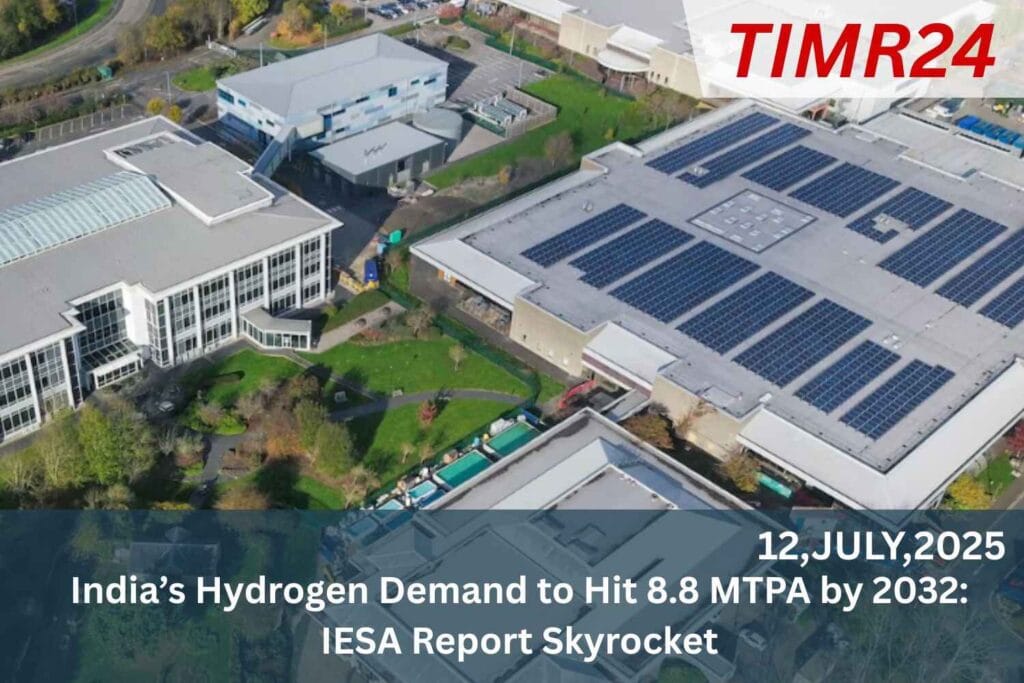
India’s demand is expected to grow at a CAGR of 3%, reaching 8.8 million tonnes per annum by 2032, according to a report by the India Energy Storage Alliance (IESA). However, the report highlights a gap between ambitious project announcements and actual progress, with only a limited number of green projects reaching Final Investment Decision or securing long-term domestic or international offtake agreements. The report also highlights that only 31% of domestic demand can be met by electrolytic and bio- supply by 2032.
The report also highlights that despite government incentives and policy support, decarbonisation challenges persist, with high hydrogen costs and regulatory barriers hindering efficiency. India is preparing for a transformative shift in its clean energy future, with hydrogen demand expected to grow to 8.8 million tonnes annually by 2032, as outlined in a report by the India Energy Storage Alliance (IESA). This projected rise aligns with India’s larger objective to reduce its carbon footprint while promoting domestic energy production from renewable resources.
The Strategic Role of in India’s Clean Energy Mission
Energy, particularly when produced using solar and wind power, is at the centre of India’s plan to decarbonize critical industries. It offers a versatile solution to reduce emissions from traditionally high-polluting sectors such as steel, cement, fertilizers, and heavy transport. The government’s proactive launch of the National Green Mission in 2023 underscores the commitment to making hydrogen an affordable and scalable energy vector.
(Internal Link: (National Green Explained)
Sectoral Growth and Industrial Transition
The report forecasts rapid adoption of hydrogen across diverse segments:
- Heavy Industry: The steel and cement sectors will benefit from Energy ability to replace coal and other fossil fuels in heat-intensive processes.
- Transportation: Energy fuel cells are emerging as viable alternatives in long-haul and freight transport, especially in buses and trucks.
- Agriculture and Fertilizers: Existing ammonia production units are set to transition from grey to green, cutting emissions drastically.
- Refineries: Hydrogen is a core input in refining operations, and moving toward cleaner sources will significantly reduce the sector’s emissions profile.
Infrastructure, Investment, and Innovation
Meeting future hydrogen demand will require building an ecosystem of electrolysers, storage systems, refuelling networks, and hydrogen pipelines. The government has earmarked over ₹19,000 crore to fund technology pilots, electrolyser production, and regional hydrogen hubs. Key industry players are also investing in R&D, pilot deployments, and large-scale green hydrogen plants. This ecosystem is crucial for achieving economies of scale and reducing costs, making hydrogen more competitive with conventional fuels.
Environmental and Policy Implications
The transition to -based systems can potentially eliminate millions of tonnes of CO₂ emissions each year, helping India fulfil its obligations under the Paris Agreement. It also enhances national energy security by reducing reliance on imported fuels. By 2032, if clean hydrogen accounts for the majority of consumption, the environmental benefits will be transformative, especially in densely populated industrial regions.
India’s Demand to Hit 8.8 MTPA by 2032, according to a recent report by the India Energy Storage Alliance (IESA), marking a significant step in the country’s clean energy transition. With green gaining traction across industries, this projected demand reflects India’s commitment to becoming a global hub for sustainable production and adoption. The forecast also aligns with national targets under the National Green Mission, which aims to boost domestic manufacturing, reduce emissions, and enhance energy security.
India’s hydrogen demand is projected to skyrocket to 8.8 million tonnes per annum (MTPA) by 2032, according to a recent study by the India Energy Storage Alliance (IESA). This sharp rise underscores the growing role of hydrogen in India’s clean energy transition, especially in hard-to-abate sectors such as steel, cement, fertilizers, and heavy transport.
The report positions hydrogen as a critical solution in India’s journey toward net-zero emissions by 2070 and supports the government’s strategic which aims to reduce dependence on imported fossil fuels and decarbonize key industries.
Why Hydrogen Matters for India
Hydrogen, particularly in its green form produced via renewable energy, offers a scalable alternative to fossil fuels. It’s non-polluting, can be stored and transported, and is versatile across multiple industrial uses. The IESA forecasts that industries currently reliant on grey hydrogen (from natural gas) will increasingly shift to green hydrogen, supported by improving electrolyser technology and policy incentives.
Sector-Wise Demand Outlook
According to IESA’s forecast, the demand will be driven by several key sectors:
- Steel: Adoption of hydrogen in Direct Reduced Iron (DRI) processes
- Fertilizers: Green hydrogen for ammonia and urea production
- Transport: Expansion of hydrogen-powered buses, trucks, and rail
- Power: Hydrogen blending in natural gas and long-duration energy storage
Conclusion
The IESA’s findings mark an inflection point for India’s energy transformation. The nation is not only targeting ambitious consumption levels but also building the necessary technological and policy frameworks to sustain it. With continued collaboration between public and private sectors, India is well-positioned to lead the global economy in the coming decade.
q1. What is India’s projected hydrogen demand by 2032?
8.8 million tonnes per annum (MTPA), as per IESA.
q2. Who released the hydrogen demand forecast?
India Energy Storage Alliance (IESA).
q3. Which sectors will drive this demand?
Steel, fertilisers, refining, transport, and power.
q4. What is green hydrogen?
Hydrogen produced using renewable energy like solar or wind.
q5. How does this support India’s climate goals?
It helps reduce emissions and supports India’s net-zero target by 2070.