





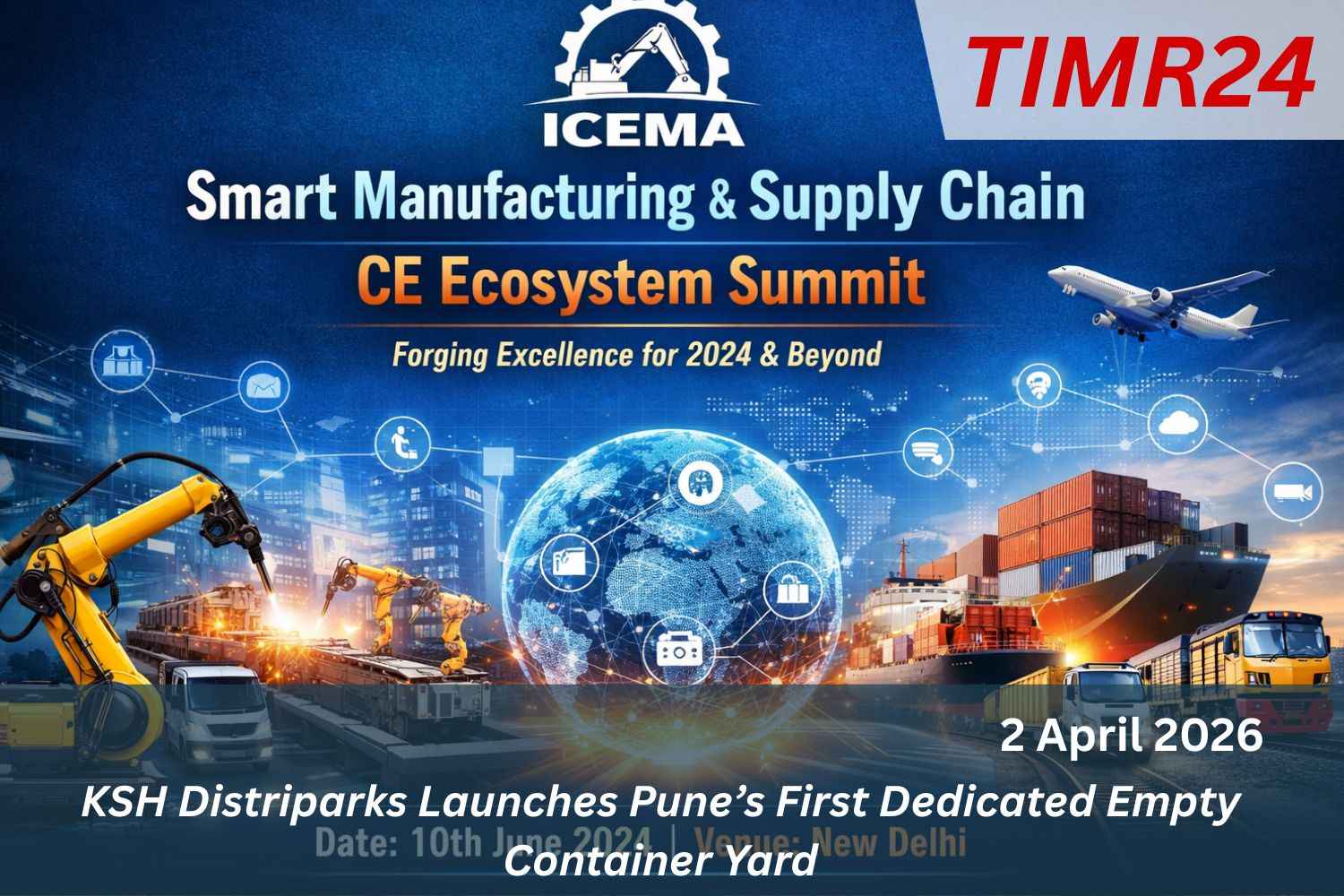






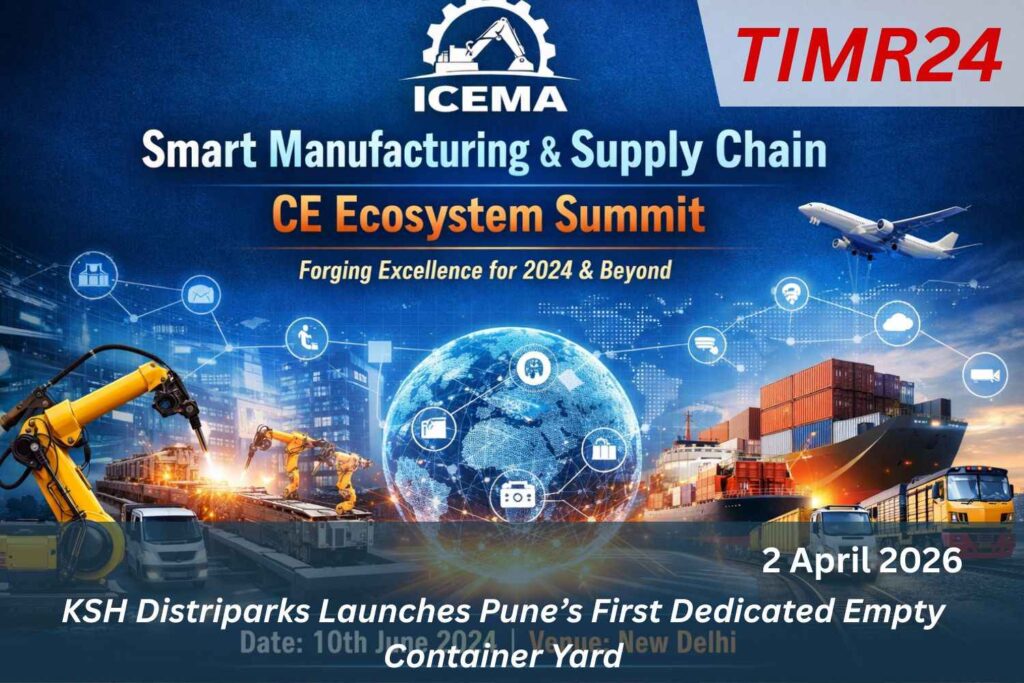
The 4th CE Manufacturing & Supply Chain Summit, organized by ICEMA, emphasized the theme “Smart, Sustainable, Self-Reliant: The New Era of the Indian CE Industry.” The event focused on creating a supportive policy ecosystem for a resilient construction equipment (CE) industry, forecasting a growth of around 15% CAGR for the Indian CE market, expected to reach USD 40 billion by FY35, driven by government infrastructure initiatives. Key speakers highlighted the necessity of industry-government collaboration, the importance of domestic value addition, and the pivotal role of MSMEs in economic growth. Discussions also covered technology adoption, capacity.
Enhancement, and alignment with global standards to boost competitiveness. The summit emphasized digitalization, AI, and sustainability as crucial for the industry’s future, fostering dialogue on needed policy and industry interventions to realize India’s CE sector potential India’s construction equipment industry is entering a defining decade. At the intersection of digital disruption, policy momentum, and global supply chain reconfiguration, the ICEMA CE Ecosystem Summit has emerged as the most consequential annual gathering for everyone who builds, moves, or powers infrastructure in this country. This is not simply a trade show or a networking event.
The Rise of Smart Manufacturing in India’s CE Sector
It is a strategic forum where the language of smart manufacturing is being translated into real factory decisions, real supplier contracts, and real competitive advantage. Smart manufacturing is no longer a buzzword reserved for automotive or electronics it has arrived decisively at the gates of India’s construction equipment industry. Across Pune, Chennai, and the emerging manufacturing belts of Rajasthan and Haryana, CE manufacturers are investing in connected production lines, machine vision quality control, and real-time operational dashboards. The ICEMA CE Ecosystem Summit serves as the annual pulse-check on how far this transformation has progressed and what gaps still demand urgent attention.
Supply Chain Visibility As A Competitive Imperative
Participants explore how sensor-driven shop floors are replacing manual inspection cycles, how AI-powered demand forecasting is cutting inventory waste, and how digital twin environments are enabling manufacturers to simulate product lifecycles before a single component is machined. One of the defining conversations at every ICEMA summit centres on supply chain visibility not as an IT upgrade, but as a survival strategy. India’s CE manufacturers have historically operated within fragmented procurement ecosystems where a single Tier-2 supplier disruption could stall an entire assembly line for weeks. The pandemic years accelerated.
The urgency of fixing this, and now the summit provides a platform where OEMs and component suppliers can openly discuss multi-tier transparency, supplier onboarding standards, and the role of blockchain in authenticating component provenance. Sessions on end-to-end supply chain management draw consistently large audiences because the problem is universal every player in the room, from a hydraulic cylinder manufacturer in Pune to a cab assembly specialist in Faridabad, has felt the pain of opacity in their upstream networks.
Component Localisation and the Make in India Imperative
India’s construction equipment industry imports a significant share of its high-precision components from advanced hydraulic pumps and electronic control units to bearing assemblies and cutting-edge telematics module into practical roadmaps for manufacturers and their supplier bases. Dedicated sessions on the Production Linked Incentive scheme, import substitution timelines, and the development of specialised component manufacturing clusters give attendees a direct line into policy intent. Internal conversations at the summit consistently reveal that localisation is not just a patriotic goal it is an economic.
One, reducing foreign exchange exposure, cutting lead times, and building defensible cost positions in an increasingly competitive global CE export market. Cross-linking these policy discussions with technology adoption pathways is what makes ICEMA’s format uniquely productive compared to other industry gatherings.
Industry 4.0 Adoption From Pilots to Scale
The honest conversation at the ICEMA CE Ecosystem Summit is about the chasm between Industry 4.0 pilots and actual scaled deployment. Dozens of India’s CE manufacturers have run successful automation pilots on single lines, implemented predictive maintenance on select machines, or deployed RFID-based work-in-progress tracking in one plant. The harder challenge scaling these interventions across the entire enterprise and through the supplier network is where the summit’s knowledge sessions become genuinely irreplaceable.
Technology partners presenting at the summit, from industrial IoT platform providers to MES vendors and system integrators, are increasingly expected to demonstrate not just capability but return on investment evidence from deployments within what summit participants are attempting on the ground in India. The gap between ambition and execution is closing but closing it faster requires exactly the kind of peer benchmarking and solution exposure that this summit provides year after year.
The Ecosystem Logic Why No CE Manufacturer Wins Alone
Perhaps the most philosophically important theme running through the ICEMA CE Ecosystem Summit is its insistence on ecosystem thinking over individual firm optimisation. A large OEM that invests heavily in a connected factory but continues to work with suppliers who cannot share digital production data has optimised only half its value chain. The summit consistently brings together OEMs, Tier-1 and Tier-2 component manufacturers, logistics providers, technology vendors, financial institutions, and skill development bodies under the same roof precisely because construction equipment competitiveness is an ecosystem outcome, not a single-company achievement.
Panel discussions on co-investment models for shared technology infrastructure, joint supplier development programmes, and standards harmonisation (India) for data exchange protocols have generated tangible post-summit follow-through. Several multi-party technology pilots and supplier digitisation programmes announced at previous ICEMA summits have gone on to become industry reference implementations. This collaborative orientation is what distinguishes the summit from purely transactional industry events.
Sustainability, Electrification, And The Next Frontier
No account of the ICEMA CE Ecosystem Summit’s strategic agenda would be complete without acknowledging the accelerating conversation around sustainable manufacturing and electrification. India’s CE industry is under dual pressure from global customers demanding decarbonised supply chains and from domestic regulatory timelines on emission standards for construction machinery. The summit is increasingly the venue where these pressures are converted into engineering and procurement priorities. Battery supply chain readiness, charging infrastructure for construction site deployment, lifecycle assessment methodologies, and sustainable material sourcing are no longer fringe sessions.
They are mainstream agenda items drawing C-suite attention. Manufacturers who treat electrification as a five-year problem are finding at the summit that their global OEM competitors are treating it as a two-year one. The velocity of change in this space means that the ICEMA CE Ecosystem Summit’s annual rhythm of bringing the whole industry together is, if anything, becoming (India) critical rather than less. Building a smart, resilient, sustainable construction equipment industry in India is a generational project and this summit is where that generation shows up, compares notes, challenges assumptions, and moves forward together.
Q1. What is ICEMA’s CE Ecosystem Summit?
ICEMA’s CE Ecosystem Summit is a key industry event focused on advancing smart manufacturing, digital transformation, and supply chain innovation in the construction equipment (CE) sector.
Q2. How does smart manufacturing benefit the CE industry?
Smart manufacturing improves efficiency, reduces costs, enhances productivity, and enables real-time data-driven decision-making using technologies like IoT, AI, and automation.
Q3. What topics are discussed at the ICEMA Summit?
The summit covers Industry 4.0, supply chain optimization, sustainability, digital logistics, automation, and future-ready manufacturing practices.
Q4. Who should attend the CE Ecosystem Summit?
Industry leaders, manufacturers, suppliers, policymakers, logistics experts, and digital transformation professionals in the construction equipment sector.
Q5. Why is supply chain innovation important in construction equipment?
It ensures faster delivery, cost control, risk management, and resilience against disruptions, improving overall project efficiency.