

















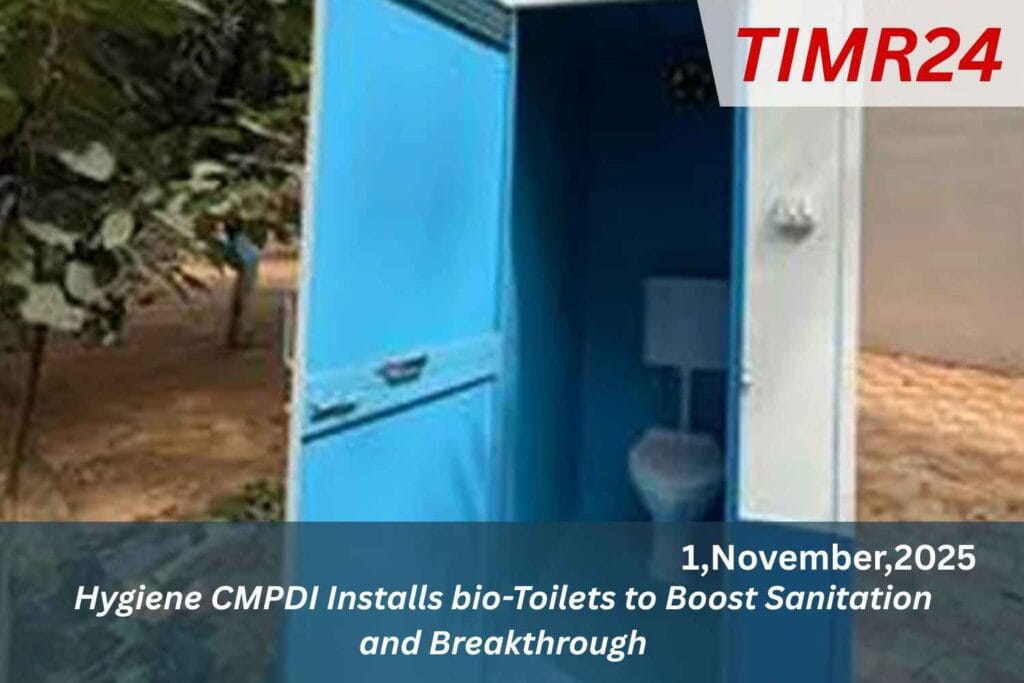
The Central Mine Planning and Hygiene Design Institute (CMPDI), a subsidiary of Coal India Limited under the Ministry of Coal, has installed six modern bio-toilets with bio-digesters across various locations in Ranchi. This initiative, part of the Special Campaign 5.0, demonstrates CMPDI’s commitment to cleanliness and sustainable sanitation, aligning with the Government of India’s Swachh Bharat Mission. The bio-toilets provide accessible and hygienic facilities, improving workplace hygiene for contractual workers and visitors, thus enhancing dignity and productivity while fostering a cleaner environment.
The Central Mine Planning and Design Institute (CMPDI), a subsidiary of Coal India Limited, has taken a groundbreaking step toward promoting hygiene and sustainability by introducing bio-toilets across its facilities and mining sites. This initiative signifies a major leap in addressing sanitation challenges in industrial and rural sectors while contributing to India’s broader environmental mission under the Swachh Bharat Abhiyan. CMPDI’s sanitation drive focuses on transforming the hygiene infrastructure of mining regions where traditional sanitation systems have long struggled to cope with large-scale operations and worker population demands.
Through this innovative move, CMPDI aims to ensure cleaner surroundings, healthier workspaces, and sustainable waste management practices that align with India’s clean energy and green development CMPDI’s installation of bio-toilets introduces a technology that revolutionizes waste management in remote and industrial areas. These bio-toilets work on a bio-digester system, which uses specially cultured anaerobic bacteria to break down human waste into harmless water and biogas. The resulting water is odorless and can be used for gardening or flushing, while the gas emitted is minimal and non-toxic. This approach eliminates the need sewage systems, septic tanks.
Or regular manual cleaning, thus ensuring a hygienic and environment-friendly sanitation model. It also aligns with the principles of circular waste economy, where waste is treated as a resource rather than a problem One of the most compelling aspects of CMPDI’s initiative is its contribution to eco-friendly industrial development. Mining and related industries are often criticized for their environmental footprint, but CMPDI’s commitment to installing bio-toilets shows a shift toward greener practices. The bio-toilet initiative significantly reduces contamination of groundwater and soil that commonly results from open defecation or poorly maintained septic systems.
By eliminating the need for conventional sewage systems, CMPDI minimizes water wastage and pollution in mining zones. This effort supports India’s Clean Environment Mission, demonstrating how industrial entities can integrate sustainability within daily operations Beyond technology, CMPDI has emphasized the importance of community involvement in achieving sanitation success. The installation of bio-toilets extends not only to CMPDI facilities but also to neighboring villages and colonies where workers and their families reside. The company has initiated awareness programs on hygiene maintenance, water conservation, and responsible waste disposal.
Improving Worker Health and Living Standards
By empowering communities to take ownership of these bio-toilet facilities, CMPDI ensures that the infrastructure remains functional and impactful in the long run. Local youth and women have been encouraged to participate in maintenance and cleanliness drives, fostering a shared sense of responsibility toward public hygiene. This approach mirrors the goals of the Swachh Bharat Mission, which emphasizes behavioural change and community-driven sanitation One of the central outcomes of CMPDI’s sanitation program is the improvement in worker health and overall living standards. Mining environments are often exposed to dust, heat, and difficult living conditions, which can compromise hygiene.
Poor sanitation can lead to outbreaks of diseases such as cholera, diarrhea, and typhoid. The bio-toilets eliminate such risks by providing clean, odor-free, and safe sanitation facilities. Workers now enjoy improved hygiene standards at workplaces, reducing absenteeism due to illness and boosting productivity. Additionally, CMPDI’s efforts to create gender-inclusive sanitation infrastructure with separate toilets for men and women reflect its commitment to equality and workplace dignity workplace health initiatives.
Technological Excellence and Innovation
The core of this initiative lies in technological innovation. CMPDI’s bio-toilets use bio-digester technology developed by the Defence Research and Development Organisation (DRDO), one of India’s most reputable scientific institutions. The system harnesses a bacterial consortium that thrives without oxygen and decomposes waste effectively. Unlike traditional septic systems, this mechanism does not require periodic cleaning, making it ideal for remote mining regions where infrastructure access is limited. Furthermore, the system produces minimal sludge and converts waste into biogas and water both of which can be reused. The initiative serves as a model for other industries looking to implement low.
Maintenance and eco-responsive sanitation technologies CMPDI’s bio-toilet initiative directly supports the United Nations Sustainable Development Goals (SDGs), particularly SDG 6 (Clean Water and Sanitation), SDG 3 (Good Health and Well-Being), and SDG 13 (Climate Action). By reducing pollution, improving health standards, and conserving water, CMPDI contributes to a more sustainable and equitable industrial future. These toilets reduce methane emissions and groundwater contamination, making them an essential component of climate-friendly industrial infrastructure. The initiative also contributes to SDG 9 (Industry, Innovation, and Infrastructure).
By showcasing how innovation can solve practical sanitation problems in heavy industries The environmental impact of CMPDI’s project extends beyond its immediate benefits. By adopting bio-toilets, CMPDI reduces the carbon footprint of its facilities, lowers water consumption, (Railways) and prevents the contamination of nearby water bodies. Economically, this initiative cuts long-term maintenance and cleaning costs associated with traditional toilets. The reduction in disease and absenteeism also translates into improved workforce efficiency and lower healthcare expenses. Moreover, the biogas generated from the digestion process can be utilized for low-energy.
Policy Alignment and Government Collaboration
Applications, adding a renewable energy dimension to this sanitation model. Such integrated systems demonstrate how waste management, energy recovery, and hygiene improvement can coexist to achieve sustainability in industrial contexts. CMPDI’s sanitation mission aligns closely with India’s policy framework for sustainable development. The Swachh Bharat Mission, National Bio-Energy Policy, and National Clean Air Programme all promote waste treatment technologies that reduce pollution and promote green living. By incorporating these policies into its corporate social responsibility (CSR) strategy, CMPDI shows how public sector enterprises can drive national sustainability agendas.
The company also collaborates with local authorities, NGOs, and research institutions to expand the reach and efficiency of its sanitation systems. This public-private collaboration ensures the initiative’s long-term scalability and replicability across other industrial sectors CMPDI’s bio-toilet installation is not just a corporate initiative it is a blueprint for sustainable hygiene and environmental responsibility. It demonstrates how industrial entities can balance economic activity with ecological consciousness and social welfare. By introducing advanced sanitation technology, engaging local communities, and promoting eco-friendly practices, CMPDI has set an example for other public and private organizations in India.
The initiative’s success reflects the transformative power of innovation when aligned with human well-being and environmental preservation. As India continues its journey (MMRC) toward clean energy and sustainable infrastructure, such models will play a vital role in ensuring that growth is both inclusive and green.
Q1. What is CMPDI’s bio-toilet initiative about?
It’s a sanitation project installing eco-friendly bio-toilets in CMPDI facilities and nearby communities.
Q2. How do bio-toilets help the environment?
They convert waste into water and gas, reducing pollution and conserving water.
Q3. Where are CMPDI’s bio-toilets installed?
At mining sites, residential colonies, and offices under CMPDI.
Q4. Which technology is used in CMPDI’s bio-toilets?
DRDO’s bio-digester technology powers the waste treatment process.
Q5. How does this initiative support Swachh Bharat Mission?
It improves sanitation infrastructure and aligns with India’s clean and green development goals.