













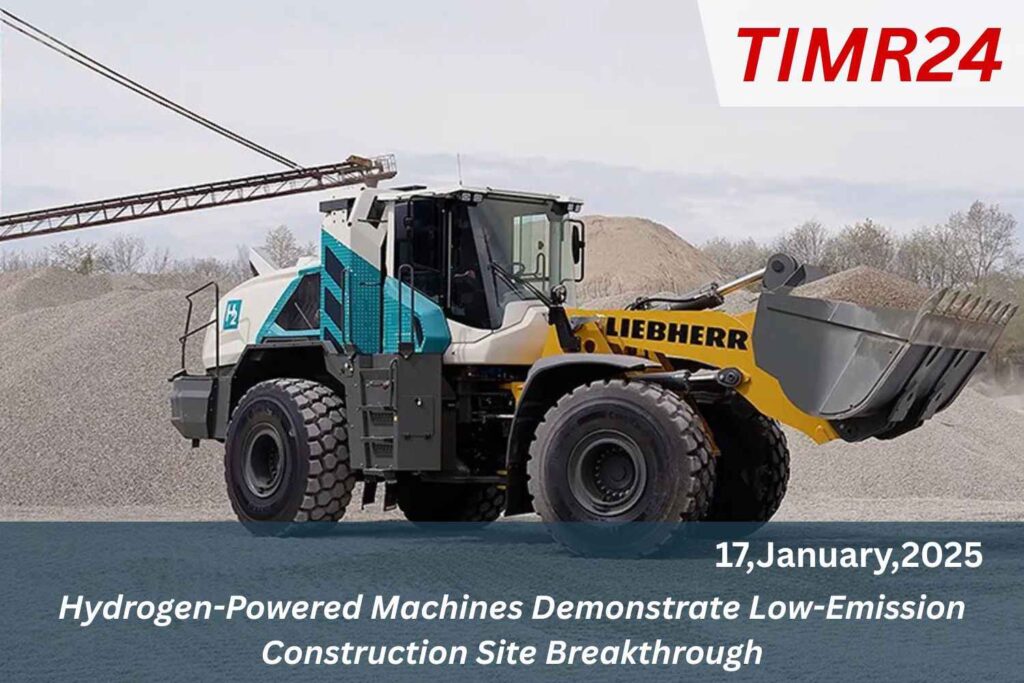
Liebherr, MAN, and Daimler Truck demonstrated a low-emission construction site near Munich, powered entirely by hydrogen engines. This deployment under the Hydrogen Engine Alliance showcased hydrogen as a viable, CO₂-free alternative for construction and logistics. The demonstration involved a production-ready MAN hTGX truck and a -powered development vehicle based on the Mercedes-Benz Arocs, successfully performing tasks comparable to diesel equipment but with lower emissions. The hydrogen-powered Liebherr wheel loader can complete a full shift and be refueled in 10-15 minutes, highlighting its integration into current workflows.
Global Construction Industry
However, broader adoption hinges on establishing a comprehensive infrastructure and competitive pricing in Europe The global construction industry is entering a decisive transformation phase as hydrogen-powered machines begin to demonstrate real-world performance at low-emission construction sites. Traditionally dependent on diesel-driven heavy equipment, construction activities have long been associated with high carbon emissions, excessive noise, and air pollution. However, the emergence of hydrogen fuel cell and hydrogen combustion-based machinery is reshaping how infrastructure projects are planned and executed.
These machines operate with near-zero tailpipe emissions, producing only water vapor as a by-product, making them a critical solution for achieving sustainability targets across urban and industrial developments-powered construction machines include excavators, wheel loaders, cranes, generators, and site transport vehicles that utilize hydrogen either through fuel cells or-ready internal combustion engines. Unlike conventional equipment, these machines maintain the same operational efficiency while significantly reducing greenhouse gas output. According to global energy research bodies such as the International Energy Agency, hydrogen is expected to.
Dramatic Reduction In Carbon
Play a major role in decarbonizing hard-to-abate sectors, including construction and heavy machinery, as infrastructure and production scale improves One of the most notable advantages of hydrogen-powered construction sites is the dramatic reduction in carbon (India) dioxide and nitrogen oxide emissions. In urban areas where construction activity directly impacts public health, the shift to hydrogen machines helps improve air quality and aligns with stricter environmental regulations. Cities aiming for net-zero targets are increasingly encouraging contractors to adopt low-emission machinery to minimize environmental impact equipment enables construction companies to.
Comply with green building standards while maintaining productivity, especially in large infrastructure and smart city projectsMBeyond emissions powered machines significantly reduce noise pollution at construction sites. Diesel engines generate high noise levels, often leading to restrictions on working hours in residential or commercial zones fuel cell systems operate much more quietly, allowing extended work schedules without disturbing nearby communities. This advantage is particularly relevant for night-time infrastructure upgrades, metro construction, and hospital or airport expansion projects where noise control is essential.
Modern Hydrogen Engines Deliver
From an operational perspective, hydrogen construction machinery offers performance comparable to conventional equipment. Modern hydrogen engines deliver high torque, fast refueling times, and extended operational ranges, addressing common limitations faced by battery-electric alternatives. Refueling hydrogen machines typically takes only a few minutes, ensuring minimal downtime on large construction sites. As hydrogen refueling infrastructure expands, especially near industrial corridors and logistics hubs, the practicality of hydrogen equipment continues to increase.
The adoption of powered machines also supports long-term cost optimization for construction companies. While the initial investment may be higher, operational savings emerge through reduced fuel costs, lower maintenance requirements, and potential government incentives for clean energy adoption. Many countries are offering subsidies, tax benefits, and pilot program support for hydrogen-based equipment as part of national clean energy missions. These policy measures accelerate market adoption and reduce financial risk for early adopters Hydrogen construction sites also contribute positively to corporate sustainability goals and brand positioning.
Green Financing, ESG-Linked Funding
Developers and contractors using machinery can showcase their commitment to environmental responsibility, which is increasingly valued by investors, regulators, and project owners. Sustainable construction practices enhance eligibility for green financing, ESG-linked funding, and international infrastructure partnerships. As highlighted by global clean energy platforms such as the World Economic Forum adoption is becoming a strategic differentiator in infrastructure development Technological innovation continues to advance machinery capabilities. Equipment manufacturers are investing heavily in engine optimization, on-site.
Storage solutions, and systems that combine with electric power. Pilot projects across Europe and Asia have already demonstrated successful hydrogen-powered construction operations, proving reliability under demanding conditions. These advancements signal a future where machines become standard across large-scale construction projects In the Indian context, powered construction aligns closely with national sustainability objectives and infrastructure growth plans. With major investments in highways, railways, urban redevelopment, and industrial corridors, the construction sector has a unique opportunity to.
Technology Matures, Costs Decline
Integrate clean energy solutions at scale. Green initiatives and public-private partnerships are expected to play a crucial role in building localized supply chains, supporting cleaner construction practices nationwide powered machines are not merely an alternative fuel option but a foundational element of the future construction ecosystem. As technology matures, costs decline, and infrastructure expands, low-emission construction sites will transition from pilot demonstrations to mainstream adoption. The integration of machinery with digital site management, automation, and smart energy systems will further enhance.
Efficiency, safety, and sustainability across the construction lifecycle powered machines are redefining construction site operations by delivering low-emission performance without compromising productivity. They represent a powerful solution for meeting environmental regulations, improving (India) community impact, and future-proofing infrastructure development. As global momentum toward clean energy accelerates driven construction sites stand as a clear indicator of how innovation and sustainability can move forward together.
Q1. What are powered construction machines?
Hydrogen-powered machines use hydrogen fuel cells or ready engines to operate heavy construction equipment with minimal emissions.
Q2. Do machines produce zero emissions?
Most fuel cell machines emit only water vapor, making them near-zero emission at the site level.
Q3. Are machines suitable for large projects?
Yes, they provide high power output, fast refueling, and long operational hours suitable for large-scale infrastructure projects.
Q4. Is construction equipment expensive?
Initial costs are higher, but long-term savings, incentives, and lower maintenance make them cost-effective over time.
Q5. Will hydrogen replace diesel in construction?
Hydrogen is expected to significantly reduce diesel dependence, especially in urban and environmentally sensitive projects.