










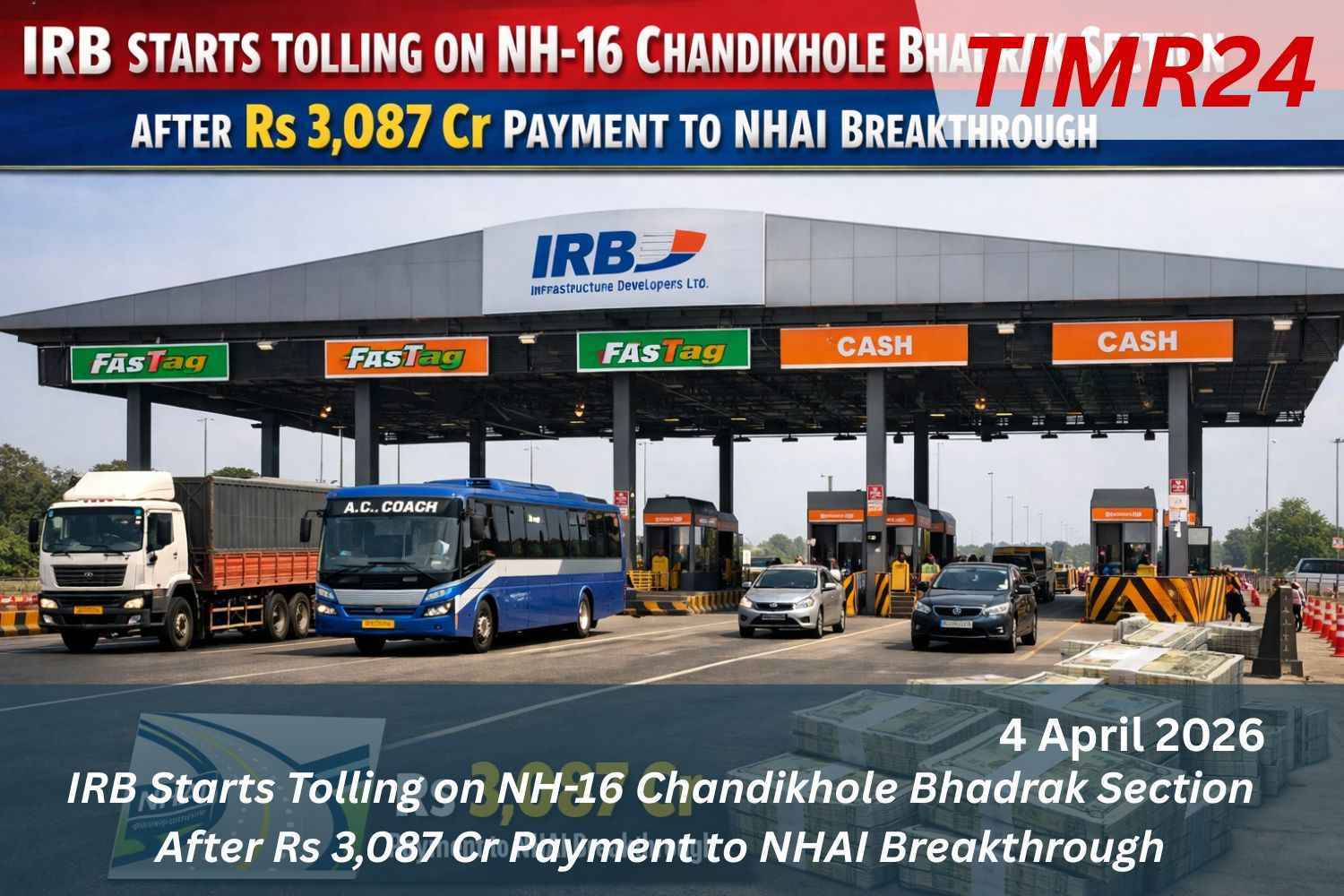



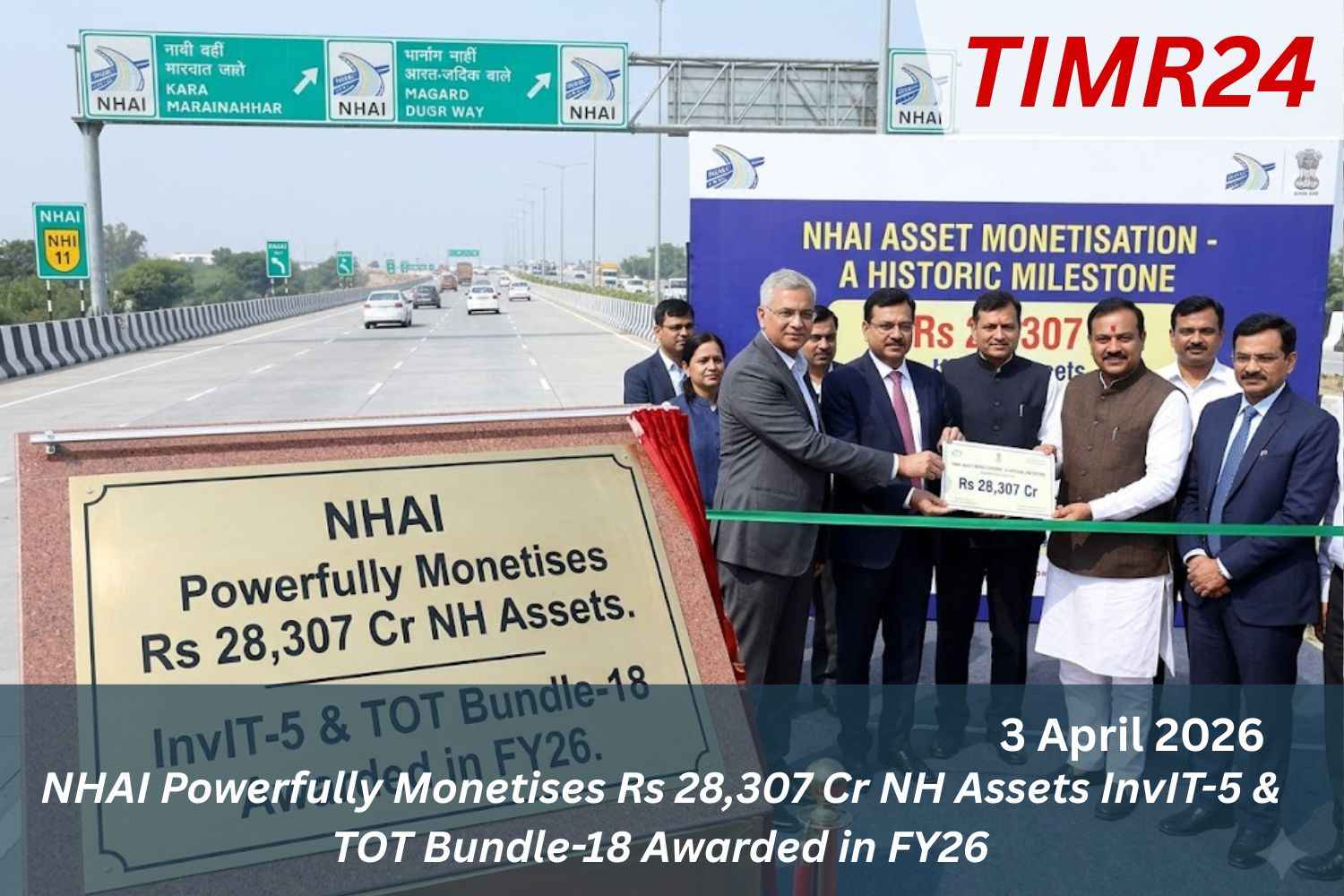


Highway Infrastructure Limited (HIL) has received a Letter of Award (LOA) from the National Highways Authority of India (NHAI) for managing the Kaza Fee Plaza on NH-16 in Andhra Pradesh. Valued at Rs 3.29 billion, this contract is HIL’s largest single work contract, covering user-fee collection and operations for one year. Following this award, HIL’s order book has increased significantly by 103%, from Rs 5.31 billion in March 2025 to over Rs 10 billion, enhancing revenue visibility and supporting long-term strategy. HIL’s Managing Director, Arun Kumar Jain, emphasized that this achievement cements the company’s capability to manage high-value projects and paves the way for accelerated growth.
World-Class Mobility Infrastructure
HIL’s recent achievement of winning a major toll operations contract from the National Highways Authority of India marks a pivotal moment in the country’s continuously modernising highway ecosystem. As India moves toward creating world-class mobility infrastructure, the role of efficient toll management companies becomes indispensable. HIL has been steadily expanding its presence across India’s national highway network, and this new contract reinforces its capabilities in handling large-scale, technology-driven operations. The contract’s significance lies not only in financial value but also in its impact on streamlining highway user experience, reducing.
Congestion, improving toll efficiency and ensuring transparent revenue collection practices. With NHAI focusing strongly on digitisation and automation, companies like HIL are expected to introduce advanced tolling mechanisms that align with India’s larger vision of smart mobility. This development is therefore a natural progression in the government’s push to enhance nationwide transportation efficiency and integrated connectivity The contract is also important because it comes at a time when India is seeing rapid expansion of its expressways, economic corridors, border roads and inter-state highway networks. With new greenfield expressways under.
Operational Discipline And Enhanced Service
The Bharatmala and Gati Shakti programs taking shape, toll collection systems must adapt to higher traffic volumes and diversified vehicle flow. HIL’s entry into this particular stretch of toll operations is expected to bring greater operational discipline and enhanced service efficiency. The company’s experience in digital tolling, FASTag-based payment systems and AI-enabled monitoring tools makes it well-suited for NHAI’s evolving expectations. FASTag penetration has already crossed 98% nationwide, and NHAI is preparing for next-generation tolling methods such as GPS-based tolling. In this context, HIL’s growing technical expertise not only meets current.
Operational demands but also positions it for future highway innovations This contract also reflects the increasing reliance of NHAI on private operators for toll plaza management, incident response systems and highway support services. Previously, toll collection was seen merely as a revenue mechanism, but today, it has evolved into a comprehensive operations model that includes safety monitoring, emergency handling, surveillance, data analytics and regular maintenance. HIL’s responsibilities under this new mandate will cover these expanded functions, requiring it to deploy trained staff, advanced digital equipment and round-the-clock monitoring.
Another important Aspect
The company’s operational readiness and strategic planning are evident in how it is preparing to integrate intelligent transportation systems across the assigned toll locations. As the government aims to enhance commuter comfort, reduce waiting times and improve road safety, HIL’s structured operational model becomes a crucial component of achieving these national goals Another important aspect is the economic impact of such contracts. Effective toll operations ensure that NHAI receives consistent revenue, which is reinvested into building new highways, upgrading existing stretches and maintaining thousands of kilometres of roads.
A professionally managed toll chain helps reduce leakages, ensures accuracy in daily collections and supports smoother cash flow for government infrastructure plans. HIL’s involvement, therefore, will have a cascading effect on India’s infrastructure growth pipeline. Better revenue inflow means quicker project completion, more robust planning and accelerated implementation of future transport corridors. In turn, this strengthens economic linkages between states and regions, improving the movement of goods and reducing logistics costs an essential element for India’s manufacturing and export competitiveness Digital transformation is another thematic area.
NHAI’s Smart Highways Initiative
That makes this contract noteworthy. Modern toll operations are heavily dependent on data analytics, cloud-based dashboards, RFID systems, ANPR (Automatic Number Plate Recognition) tools and integrated command centres. HIL has been investing consistently in these areas, allowing it to offer technology-first solutions that align with NHAI’s Smart Highways initiative. These smart systems help in real-time traffic tracking, reducing pilferage, improving security and providing data insights for policy formulation. Furthermore, digital tolling systems contribute to smoother commuter flow, minimising wait times and enabling a seamless travel experience for millions of highway users.
Over the coming years, as India transitions toward GPS-based tolling, companies like HIL will play an even greater role in the technical implementation of such futuristic systems This development also highlights the importance of public-private partnership (PPP) models in nation-building. With thousands of kilometres of new roads being planned, government agencies alone cannot manage operations at scale. The private sector’s involvement brings operational discipline, speed of execution, and innovation. HIL’s win demonstrates increasing trust in private expertise and showcases how such partnerships can accelerate the modernisation of a country’s mobility backbone.
Technological Preparedness
NHAI’s transparent bidding process ensures that competent players gain opportunities, and HIL’s success is a reflection of its strong track record, financial capacity and technological preparedness. This will likely inspire other infrastructure companies to invest in tolling and transport (NHAI) technology solutions From a commuter’s perspective, improved toll management directly affects journey comfort and safety. Efficient toll plazas reduce traffic bottlenecks, prevent long queues and ensure smoother entry and exit across highways. With the addition of HIL’s services, users can expect better lane management, quicker FASTag processing and improved signage and guidance systems.
Additionally, toll operators are now responsible for emergency response teams, highway patrol units and assistance vehicles making road travel safer and more dependable. As India moves toward international standards of road mobility, the quality of toll operations will become a key differentiator in users’ overall travel experience The article would be incomplete without acknowledging the broader infrastructure ecosystem that supports such developments. Ministries like MoRTH, as well as government initiatives such as PM Gati Shakti and Bharatmala Pariyojana, are expanding India’s logistics capacity at an unprecedented pace. Smooth toll operations ensure.
That these mega-investments yield maximum value HIL’s victory in securing this major NHAI toll operations contract is far more than a corporate milestone it is a reflection of India’s evolving approach to highway management, digital transformation and public-private (India) collaboration. As the nation prepares for future-ready mobility infrastructure, this development sets an important benchmark and reinforces the essential role of technology-enabled, professionally managed toll operations in shaping India’s transportation future.
Q1. What is the new contract HIL won from NHAI?
HIL secured a major toll operations contract to manage and operate selected national highway toll plazas.
Q2. How will this contract benefit highway users?
It will reduce waiting time, improve FASTag processing, and enhance overall toll efficiency.
Q3. Why did NHAI choose HIL for toll operations?
Because of HIL’s proven experience in digital tolling, automation, and large-scale highway management.
Q4. What changes can commuters expect under HIL’s management?
Better lane discipline, faster payments, improved safety monitoring, and smoother traffic flow.
Q5. How does this contract impact India’s infrastructure growth?
It supports modern, tech-enabled tolling and boosts revenue that helps fund future highway projects.