









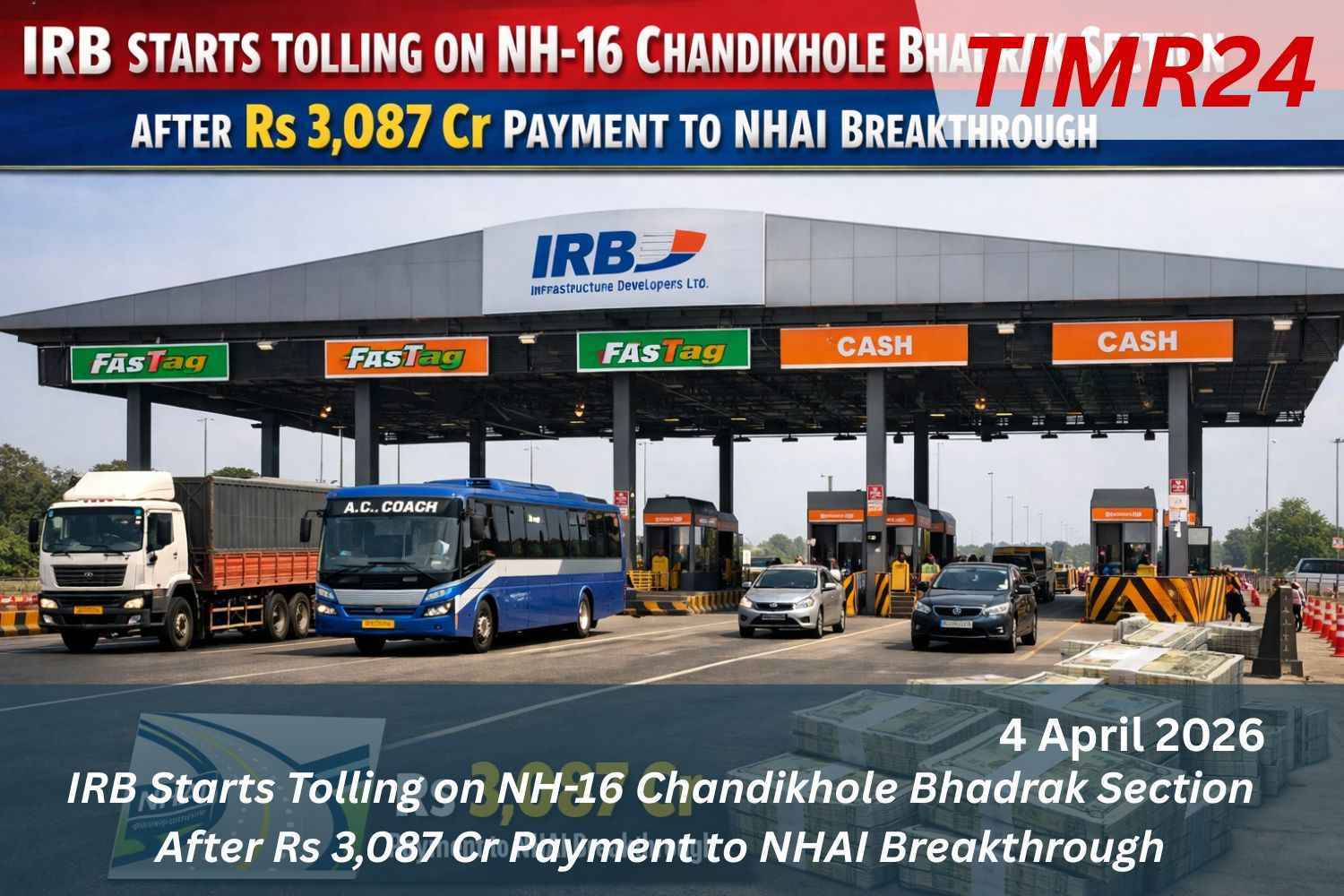



Highway Infrastructure Limited has begun toll operations at the Kaza Fee Plaza along the Chilakaluripet–Vijayawada section of National Highway-16 in Andhra Pradesh. The National Highways Authority of India (NHAI) awarded the project, valued at Rs 328.77 crore, which is the company’s largest toll operations contract. The plaza spans 82.5 km between km 355.0 and km 437.5 and is a critical north south corridor linking major economic centers in southern and eastern India. Highway Infrastructure will manage the toll plaza for one year, marking its first large-scale toll operations contract and entering a phase of active revenue generation.
Andhra Pradesh Marking
Highway Infrastructure has officially commenced toll operations at the Kaza Fee Plaza located on National Highway-16 (NH-16) in Andhra Pradesh, marking an important step in strengthening road infrastructure and improving highway management in the region. NH-16 is one of India’s most critical arterial corridors, forming a key segment of the Golden Quadrilateral and connecting major economic hubs along the eastern coast. The start of toll collection at Kaza Fee Plaza reflects the government’s continued focus on sustainable infrastructure financing, efficient road maintenance, and enhanced commuter safety. With increasing traffic volumes and growing logistics.
Demand, structured tolling mechanisms have become essential to maintain service quality and support long-term infrastructure development across national highways National Highway-16 plays a vital role in connecting Andhra Pradesh with neighboring states while facilitating the movement of goods, passengers, and industrial traffic. The operationalisation of the Kaza Fee Plaza is expected to streamline revenue collection that directly contributes to highway upkeep, periodic repairs, and operational efficiency. According to guidelines set by the National Highways Authority of India, toll revenue is primarily reinvested into maintaining road surfaces, improving signage.
National Highways Authority
Strengthening safety infrastructure, and ensuring uninterrupted mobility for daily commuters and long-haul transporters. More insights into India’s national framework can be found on the official website of the National Highways Authority of India at The introduction of (India) toll operations at Kaza also aligns with the broader vision of modernising highway infrastructure through technology-driven solutions. FASTag-enabled toll collection ensures minimal waiting time at plazas, reduced fuel consumption, and lower emissions caused by idling vehicles. This digital approach not only enhances commuter convenience but also improves transparency and accountability in toll revenue management.
As NH-16 witnesses heavy traffic from commercial vehicles, buses, and private automobiles, the adoption of electronic tolling at Kaza Fee Plaza is expected to significantly reduce congestion and improve overall travel efficiency From a regional development perspective, the start of toll operations has wider economic implications for Andhra Pradesh. Improved highway maintenance leads to better connectivity between urban centres, ports, industrial clusters, and rural hinterlands. This enhanced connectivity supports local businesses, agricultural supply chains, and tourism activities, ultimately contributing to regional economic growth. Infrastructure-led development has been a key driver of employment.
Standardised Operational Practices
Generation, and toll-funded projects play an important role in sustaining construction, operations, and ancillary services linked to road networks Infrastructure’s role in operating the Kaza Fee Plaza underscores the increasing participation of experienced infrastructure operators in India’s road sector. Such operators bring standardised operational practices, improved customer service, and compliance with safety and quality benchmarks mandated by national authorities. The presence of trained personnel, proper lane management, emergency response systems, and real-time monitoring contributes to safer travel conditions for motorists.
Additionally, toll plazas often act as data points for traffic analysis, helping authorities plan future expansions, lane additions, and safety interventions along busy corridors like NH-16 The commencement of toll collection also highlights the importance of user-pay principles in infrastructure financing. Rather than relying solely on public funds, tolling enables the sharing of costs among actual road users, ensuring that highways remain financially viable over their lifecycle. This model supports faster project execution, timely maintenance, and better asset management. On heavily trafficked routes such as NH-16, where wear and tear are significant, consistent revenue.
Reduced Vehicle Operating
Streams are essential to maintain international-grade road standards. Over time, this translates into fewer accidents, reduced vehicle operating costs, and improved travel reliability for commuters and logistics operators alike In the larger context of India’s infrastructure growth story, developments like the Kaza Fee Plaza reinforce the country’s commitment to building resilient, efficient, and future-ready transport networks. National highways are not just roads; they are economic lifelines that connect markets, enable trade, and support social mobility. The start of toll operations at Kaza is a practical step toward ensuring that NH-16 continues to serve these functions effectively.
As traffic demand continues to rise across Andhra Pradesh and the eastern corridor, the operationalisation of toll plazas such as Kaza will remain crucial in balancing infrastructure quality with user convenience. With transparent toll systems, digital payment adoption, and (India) reinvestment in road assets, Highway Infrastructure’s initiative at Kaza Fee Plaza represents a forward-looking approach to management. This development not only supports smoother journeys today but also lays the foundation for safer, more efficient transportation networks in the years to come.
Q1. Where is Kaza Fee Plaza located?
Kaza Fee Plaza is located on National Highway-16 in Andhra Pradesh.
Q2. Who operates the Kaza toll plaza?
The toll plaza is operated by Highway Infrastructure under national highway guidelines.
Q3. Why has toll collection started at Kaza?
Toll operations help recover project costs and ensure highway maintenance.
Q4. Will FASTag be mandatory at Kaza Fee Plaza?
Yes, FASTag is required for seamless toll payments.
Q5. How does toll collection benefit commuters?
It supports better road quality, safety, and smoother travel experience.