









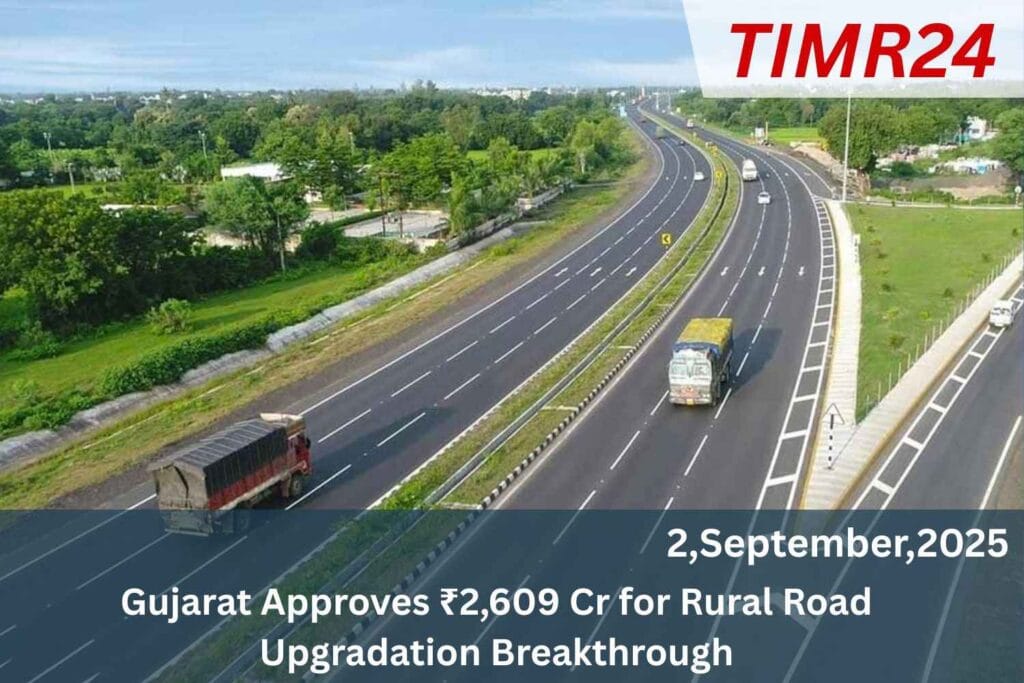
Gujarat Chief Minister Bhupendra Patel has approved a ₹2,609 crore infrastructure push to upgrade 1,258 panchayat-managed roads across the state, aiming to improve rural connectivity and address long-standing demands for durable road infrastructure. The Government of Gujarat has announced a landmark approval of ₹2,609 crore for the upgradation of rural roads, a decision that marks a significant breakthrough in the state’s development strategy. Roads are not merely pathways of transportation; they are arteries of growth, linking villages to towns, enabling commerce, providing access to education and healthcare, and enhancing overall socio-economic well-being. This initiative is expected to transform rural connectivity across the state.
Directly benefiting lakhs of villagers who rely on road networks for their livelihoods and daily needs. By investing in infrastructure at the grassroots level, Gujarat is sending a strong signal that inclusive development is at the heart of its governance model. The foundation of this ₹2,609 crore investment lies in the vision of creating robust rural infrastructure that reduces the gap between urban and rural Gujarat (Rural Development) While cities like Ahmedabad, Surat, and Vadodara are already experiencing rapid modernization, rural regions often struggle with poor road conditions that hinder access to markets, healthcare centers, and educational institutions. The government’s roadmap for rural road upgradation is part of its larger mission to achieve balanced development.
The Vision Behind the Road Upgradation
By laying durable and wider roads, introducing advanced technology in construction, and ensuring all-weather connectivity, this project is expected to bring villages into the mainstream of economic activities Agriculture remains the backbone of Gujarat’s rural economy, and better road connectivity will directly impact farmers. At present, many small farmers face challenges in transporting their produce to mandis (markets) due to poor road conditions, leading to post-harvest losses and lower income. With the new project, transportation of crops, dairy products, and perishable goods will become faster and more efficient. This initiative will also encourage agro-based industries to set up units in rural areas, as improved roads mean reduced logistics costs and easier access to raw materials.
Over time, this could create job opportunities, promote entrepreneurship, and enhance the income levels of rural households Infrastructure projects of this scale not only deliver long-term benefits but also create immediate employment opportunities. The road upgradation initiative will require skilled and unskilled labor across planning, construction, maintenance, and supervision phases. For rural youth, this opens up temporary as well as semi-permanent job avenues close to their villages, reducing migration pressures towards urban centers. Moreover, the project could pave the way for skill development programs, where workers are trained in modern road construction technologies, paving methods, and equipment handling.
Social Benefits and Inclusive Growth
This dual advantage of direct employment and capacity building contributes significantly to rural empowerment. Beyond economics, better roads have a profound social impact. Villagers gain easier access to schools, colleges, and healthcare centers, improving literacy levels and overall health outcomes. For women and children, safer and smoother connectivity enhances mobility and reduces isolation Emergency services like ambulances, fire brigades, and disaster relief teams also benefit from improved accessibility, ensuring quicker response times. The initiative, therefore, goes beyond just concrete and asphalt; it is a step toward building inclusive communities where opportunities are accessible to all, irrespective of location.
The Gujarat government has emphasized adopting advanced technology and sustainable practices in the construction of these rural roads. With climate resilience becoming a critical consideration, the roads are expected to be designed using eco-friendly materials and innovative engineering techniques that ensure durability even in adverse weather conditions. Modern machinery, digital monitoring systems, and quality control measures will be employed to maintain high standards of construction. The use of recycled materials, proper drainage systems, and green cover along the roadways could also be part of the plan, ensuring that the project is both future-ready and environmentally sustainable.
Alignment with National Development Programs
This breakthrough aligns with India’s broader rural development agenda under schemes like Pradhan Mantri Gram Sadak Yojana (PMGSY), which focuses on providing all-weather connectivity to unconnected habitations. By approving ₹2,609 crore for this project, Gujarat has shown its commitment to complementing national efforts with state-specific initiatives. The synergy between state and central government programs ensures faster execution, efficient resource allocation, and maximum impact on rural communities. Gujarat’s move can serve as a model for other states to follow, especially in prioritizing rural road connectivity as a catalyst for growth.
As rural roads improve, the distinction between urban and rural lifestyles begins to blur. Villages become more connected to nearby towns and cities, creating a natural flow of goods, services, and people. Small businesses can expand their markets, educational institutions can attract rural students, and healthcare systems can extend their reach. Over the long term, this integration fosters balanced regional development, prevents urban overcrowding, and enhances the quality of life in villages. Improved rural road networks are often the foundation upon which other infrastructure such as digital connectivity, power supply, and water systems can be expanded.
While the announcement of this breakthrough is highly encouraging, the real challenge lies in execution. Issues such as land acquisition, environmental clearances, project delays, and cost overruns can affect timelines. Ensuring transparency in tendering processes, engaging reputed contractors, and setting up strict monitoring systems will be key to the project’s success. Another crucial aspect will be long-term (NITI AAYOG) Challenges and Road Ahead maintenance, as rural roads often deteriorate quickly without proper upkeep. The government’s commitment to not only building but also maintaining these roads will determine the lasting impact of this ₹2,609 crore investment.
The approval of ₹2,609 crore for rural road upgradation in Gujarat is more than just an infrastructure investment it is a socio-economic transformation initiative. By connecting villages with towns, boosting agriculture, creating jobs, and improving access to education and healthcare, this project addresses multiple dimensions of rural life. It reflects Gujarat’s commitment to inclusive and sustainable development, ensuring that growth reaches every corner of the state. If executed effectively, this initiative could redefine rural connectivity and serve as a benchmark for other states across India. In many ways, it is not just about upgrading roads but about paving the way for a more equitable and prosperous future.
Q1. What is the purpose of the ₹2,609 Cr rural road upgradation project in Gujarat?
The project aims to enhance rural connectivity, improve infrastructure, and provide better access to education, healthcare, and markets.
Q2. How many villages will benefit from Gujarat’s rural road upgradation plan?
Thousands of villages across Gujarat are expected to see improved connectivity and economic development.
Q3. Which department is leading this road infrastructure project?
The project is spearheaded by Gujarat’s Rural Development and Road & Building Departments.
Q4. How will this project impact the state’s economy?
Improved road networks will boost trade, agriculture supply chains, and rural employment opportunities.
Q5. When will the rural road upgradation project be completed?
The project has a phased completion plan, expected to roll out over the next 3–4 years.