



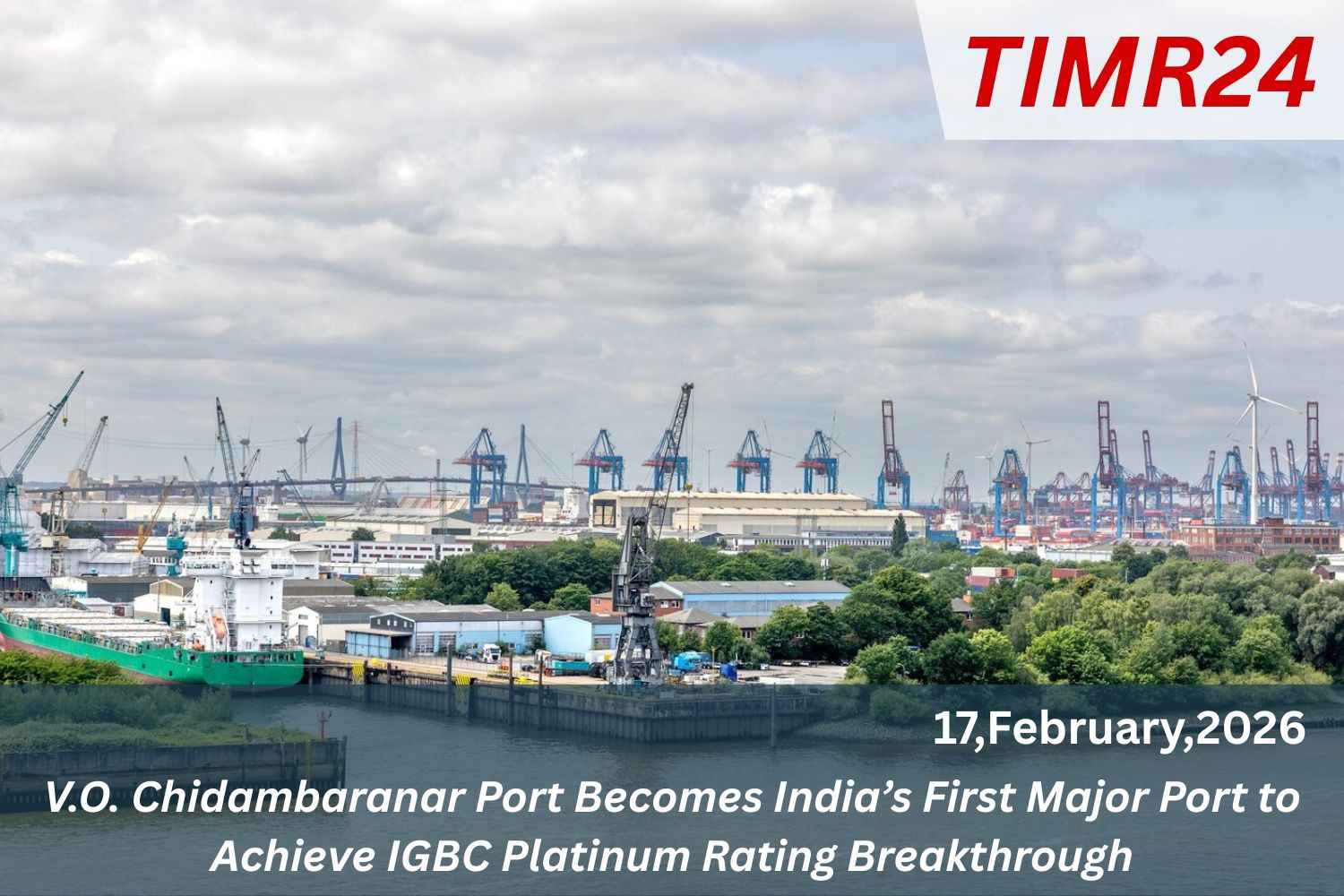



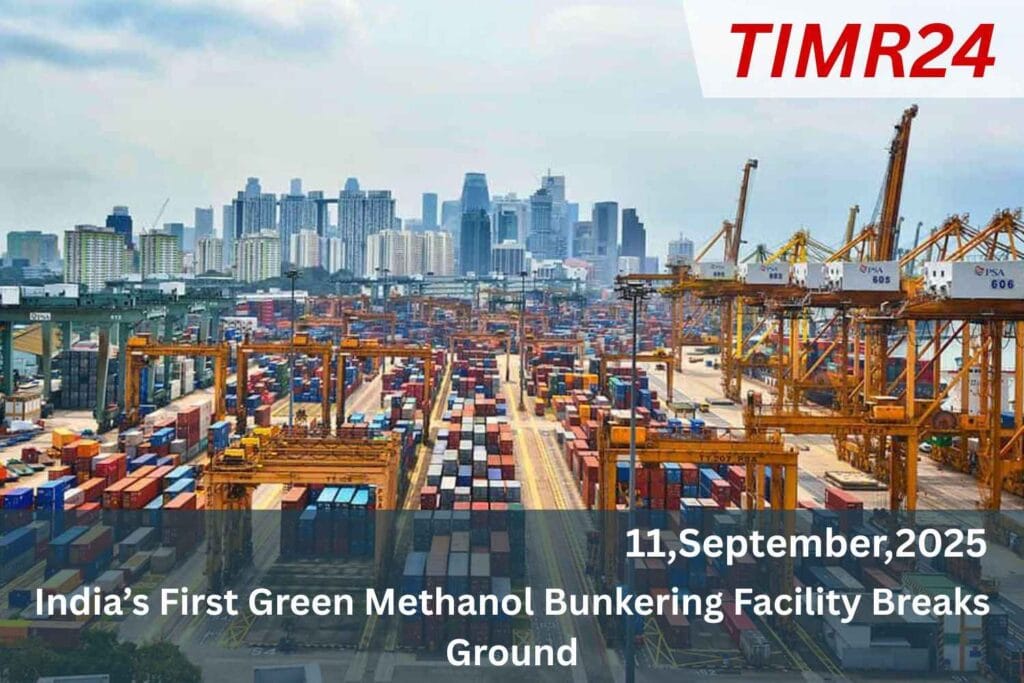
Pune-based SOPAN Group has begun construction on India’s first Green Methanol Bunkering and Refuelling Facility, in collaboration with the VO Chidambaranar Port Authority (VOCPA). The project, inaugurated by Union Minister Shri Sarbananda Sonowal, aims to support India’s Net Zero 2070 vision and align with Maritime India Vision 2030. The pilot-scale project includes a 750 m³ Green Methanol Storage and Bunkering Terminal and complete plant infrastructure. The initiative supports India’s Net Zero 2070 vision and aligns with Maritime India Vision 2030. The project aims to reduce up to 95% in CO2 emissions for ships and position India as a key player in the global.
Alternative fuel market. The maritime sector is at a defining crossroads, and India has just signalled its intent to be at the forefront of clean shipping with the ground-breaking of its first Green Methanol Bunkering Facility. This development is not just a new port installation; it represents a shift in how the country views sustainable transport, renewable fuels, and its role in the global supply chain. By stepping into methanol bunkering, India is aligning itself with international climate targets while also building new pathways for green infrastructure growth.
Green Methanol A Game-Changer for Shipping
Maritime transport accounts for over 90% of world trade, yet it is also one of the highest emitters of greenhouse gases. Conventional fuels like heavy fuel oil release carbon dioxide, sulfur oxides, and nitrogen oxides, directly harming the environment. Green methanol, on the other hand, is produced from renewable feedstocks such as biomass, captured carbon, and green hydrogen. It burns cleaner, leaving behind significantly fewer emissions. Countries like Denmark, Singapore, and China are already experimenting with methanol bunkering hubs, and India joining this league reinforces its global relevance According to the methanol reduces sulfur oxide emissions by nearly.
99% and nitrogen oxides by up to 60%. This makes it a leading contender for the International Maritime Organization’s decarbonization roadmap. With India’s adoption, shipping companies operating along Asian and global trade corridors will now have a new option for sustainable refuelling India has been steadily modernizing its ports and logistics systems. Initiatives like (DP World’s) in creating jobs and infrastructure highlight how foreign capital is driving local growth. The Green Methanol Bunkering Facility builds on this momentum, combining green energy with strategic maritime positioning The facility’s location is no accident. Built at a strategic coastal hub.
It is designed to serve both domestic vessels and international fleets docking in India. This move is expected to attract global shipping companies that are transitioning to low-carbon fuels, giving Indian ports an edge over regional competitors. It also reduces dependency on fossil fuel imports while opening new avenues for domestic methanol production industries. The long-term benefits extend beyond shipping. India’s shift to methanol bunkering supports the country’s National Green Hydrogen Mission and its commitments under the Paris Agreement. By promoting cleaner marine fuels, India could cut millions of tonnes of carbon emissions, directly improving air quality in coastal and port cities.
Environmental and Economic Benefits
From an economic standpoint, the facility will create new green jobs, encourage private-public partnerships, and position India as a hub for eco-friendly maritime solutions. Just as projects like are reshaping inland connectivity, the methanol bunkering initiative is reshaping seaborne trade. Together, these infrastructure upgrades are building the foundation for India’s sustainable growth story The International Maritime Organization (IMO) has set ambitious targets for reducing carbon intensity in shipping by 40% by 2030 and pursuing net-zero emissions by 2050. India’s new methanol bunkering project directly contributes to these goals. It signals that India is not waiting passively for.
Global solutions but is actively building them International shipping firms already exploring alternative fuels will now find Indian waters better equipped. Just as Singapore is recognized as a global bunkering hub, India has the opportunity to establish itself as a regional leader in South Asia. This facility could be the first of many, with future expansions expected in Gujarat, Maharashtra, and Tamil Nadu, where industrial and shipping activities are heavily concentrated.
Linking to India’s Broader Sustainability Projects
Green methanol bunkering is not a standalone venture. It connects to a larger web of sustainability projects across the country. For instance, the represents how urban transport is moving toward cleaner solutions, while real estate developers like are integrating eco-friendly infrastructure into residential projects. Taken together, these initiatives highlight a pattern: India is embedding sustainability into every layer of its growth, from highways to metros to seaports The synergies are particularly important for industries like steel, power, and chemicals. Methanol has versatile applications beyond bunkering, including as a feedstock in petrochemicals and as a fuel for power .
Generation Thus, India’s facility is not just serving ships; it is catalyzing an entire ecosystem of clean energy solutions Of course, the journey won’t be without challenges. Green methanol production costs are currently higher than traditional fuels, largely due to expensive renewable feedstocks and green hydrogen. Infrastructure for large-scale methanol storage, handling, and distribution also needs expansion. Yet, these are transitional challenges. As global demand scales up and technology advances, costs are expected to fall significantly India’s strategy will likely focus on phased rollouts. The first facility will act as a pilot hub, followed by replication in other high-traffic ports.
International Collaborations and Investment Potential
Just as projects like showcased speed and innovation in the construction sector, India’s shipping sector now has an opportunity to showcase speed in green energy adoption. Foreign investors are closely watching these developments. Collaborations with European and Japanese shipping companies could accelerate knowledge transfer and financing. For India, this means not only positioning itself as a fuel hub but also as a key player in shaping global energy transitions The facility also strengthens India’s standing in trade negotiations, as eco-friendly practices are becoming prerequisites for international shipping contracts. For example, many global ports are beginning to impose.
Carbon taxes or emission-related charges. With a methanol bunkering option, India could attract more traffic by offering both compliance and cost efficiency. The breaking ground of India’s first Green Methanol Bunkering Facility is both a symbolic and practical milestone. Symbolically, it reflects the nation’s willingness to embrace sustainability in one of the hardest-to-decarbonize sectors. Practically, it sets into motion a chain of developments that could transform India’s maritime future If successfully executed, this facility could become a blueprint for future bunkering hubs across Asia. As other projects whether in highways, metros, or smart real estate continue to integrate .
Sustainable practices, India is gradually creating a narrative of balanced growth. This narrative combines economic expansion with environmental accountability, something that the world is increasingly demanding from emerging economies India’s first Green Methanol Bunkering Facility is not just a maritime installation; it is a declaration that the country is ready to lead in the clean energy transition. It ties together global climate goals, domestic infrastructure development, and economic opportunities into one cohesive project. By doing so, it provides a roadmap not just for India but for other developing nations looking to balance growth with sustainability For global shipping companies.
The message is clear: India is open for green business. For domestic industries, it is a reminder that the future is low-carbon, and being an early mover brings advantages. And for the environment, it is a much-needed step towards reducing the footprint of one of the most polluting industries With the groundwork (DP World’s) now laid, the coming years will reveal how effectively India can scale this vision. If the current pace of infrastructure development is any indicator, the green tide in India’s maritime industry is only just beginning.
Q1. What is a green methanol bunkering facility?
A green methanol bunkering facility is a dedicated infrastructure that supplies ships with renewable methanol fuel, offering a cleaner alternative to traditional marine fuels.
Q2. Why is methanol considered eco-friendly?
Methanol made from renewable sources reduces greenhouse gas emissions and particulate matter, supporting global decarbonization targets for shipping.
Q3. Where is India’s first green methanol bunkering facility being built?
The project has broken ground at a strategic Indian port to serve both domestic and international shipping lines.
Q4. How will this facility impact India’s maritime industry?
It will position India as a global leader in sustainable shipping, reduce fuel import dependency, and boost green energy jobs.
Q5. What are the global implications of this project?
It aligns India with the International Maritime Organization’s 2030 and 2050 decarbonization goals, attracting foreign investment and partnerships.