

















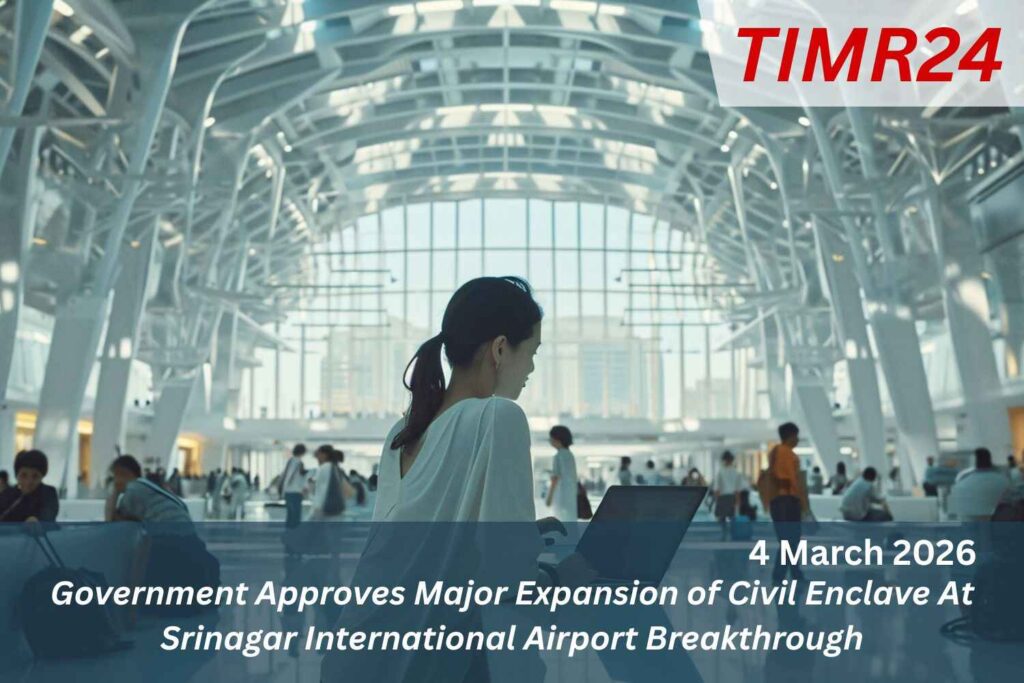
The Government of India has approved a major expansion of the civil enclave at Srinagar International Airport, marking a significant step toward strengthening aviation infrastructure in the Union Territory of Jammu and Kashmir. The project is aimed at upgrading passenger handling capacity, improving operational efficiency, and boosting regional economic growth through enhanced connectivity. Srinagar Airport, which plays a dual role as both a civilian and defense-operated airport, has witnessed a steady rise in passenger traffic over the past few years, particularly during peak tourist seasons. With Kashmir emerging again as a key tourism destination and pilgrimage hub.
Enlarging The Terminal Building, Modernizing
The demand for better airport infrastructure has become increasingly urgent. The newly approved expansion of the civil enclave will focus on enlarging the terminal building, modernizing passenger amenities, strengthening security infrastructure, and increasing apron space to accommodate more aircraft simultaneously. This development aligns with the government’s broader vision of enhancing regional air connectivity under national aviation growth strategies and ensuring that critical infrastructure keeps pace with economic aspirations The expansion project is expected to significantly enhance the passenger handling capacity of Srinagar International Airport, which currently.
Manages millions of travelers annually, including tourists, business travelers, and pilgrims heading toward destinations such as Gulmarg, Pahalgam, and Sonamarg. By expanding the civil enclave area, authorities aim to reduce congestion, streamline check-in and security processes, and provide world-class facilities comparable to major metropolitan airports. Improved boarding gates, expanded waiting lounges, modern baggage handling systems, and upgraded parking facilities are likely to be part of the redevelopment blueprint. The move is also strategically important from a national security perspective, as Srinagar Airport operates in coordination with.
Convenience And Operational Efficiency
The Indian Air Force, making civil-military infrastructure coordination a critical element of the expansion plan. The project will ensure smoother segregation and optimized use of shared infrastructure, enhancing both civilian convenience and operational efficiency From an economic standpoint, the airport expansion is expected to act as a catalyst for tourism, hospitality, trade, and local employment generation across Jammu and Kashmir. Tourism remains one of the primary economic drivers of the region, and improved air connectivity directly contributes to higher visitor inflows. With better infrastructure, airlines may increase flight frequencies and introduce.
New domestic routes connecting Srinagar to major Indian cities such as Delhi, Mumbai, Bengaluru, and Hyderabad. There is also potential for expanded international charter operations in the future, depending on policy decisions and demand growth. Enhanced airport capacity will not only benefit tourists but also support horticulture exporters and local businesses that rely on air cargo services for transporting perishable goods like apples and saffron to national markets. Infrastructure growth of this scale often generates multiplier effects, including job creation during construction phases and long-term employment in airport operations, retail outlets, ground handling, and security services.
Airport Modernization And New Terminal
The expansion of the civil enclave is part of India’s broader push to modernize aviation infrastructure across tier-2 and tier-3 cities, ensuring balanced regional development. In recent years, the central government has emphasized airport modernization and new terminal construction projects to meet rising passenger demand nationwide. Srinagar’s inclusion in this wave of infrastructure investment underscores its strategic and economic importance. The project also reflects the administration’s commitment to strengthening connectivity in border and sensitive regions, integrating them more closely with the national economic mainstream.
Enhanced infrastructure at Srinagar International Airport will likely improve the overall passenger experience, making travel to and from the Valley more comfortable, efficient, and secure The approval of the project follows technical assessments and coordination among various ministries and agencies responsible for civil aviation, defense, and infrastructure planning. Environmental considerations and land-use optimization have been factored into the expansion blueprint to ensure compliance with sustainability standards. Modern airport expansions increasingly incorporate energy-efficient designs, better waste management systems, and improved water conservation.
Passenger Numbers Continue To Rise Post
Mechanisms, and Srinagar’s redevelopment is expected to follow similar best practices. The focus is not merely on physical expansion but on creating a future-ready facility capable of handling projected traffic growth over the next decade. As passenger numbers continue to rise (India)post-pandemic, infrastructure readiness becomes essential to prevent bottlenecks and maintain service quality The expansion will also improve seasonal traffic management, especially during peak tourism months and religious travel periods. During heavy tourist inflow, Srinagar Airport often experiences high passenger density, leading to extended waiting times. With additional terminal space and improved.
Processing systems, authorities aim to significantly reduce congestion and enhance operational smoothness. Improved runway-side infrastructure and aircraft parking bays will enable better scheduling flexibility for airlines, potentially reducing delays caused by limited parking stands. Such enhancements contribute to overall aviation efficiency and reliability, which are critical factors in passenger satisfaction and airline operations Beyond infrastructure, the project carries symbolic importance as well. It reflects continued central investment in Jammu and Kashmir’s development and underscores the region’s role in India’s growth narrative.
Srinagar International Airport Therefore
Improved connectivity fosters social integration, economic resilience, and investor confidence. Businesses are more likely to invest in regions where transport infrastructure is reliable and scalable. The civil enclave expansion at Srinagar International Airport therefore represents not just a construction project but a strategic development initiative aimed at unlocking long-term economic potential The government’s approval for the major expansion of the civil enclave at Srinagar International Airport marks a transformative milestone for Jammu and Kashmir’s aviation landscape. The project is set to enhance passenger capacity, strengthen connectivity, improve tourism prospects, and stimulate regional economic growth.
By modernizing airport infrastructure and aligning it with national aviation development goals, the government is ensuring that Srinagar remains well-equipped to (India) meet rising travel demand while offering a world-class passenger experience. As work progresses in the coming years, the upgraded civil enclave is expected to serve as a gateway of growth and opportunity for the region, reinforcing Srinagar’s position as a critical aviation hub in northern India.
Q1. What is approved in the Srinagar Airport project?
The government approved expansion of the civil enclave including terminal upgrades and infrastructure enhancement.
Q2. Why is this expansion important?
It will increase passenger capacity and improve connectivity for tourism and trade.
Q4. Will flight connectivity increase?
Yes, airlines may introduce more routes and higher flight frequency.
Q5. How will this benefit Jammu and Kashmir?
It will boost tourism, employment, and regional economic development.