
















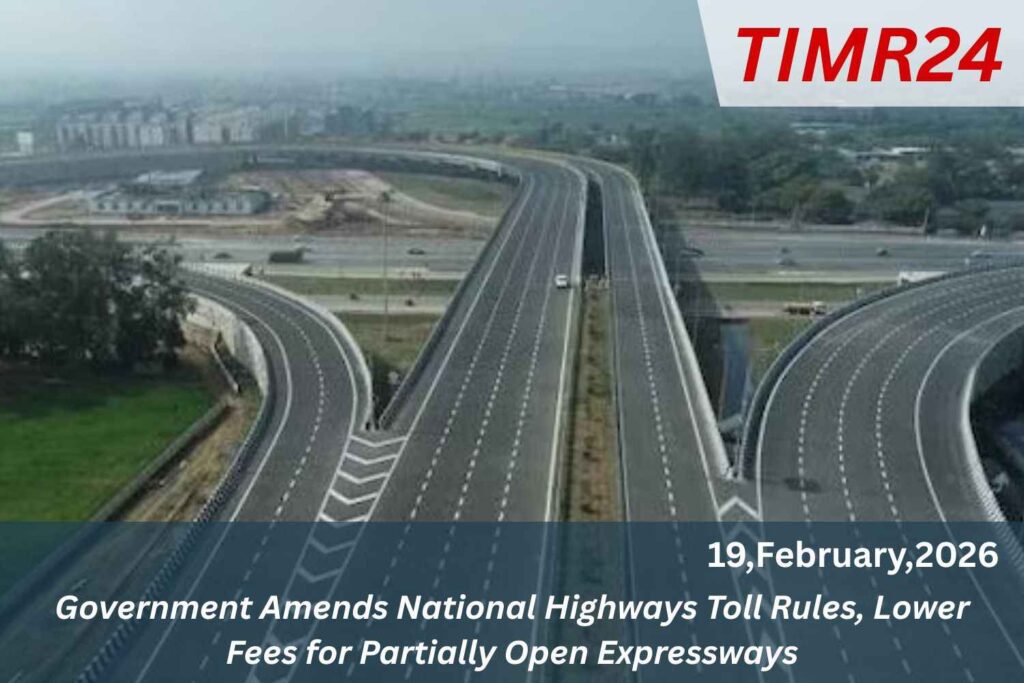
The Government of India has amended the National Highways Fee Determination of Rates and Collection Rules, 2008, effective 15 February 2026. The new provisions state that tolls for incomplete stretches of national expressways will be charged only for the completed sections at reduced rates comparable to national highways. This change aims to alleviate costs for road users and promote traffic on expressways to reduce congestion on existing national highways, enhancing logistics and commuter travel while lowering pollution. The amendments will remain in effect for one year or until the expressway is fully operational, whichever comes first.
Reduce Fees On Partially Operational
India’s road infrastructure sector continues to evolve with policy reforms aimed at improving commuter convenience and ensuring fair user charges. In a significant move, the Government of India has amended the National Highways toll rules to reduce fees on partially operational expressways and highway stretches. The decision reflects the government’s commitment to balancing infrastructure development with public convenience while strengthening transparency in toll collection practices. The revised policy is expected to provide relief to millions of highway users who previously paid full toll charges even when expressways lacked complete facilities or operational capacity.
The amendment has been introduced by the Ministry of Road Transport and Highways, which oversees the development, regulation, and maintenance of India’s national highway network. The policy change ensures that toll charges correspond more accurately to the level of infrastructure and services available to users. Under the revised rules, highway operators must reduce toll rates if certain sections of an expressway are incomplete, under construction, or not fully accessible to commuters. This initiative is expected to increase accountability among concessionaires and developers while promoting fairness in toll pricing India’s highway network, managed primarily by.
Corridors Connecting Metropolitan
The National Highways Authority of India, plays a crucial role in Supporting Economic Growth, logistics efficiency, and regional connectivity. Over the years, the country has witnessed rapid expansion in expressway construction, including major corridors connecting metropolitan regions, Industrial Hubs, and rural areas. However, several highway users have raised concerns regarding toll collection on partially completed stretches where services such as proper lanes, lighting, safety infrastructure, and service roads were not fully available. The latest amendment addresses these concerns by ensuring that users pay only for the infrastructure that is actually operational.
The revised toll rules also align with the broader vision of Improving Transparency in infrastructure governance. As India Invests heavily in large-scale road development programs, ensuring accountability in toll collection mechanisms has become increasingly important. The (India) new policy introduces clearer guidelines for assessing operational status and determining appropriate toll rates. This is expected to reduce disputes between highway users and operators while enhancing public trust in Infrastructure Projects Another important aspect of the amendment is its potential impact on commuter experience. Expressways are designed to offer high-speed.
Approach Encourages Faster Completion
Connectivity, improved safety standards, and enhanced travel comfort. When these facilities are incomplete, charging full toll rates often creates dissatisfaction among users. The revised rules aim to address this issue by linking toll charges to service quality. This approach encourages faster completion of pending infrastructure work and motivates developers to maintain higher operational standards The policy reform also reflects the government’s broader infrastructure modernization strategy, which emphasizes efficiency, sustainability, and user-centric development. India’s infrastructure sector has been undergoing rapid transformation through initiatives.
such as expressway expansion, smart transport systems, and digital toll collection technologies. The introduction of FASTag-based electronic toll collection has already streamlined toll payments across the country, reducing congestion and improving efficiency. The new toll rule amendment complements these reforms by ensuring that pricing mechanisms remain fair and transparent From an economic perspective, the revised toll policy is expected to support logistics and transportation sectors by reducing operational costs for commercial vehicles using partially developed expressways. Lower toll charges on incomplete stretches can help improve cost efficiency in freight movement.
Experience Improved Cost Predictability
Benefiting industries that rely heavily on road transportation. This move also aligns with India’s goal of enhancing ease of doing business by improving infrastructure accessibility and affordability. Businesses and logistics providers may experience improved cost predictability and better route planning as a result of the new policy The amendment is also likely to influence future highway development models and public-private partnership projects. Developers and concessionaires may now face increased pressure to meet project deadlines and deliver complete infrastructure before implementing full toll charges. This shift could lead to improved project management practices.
Better quality standards, and faster completion timelines. The government’s emphasis on performance-based infrastructure delivery is expected to strengthen investor confidence while ensuring that public interest remains a priority Furthermore, the policy highlights (India) the importance of equitable infrastructure governance in a rapidly growing economy. As India continues to expand its highway network, maintaining a balance between infrastructure investment and public affordability becomes essential. The revised toll rules demonstrate the government’s responsiveness to citizen concerns and its commitment to improving service delivery.
By linking toll charges to operational status, the policy promotes fairness, accountability, and transparency in infrastructure manag.
Q1. What is the new National Highways toll rule amendment?
The government has revised toll rules to reduce fees on partially operational expressways where full services are not available.
Q2. Who announced the new toll policy?
The amendment was introduced by the Ministry of Road Transport and Highways.
Q3. How will commuters benefit from this decision?
Commuters will pay lower toll charges when highways or expressways are not fully developed or operational.
Q4. Will toll rates change on fully operational highways?
No, the revised rules mainly apply to partially completed or partially opened expressways.
Q5. When will the new toll rules come into effect?
The implementation will follow government notification and rollout guidelines across national highways.