













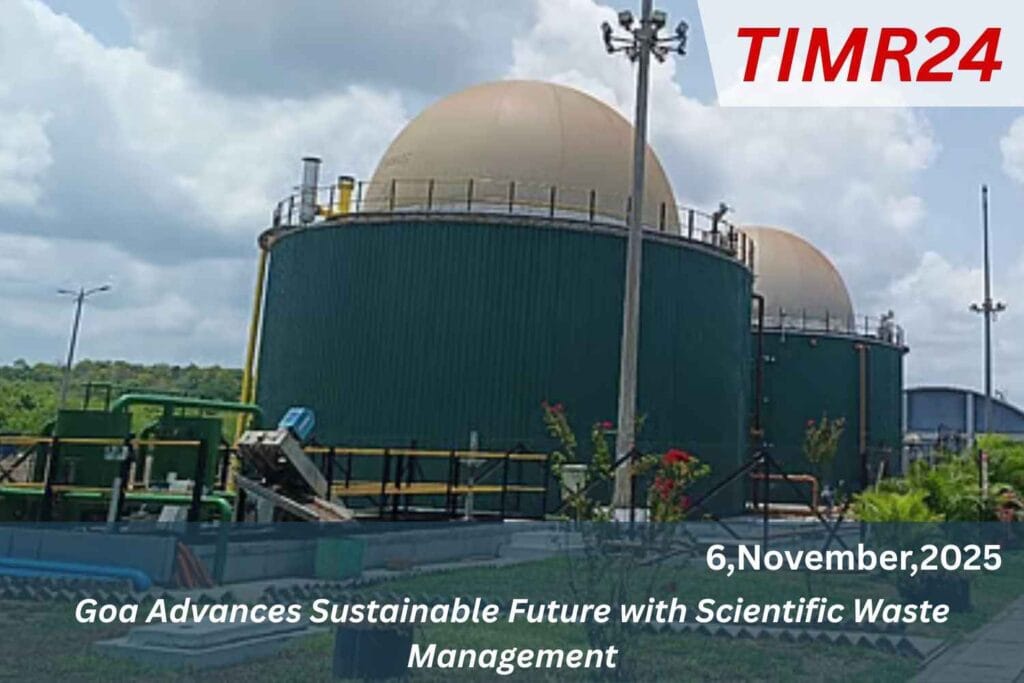
Chief Minister Pramod Sawant Emphasized Goa’s dedication to environmental sustainability via responsible waste management, particularly with the Common Hazardous Treatment and Storage Facility. This facility plays a crucial role in managing hazardous waste safely and efficiently, bolstering local employment with 80% of its workforce being Goan youth. Sawant reaffirmed that the state’s (India) environmental policies aim for long-term ecological balance and sustainable development Goa, one of India’s most popular tourist destinations, is now leading a transformative journey toward a cleaner, greener, and more sustainable future. With its pristine beaches, rich biodiversity, and vibrant cultural heritage.
The state recognizes the urgent need to protect its environment from the mounting challenges of waste generation. The Goa government’s recent focus on scientific waste management marks a pivotal step toward sustainability, blending innovation, community participation, and advanced technology. Through well-planned waste segregation, recycling initiatives, and modern treatment facilities, Goa is setting a model for other states in India to emulate Over the past few years, Goa has transitioned from conventional waste disposal methods to a scientific management model. This shift is driven by the government’s resolve to minimize landfill dependency and maximize resource recovery.
The Department of Science, Technology and Waste Management (DSTWM) and the Goa Waste Management Corporation (GWMC) have implemented systematic measures that focus on segregation at source, collection efficiency, and material recovery. By introducing decentralized waste processing units in both North and South Goa, the state aims to reduce transportation costs and carbon emissions while ensuring waste is treated closer to its origin These centers use advanced methods like bio methanation, composting, and refuse-derived fuel (RDF) conversion. The Saligao Waste Treatment Plant in North Goa, for instance, has become a benchmark in waste-to.
Q1. What is scientific waste management in Goa?
Scientific waste management involves using technology-driven processes for segregation, recycling, and energy recovery to minimize environmental impact.
Q2. What are the key facilities under waste management system?
Facilities include Material Recovery Facilities (MRFs), decentralized composting units, and waste-to-energy plants at Saligao and Cacora.
Q3. How is the Goa government promoting citizen participation?
Through awareness campaigns, door-to-door collection, and educational programs encouraging segregation and recycling at the household level.
Q4. What are Goa’s goals for 2030 under sustainable development?
To achieve zero landfill waste, 100% recycling, and a circular economy model through innovation and citizen cooperation.
Q5. How does Goa’s initiative align with national and global sustainability goals?
It supports India’s Swachh Bharat Mission, Smart Cities Mission, and UN Sustainable Development Goals (SDGs).