


















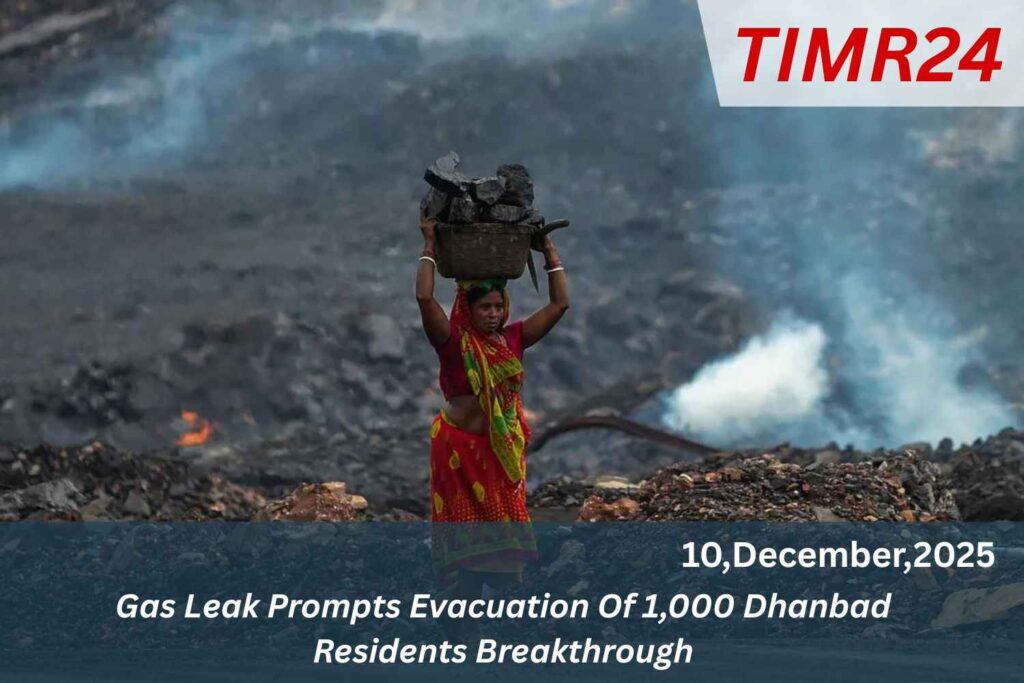
More than 1,000 residents in Dhanbad, Jharkhand are being relocated due to a poisonous gas leak from underground mines. A woman reportedly died, and 12 others fell ill from carbon monoxide exposure in Kenduadih Basti. Bharat Coking Coal Ltd (BCCL) has begun evacuations, urging residents to leave high-risk areas immediately, and has positioned ambulances in the region for emergencies. BCCL’s General Manager stated efforts are underway to ensure the safety of affected residents The sudden gas leak that prompted the evacuation of nearly 1,000 residents in Dhanbad has become a major reminder of how vulnerable thickly populated industrial regions.
Within Minutes, Residents Stepped
Remain when safety protocols fail or aging pipelines remain unchecked. The incident unfolded early in the morning when several households reported an unusual chemical smell, leading to panic across the blocks closest to the suspected leak site. Within minutes, residents stepped out onto the streets, trying to understand the source of the gas while authorities rushed to mobilize first responders. The district administration then ordered an immediate evacuation, moving people to temporary shelters set up in community halls and schools. This rapid action helped avert what could have escalated into a far more serious environmental and health crisis.
As news spread across Jharkhand, concerns began rising about the industrial infrastructure surrounding Dhanbad, a region already known for coal mines, chemical facilities, and aging pipelines. While the exact cause is still under investigation, early assumptions suggest a leak in an industrial supply line that may have gone unnoticed due to delayed inspection cycles. The situation drew quick intervention from disaster management units, and their coordinated response was crucial in neutralizing the spread of toxic fumes. Dhanbad authorities issued real-time updates through emergency networks, assuring people that the evacuation was a precautionary step meant to.
Monitoring Technologies Local Communities
Protect lives before the gas concentration could escalate. For a region that has witnessed multiple industrial hazards over decades, this incident has triggered renewed demands for stricter compliance and real-time monitoring technologies Local communities (India) recalled similar past incidents and criticized the slow pace at which safety audits take place. Environmental groups have been urging the government to adopt advanced leak detection systems that can send automatic alerts to authorities and industrial operators long before residents are exposed. Experts on the scene reported that the leaked gas had moderate toxicity levels capable of causing.
Irritation in the eyes and respiratory tract, but the swift relocation of residents prevented major health emergencies. Medical teams stationed at the evacuation centers examined several individuals who complained of dizziness and coughing, but all were discharged after observation. Dhanbad hospitals stayed on standby throughout the day, anticipating potential admissions This incident also amplified discussions around urban planning, especially in areas where industries and residential settlements coexist with very little buffer between them. Several families living in the affected zone pointed out that only a thin boundary wall separates.
Face Similar Emergencies
Their homes from nearby industrial pipelines, raising serious questions about zoning laws and regulatory oversight. Urban safety analysts argue that without a robust risk assessment framework, cities like Dhanbad will continue to face similar emergencies. The local administration has already announced a full-scale technical audit to evaluate the entire pipeline network and to check for corrosion, pressure fluctuations, and structural weaknesses that may pose future threats The gas leak has also reopened the conversation about environmental justice, as most of the affected residents belong to economically weaker communities that have historically been forced to.
Live close to industrial belts due to low housing costs. Advocacy groups are now demanding a relocation plan or safe housing alternatives to ensure families are not exposed repeatedly to hazardous environments. While officials stated that they will review the settlement structure and engage with urban housing boards, long-term solutions will require collaboration between government departments, private industries, and community groups. This event also triggered immediate action from environmental agencies, which began collecting air quality samples and soil residue for laboratory evaluation to determine whether the leak has left any lingering contamination.
National Disaster Management Authority
For the rest of India, this incident serves as a significant lesson on the importance of preparedness. States are now expected to review their industrial zones, strengthen inter-agency coordination, and adopt stricter enforcement of safety rules. The National Disaster Management Authority guidelines, available through resources like the NDMA website, provide detailed frameworks for industrial emergency response, yet several regions still lack the on-ground preparedness required to act within minutes of a leak. With climate change influencing temperature patterns, the behavior of escaping gases can also vary, increasing the unpredictability of such incidents.
To maintain transparency, the Dhanbad administration has promised to publish findings from the technical investigation and hold industries accountable if negligence is proven. They also aim to introduce more frequent pipeline inspections and implement community (Solar) awareness programs so residents know how to respond instantly in case of unusual smells or visible fumes. Meanwhile, the incident has drawn national attention toward the importance of disaster-ready urban environments, prompting media outlets and safety groups to call for stronger government–industry collaboration.
Q1. What caused the gas leak in Dhanbad?
Authorities are still investigating, with early reports pointing toward an industrial pipeline failure.
Q2. How many residents were evacuated?
Around 1,000 residents were safely moved to designated shelters.
Q3. Is the area safe now?
Disaster response teams have controlled the situation and declared the zone stable.
Q4. Were there any injuries reported?
Minor breathing discomfort cases were reported, but no fatalities.
Q5. What steps are being taken to prevent recurrence?
Officials have ordered a technical audit of pipelines and nearby industrial facilities.