















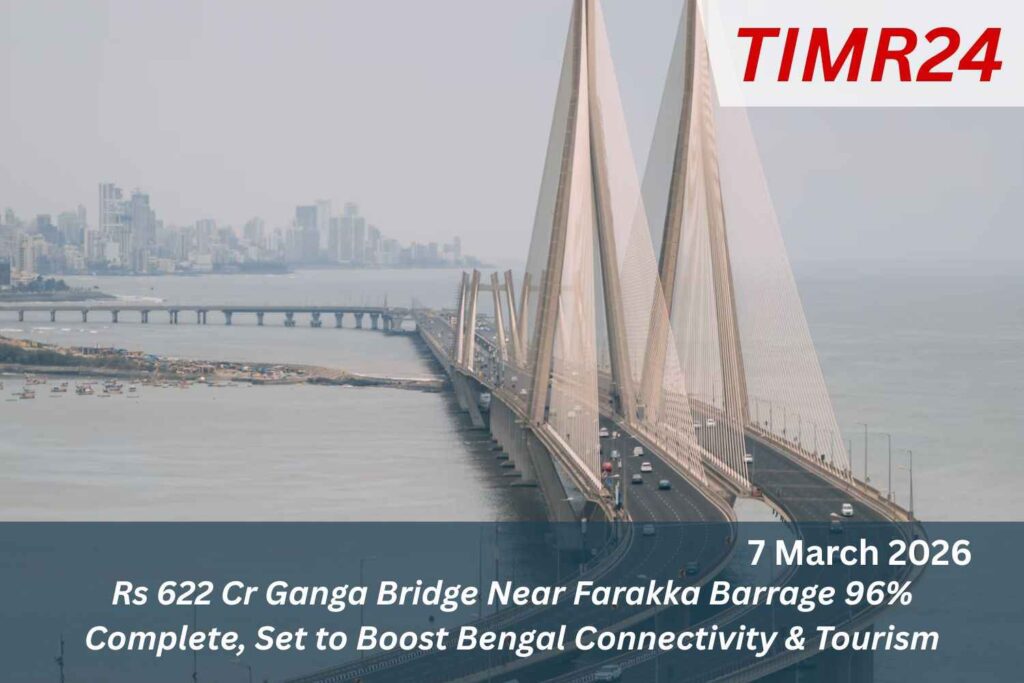
The four-lane bridge over the Ganga near Farakka Barrage is 96% complete and set to open soon, costing Rs 622.04 crore. Spanning 5.468 km, it aims to alleviate congestion on the Farakka corridor and boost connectivity between North and South Bengal. The bridge will enhance logistics for transporting goods and agricultural produce, improve travel times for commercial vehicles, and facilitate tourism access to destinations like Kulik Bird Sanctuary, Gour Malda, and Sikkim, thus promoting economic growth in North Bengal Infrastructure development continues to play a vital role in strengthening regional connectivity across India. One such important project nearing completion is the ₹622 crore Ganga bridge being constructed near the historic Farakka Barrage in the state of West Bengal.
With nearly 96% of the construction work completed, the bridge is expected to become operational soon, bringing significant benefits to transportation, trade, and tourism across the region The new bridge is strategically located over the Ganga River and aims to improve road connectivity between northern and southern parts of West Bengal. The Farakka region has long served as a critical transit point for road and rail traffic, but increasing vehicle movement has placed significant pressure on the existing infrastructure. Once completed, the new bridge will help ease congestion and create a smoother and safer transportation corridor.
Importance of the Farakka Region
The Farakka area holds immense importance due to its location near the interstate boundary connecting West Bengal with neighboring regions such as Jharkhand and Bihar. The existing Farakka Barrage already serves as a major road link, but over the years the volume of traffic has increased substantially, resulting in frequent bottlenecks The upcoming Ganga bridge will function as an additional transportation route, reducing dependency on the barrage road. This is expected to significantly improve traffic management in the region and ensure uninterrupted connectivity between key districts such as Murshidabad and Malda.
Infrastructure Development and Project Cost
Improved connectivity in this region is also expected to support cross-state travel and logistics movement, making the transportation network more efficient. The bridge project has been developed with an estimated investment of ₹622 crore, reflecting the government’s commitment to strengthening infrastructure in eastern India. The bridge spans a crucial stretch of the Ganga river and incorporates modern engineering techniques designed to ensure durability, safety, and long-term operational efficiency Authorities involved in the project have confirmed that most of the structural work has already been completed. Only finishing activities such as road surfacing.
Safety barriers, lighting systems, and final inspections remain before the bridge can be opened for public use Projects like these are aligned with India’s broader infrastructure expansion initiatives led by organizations such as the National Highways Authority of India, which is responsible for developing and maintaining national highway infrastructure across the country.
Reducing Travel Time And Traffic Pressure
One of the most immediate benefits of the new bridge will be reduced travel time for commuters and freight transport vehicles. Currently, heavy traffic passing through the Farakka Barrage often causes delays, especially during peak movement hours Once the new bridge becomes operational, vehicles will have an alternative route to cross the Ganga river, significantly reducing congestion. This will also improve road safety, as overcrowded transport routes often increase the risk of accidents Better road infrastructure will also support logistics operations by enabling faster transportation of goods between agricultural markets and urban centers.
Boost to Tourism and Regional Economy
This is particularly important for districts in North Bengal that rely heavily on road networks for trade. Apart from improving connectivity, the bridge is expected to give a significant boost to tourism in the surrounding regions. West Bengal is home to several historic towns and cultural destinations, and improved transport infrastructure makes these locations more accessible to travelers Tourists visiting heritage destinations such as Murshidabad, once the capital of Bengal during the Mughal period, will benefit from improved road access. The district is known for its palaces, mosques, and historical monuments that attract visitors interested in India’s rich cultural heritage.
The bridge will also enhance access to river tourism along the Ganga basin, which has been gradually gaining popularity. Easier travel routes encourage more tourists to explore riverfront towns, local markets, and heritage sites As tourism grows, local businesses such as hotels, restaurants, and transportation services are expected to benefit, leading to increased employment opportunities in the region.
Supporting Trade and Freight Movement
Infrastructure improvements often have a direct impact on economic growth. With better connectivity across the Ganga river, the new bridge will facilitate smoother movement of goods between districts and neighboring states Agricultural products, textiles, and small-scale industrial goods produced in the surrounding regions will be able to reach markets faster and more efficiently. This improved logistics network will reduce transportation costs and support local industries The bridge will also help strengthen supply chains connecting eastern India with major markets across the country, ensuring more reliable freight movement.
Integration with National Infrastructure Plans
The Ganga bridge near Farakka is part of India’s larger infrastructure modernization strategy aimed at building resilient transportation networks. Projects like these are often linked with broader development programs focusing on highways, waterways, and rail networks For instance, the government is simultaneously investing in inland water transport through initiatives led by the Inland Waterways Authority of India. Such efforts are designed to create multi-modal transport systems where road, rail, and waterways complement each other.
Enhancing Safety and Modern Infrastructure Standards
The Farakka region already plays a key role in river navigation and transport along the Ganga. With improved road infrastructure, the area could evolve into an important logistics hub in eastern India. Another important objective of the new bridge project is improving transportation (India) safety. Modern bridges are designed with advanced structural engineering standards that enhance durability and load-bearing capacity Features such as reinforced concrete structures, improved guard rails, lighting systems, and drainage mechanisms ensure that the bridge can handle high traffic volumes safely. These improvements are particularly important in regions where heavy freight vehicles frequently operate.
Long-Term Regional Development Impact
Once completed, the bridge will provide a safer alternative crossing over the Ganga, reducing stress on older infrastructure and improving overall travel conditions. Large infrastructure projects often serve as catalysts for regional development. The Farakka Ganga bridge is expected to stimulate economic growth in surrounding districts by improving accessibility and attracting new investments Better connectivity encourages industrial activity, promotes tourism, and supports agricultural supply chains. Over time, improved transportation infrastructure can transform local economies and create new opportunities for residents.
Looking Ahead
As West Bengal continues to expand its road and logistics network, projects like the Farakka bridge demonstrate how strategic infrastructure investments can deliver long-term benefits for both urban and rural communities. With 96% of construction completed, the new Ganga bridge near Farakka Barrage is set to become a major transportation asset for eastern India. Once operational, it will ease traffic congestion, shorten travel times, and improve connectivity between several important regions.
The bridge will also strengthen tourism potential, facilitate smoother trade movement, and support economic development across West Bengal and neighboring (India) states As India continues to focus on building modern infrastructure networks, projects like this highlight the country’s commitment to improving connectivity and promoting sustainable regional growth.
Q1. Where is the new Ganga bridge being built?
The bridge is being constructed near the Farakka Barrage in West Bengal across the Ganga River.
Q2. What is the cost of the Farakka Ganga bridge project?
The project has an estimated cost of ₹622 crore.
Q3. How much construction work has been completed?
Approximately 96% of the bridge construction work has been completed.
Q4. What are the main benefits of the bridge?
It will reduce traffic congestion, improve connectivity, boost tourism, and support trade movement.
Q5. Which areas will benefit from the new bridge?
Districts such as Murshidabad, Malda, and nearby regions of Bihar and Jharkhand will benefit from improved connectivity.