















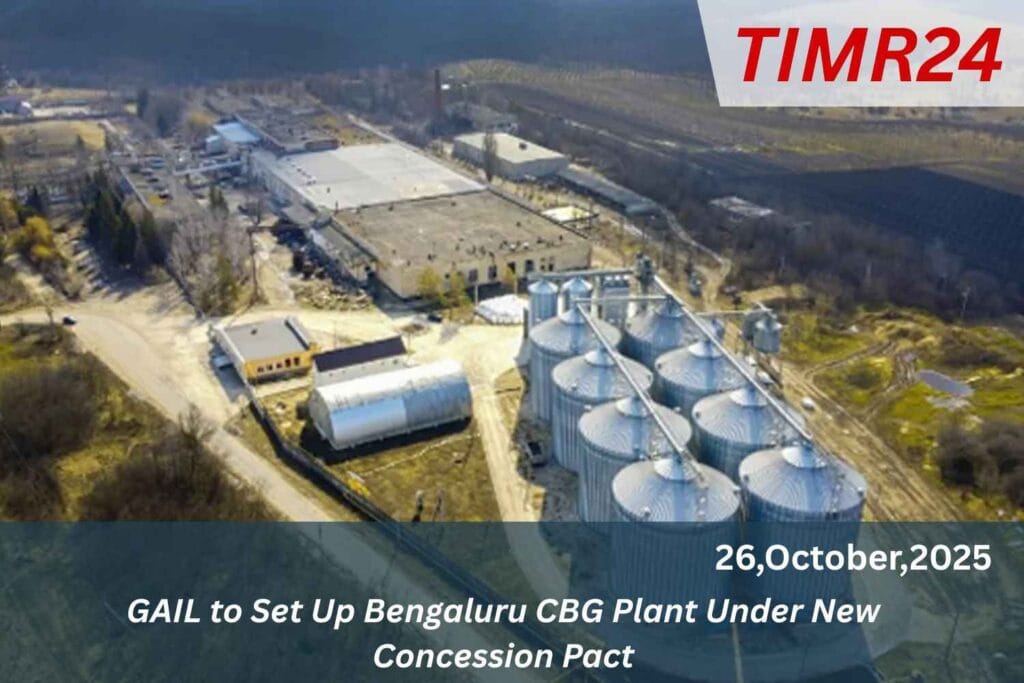
GAIL has signed a 20-year concession agreement with Bengaluru City Municipal Corporation to set up a compressed biogas (CBG) plant, aiming to generate around 10 tonnes of CBG daily. The project will use municipal solid waste as feedstock, contributing to clean energy generation and efficient waste management The CBG will be used in GAIL’s City Gas Distribution network to promote cleaner fuel usage, aligning with the government’s Sustainable Alternative Towards Affordable Transportation scheme GAIL (India) Limited has embarked on a significant sustainability initiative by signing a tripartite Concession Agreement with the Greater Bengaluru.
Authority (GBA) and Bengaluru Solid Waste Management Limited (BSWML) to establish a Compressed Bio Gas (CBG) plant in Bengaluru. This project, located in Haralakunte Village, Bengaluru South Taluk, aims to address the city’s growing waste management challenges while contributing to clean energy generation and promoting sustainable agriculture Under the terms of the agreement, (Renewable Power) GBA will provide 18 acres of land on a permissive-use basis, and BSWML will supply 300 tonnes per day of segregated municipal solid waste (MSW) for processing. The plant is expected to produce approximately 12.6 tonnes of CBG and 22 tonnes of Fermented Organic Manure.
(FOM) daily The CBG produced will be utilized in GAIL’s City Gas Distribution network, promoting cleaner fuel usage and supporting the Government of India’s Sustainable Alternative Towards Affordable Transportation (SATAT) initiative. Additionally, the FOM will contribute to sustainable agriculture practices by providing organic fertilizer The Concession Agreement is set to remain valid for 25 years from the date the project becomes operational, ensuring a long-term commitment to sustainable waste management and green energy generation in Bengaluru. This initiative aligns with the objectives of the Swachh Bharat Mission, aiming to integrate clean energy solutions with effective solid waste management.
GAIL’s City Gas Distribution
Q1. What is Compressed Biogas (CBG)?
CBG is a renewable fuel produced by processing organic waste into methane-rich gas, which can be used as a substitute for CNG in transportation and industry.
Q2. Where will GAIL’s new CBG plant be located?
The plant will be established in Bengaluru, Karnataka, under a new concession agreement.
Q3. How does the CBG plant benefit the environment?
The plant reduces methane emissions, lowers reliance on fossil fuels, and converts waste into sustainable energy.
Q4. Who can supply feedstock to the CBG plant?
Local farmers, municipal waste management agencies, and food processing industries can provide organic waste for processing.
Q5. When is the Bengaluru CBG plant expected to be operational?
The plant is projected to commence operations within the next 1–2 years, subject to regulatory approvals and construction timelines.