













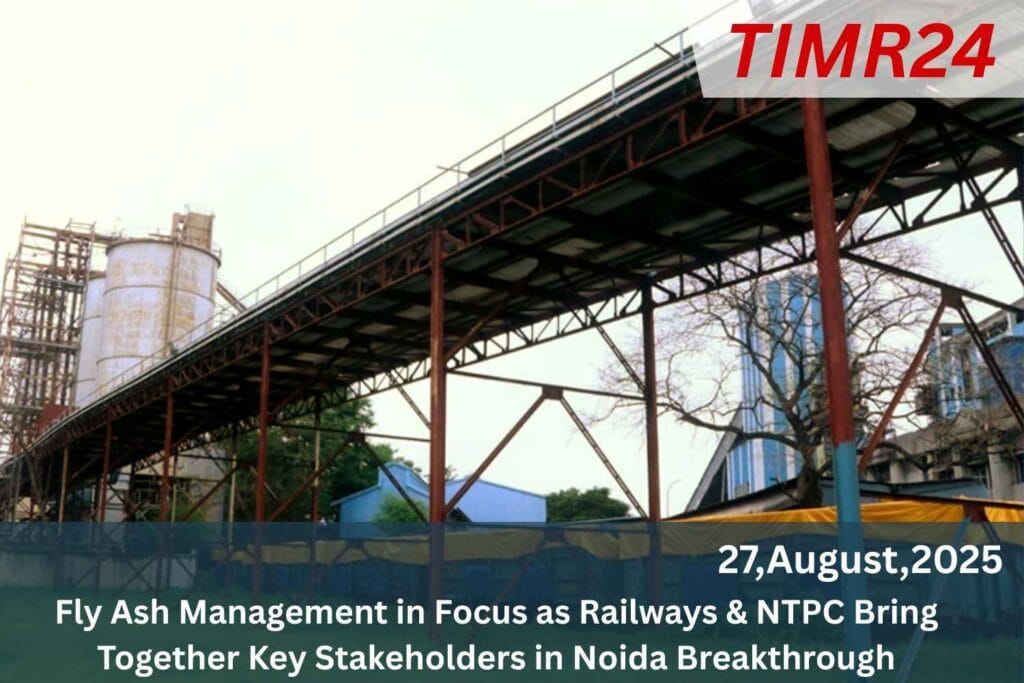
India’s Ministry of Railways and National Transport Policy Council (NTPC) have held a National Conference on Fly Ash Utilisation and Transportation to discuss sustainable fly ash management strategies. The conference, held on 25th August 2025, aimed to foster partnerships and develop innovative solutions for large-scale fly ash transportation. India generated 340.11 million tonnes of fly ash in 2024-25, with 332.63 million tonnes successfully utilized. The Railways is offering green and sustainable transportation options through freight concessions, with potential for expansion. The conference aimed to develop actionable strategies for cleaner, greener, and more resource-efficient growth
Ash management has emerged as a pressing issue in India, with power generation companies and infrastructure developers seeking sustainable solutions. In a significant move, Indian Railways and NTPC recently organized a stakeholder meet in Noida to discuss strategies for effective ash utilization The collaboration reflects India’s push towards cleaner energy practices, sustainable construction, (Railways) and reduced environmental impact ash is a by-product of coal-based thermal power plants, and India produces over 200 million tonnes annually. If not managed properly, it can cause severe land, water, and air pollution. Effective management ensures the material is used in eco-friendly
Applications like cement, bricks, road construction, and India has been steadily increasing fly ash utilization to over 80% in recent years. The Indian Railways, known for its massive infrastructure footprint, has been actively promoting the use of fly ash. From building embankments to producing eco-friendly concrete sleepers, the Railways have showcased how waste can be transformed into a resource. In fact, projects such as have integrated sustainable construction materials, including fly ash, to minimize environmental harm.
NTPC’s Role in Sustainable Fly Ash Initiatives
NTPC, India’s largest power producer, contributes significantly to ash generation. To address this, the company has launched multiple programs to ensure safe disposal and encourage industrial use. NTPC has set up ash utilization cells, partnered with cement manufacturers, and even promoted fly ash-based brick-making units in rural areas. These efforts not only reduce pollution but also create livelihood opportunities. More details about NTPC’s initiatives can be found on The Noida meet brought together government officials, construction companies, cement manufacturers, and environmental experts. The discussions cantered on improving transportation of ash, enhancing storage facilities, and creating policies for 100% utilization. By aligning multiple sectors,
The initiative ensures that ash is no longer seen as waste but as a resource with economic and environmental benefits. Despite progress, several challenges remain. Transportation costs, lack of awareness among smaller contractors, and inadequate infrastructure for storage limit effective utilization. Railways and NTPC aim to resolve these issues by introducing better logistics and incentivizing industrial use. Looking ahead, India aims for 100% ash utilization by 2030. Railways will continue to expand eco-friendly infrastructure projects, while NTPC will innovate in waste-to-wealth initiatives. Collaborative meets like the one in Noida are crucial in ensuring all stakeholders move in the same direction for a greener future.
The Railways and NTPC-led stakeholder engagement in Noida marks a turning point in India’s ash management journey. By focusing on collaboration, policy support, and sustainable practices, India is transforming industrial waste into an opportunity for growth and sustainability. (IRB’s). The growing importance of sustainable practices in India’s infrastructure and power sectors has once again come into the spotlight with the recent stakeholder meeting in Noida, where the Indian Railways and NTPC collaborated to highlight the urgent need for effective ash management. This gathering brought together policymakers, industry experts, environmental specialists, and representatives from the construction and logistics industries to deliberate on long-term strategies that can transform fly ash from an environmental liability into a valuable resource.
Fly ash, a by-product of coal-fired thermal power plants, has historically been a challenge for disposal, leading to concerns over land use, air pollution, and water contamination. However, in the last decade, India has seen growing awareness about its potential in cement manufacturing, road construction, and even in the making of bricks and embankments, which has positioned it as a material of national importance in the sustainable development discourse. At the Noida meet, Indian Railways outlined its efforts to integrate fly ash into large-scale projects, citing examples from freight corridor developments and eco-friendly railway embankments, which echo similar initiatives like.
Q1. What is the purpose of the Railways & NTPC fly ash management meet in Noida?
The meeting aims to bring stakeholders together to enhance fly ash utilization, reduce waste, and promote sustainable infrastructure.
Q2. Why is fly ash management important in India?
It reduces environmental pollution, minimizes landfill usage, and supports eco-friendly construction projects.
Q3. How are Indian Railways involved in fly ash management?
Railways use fly ash in cement, concrete, and embankments while also ensuring eco-friendly transportation of ash.
Q4. What role does NTPC play in fly ash utilization?
NTPC, being India’s largest power producer, generates significant fly ash and promotes its safe disposal and industrial use.
Q5. What are the benefits of sustainable fly ash utilization?
It reduces carbon footprint, lowers construction costs, conserves natural resources, and ensures a cleaner environment.