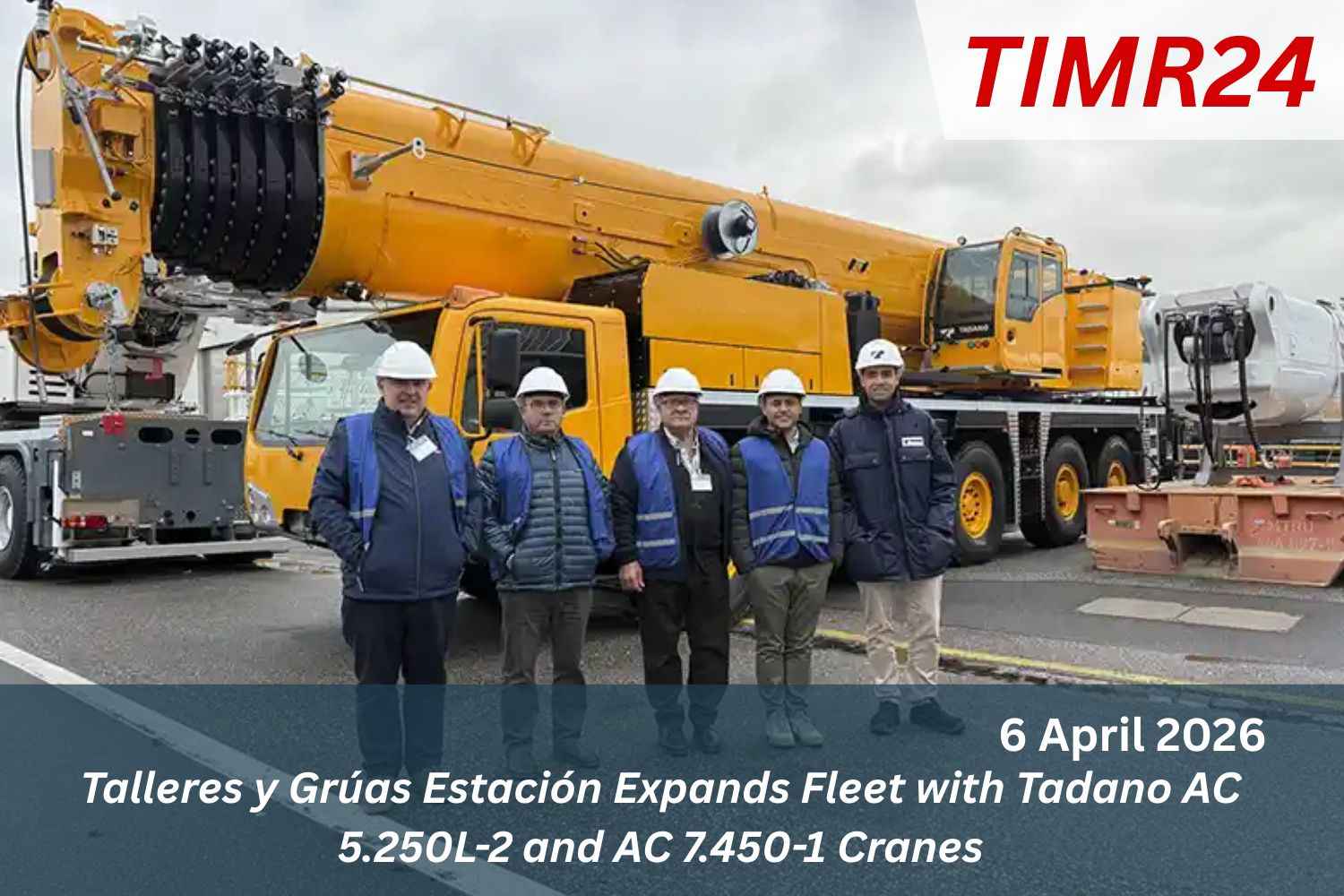









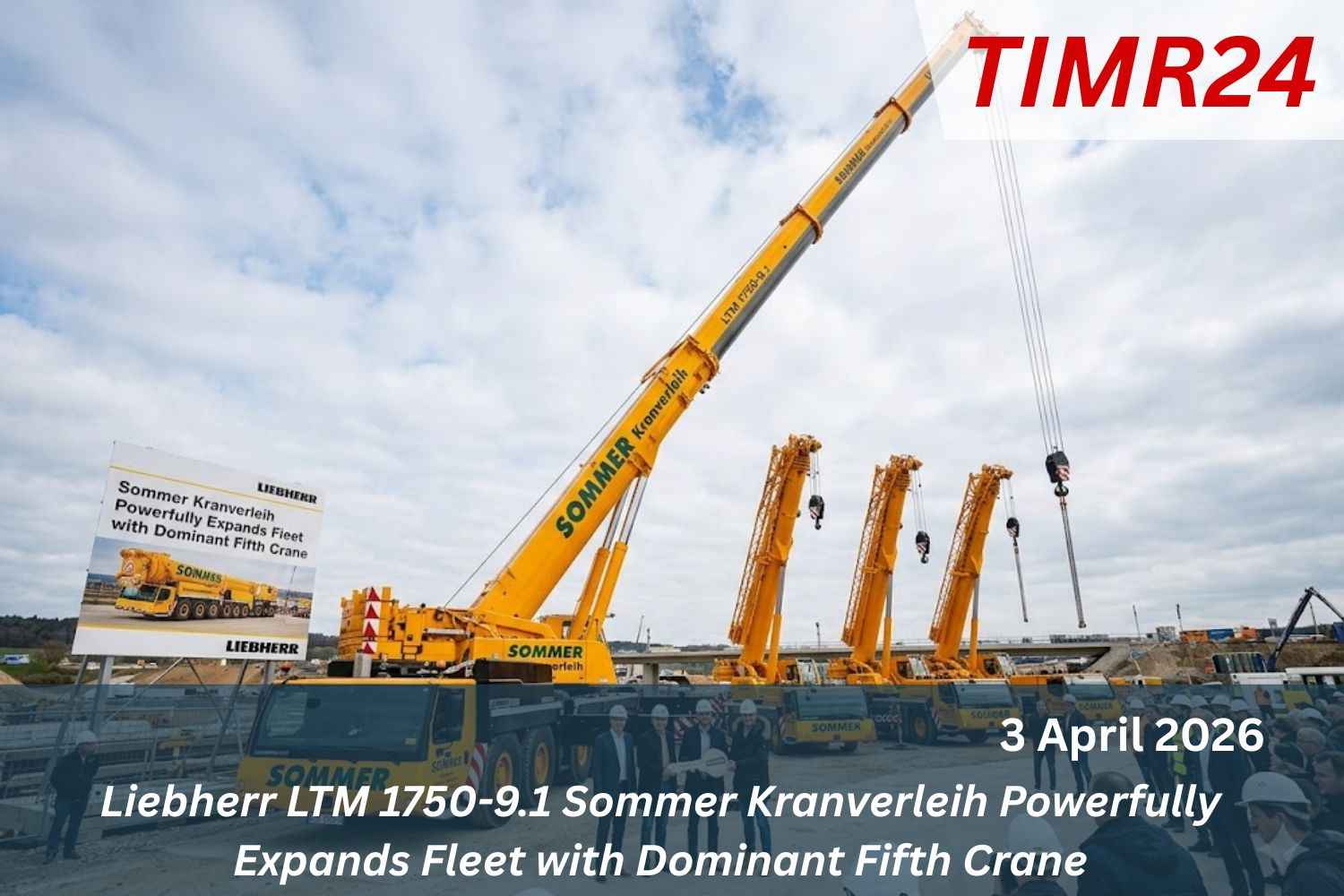
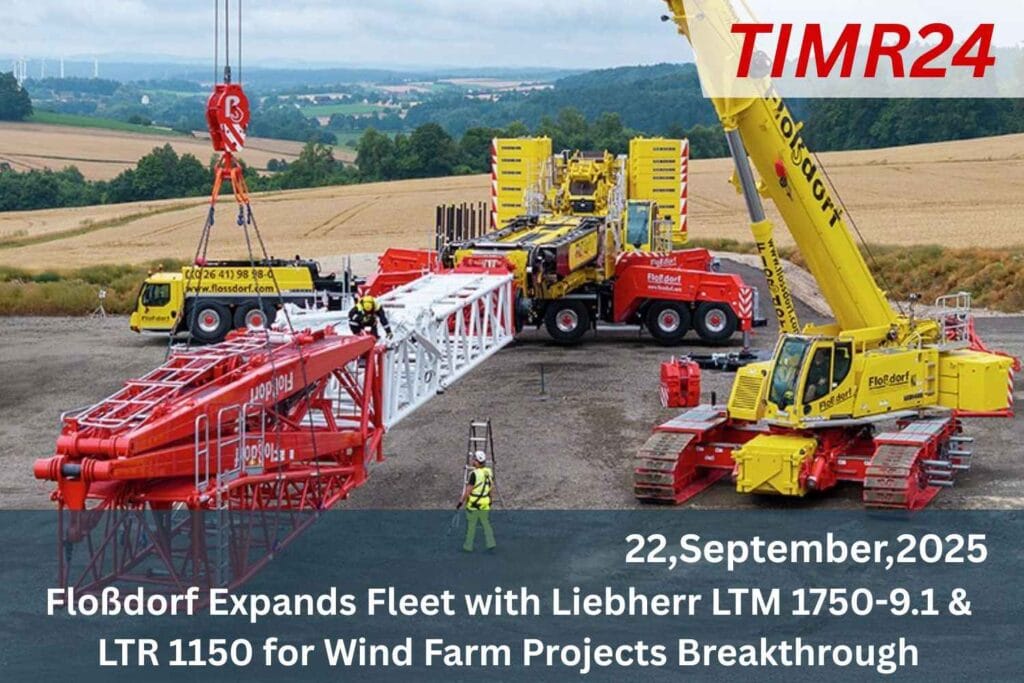
Dietmar Floßdorf GmbH & Co. KG has added two new Liebherr machines to its crane fleet, the LTM 1750-9.1 mobile crane and the LTR 1150 telescopic crawler crane. The LTM 1750-9.1 is designed for heavy-duty assembly sectors, particularly wind power, and has a high load capacity, allowing for efficient installation of large components. The LTR 1150, a 150-tonne crane, is primarily used for wind projects, handling setup tasks and system components. The additions have already proven successful at a wind farm near Alsfeld, Hesse. Floßdorf’s fleet now exceeds 20 cranes. Write Floßdorf’s latest decision to expand its fleet with the addition of the Liebherr LTM 1750-9.1 mobile.
Crane and the Liebherr LTR 1150 telescopic crawler crane is a development that reflects not just a business upgrade but also a deeper alignment with Europe’s growing renewable energy ambitions, particularly in the wind farm sector where the demand for efficient heavy-lifting equipment continues to rise at an unprecedented pace, and this expansion demonstrates how technology, sustainability, and infrastructure growth intersect in a way that will influence the broader construction and energy markets. The significance of the LTM 1750-9.1 lies in its exceptional lifting capacity of 800 tonnes combined with the mobility of a nine-axle chassis, which allows it to be transported swiftly.
Between project sites while maintaining the power required to lift modern wind turbine components that often exceed the capabilities of smaller cranes, and its rapid setup time ensures minimal downtime, making it an asset for renewable projects where deadlines are often critical to align with seasonal weather conditions. Alongside it, the LTR 1150 provides crawler stability combined with the flexibility of a telescopic boom, a combination that makes it particularly suitable for uneven and challenging terrains often found in onshore wind farm locations, thus giving Floßdorf a diversified capability that enables them to serve both standard and complex project environments.
Something that is increasingly important as Europe looks to scale up its renewable energy output. To understand this expansion in a broader policy context, it is useful to note that the (Renewable Energy) emphasizes the urgent need to deploy more wind and solar power infrastructure across the continent, and companies like Floßdorf, by investing in advanced cranes, are providing the logistical backbone that allows these policies to be translated into on-ground projects The choice of Liebherr as a partner is equally telling, as Liebherr has long been recognized as a pioneer in crane technology, delivering equipment that emphasizes reliability, innovation, and operational.
Efficiency, and Floßdorf’s alignment with such a trusted manufacturer assures its clients that their projects will be supported by some of the best machinery available. The LTM 1750-9.1 is particularly valued in the wind energy sector because it can handle the large rotor blades and heavy nacelles of modern turbines that are continuously growing taller and more powerful, and the LTR 1150 complements this by offering the ability to move with loads across rough terrain, enhancing operational flexibility in remote wind farm locations where access can be a major challenge. For context, readers may consider how similar equipment investments have supported large-scale.
Infrastructure efforts, such Mumbai, where efficient lifting machinery directly translates into shorter project timelines and improved cost management, drawing a parallel to how Floßdorf’s cranes will support the renewable sector. Beyond immediate project efficiency, the expansion is closely tied to Europe’s broader clean energy goals, as Germany and neighbouring countries ramp up both onshore and offshore wind farms to meet 2030 climate targets. According to the global wind capacity needs to triple by 2030 to align with net-zero goals, and the role of crane companies like Floßdorf becomes indispensable in ensuring that the physical installation of turbines can keep pace.
With policy ambitions. Floßdorf’s ability to deploy the LTM 1750-9.1 and LTR 1150 across multiple project sites not only increases its competitiveness but also supports Europe’s overall capacity to meet renewable targets without bottlenecks in construction logistics. Internally, parallels can be drawn to how reforms in infrastructure procurement, like NHAI’s are designed to ensure higher quality and transparency in project execution, illustrating that across sectors, raising technical standards is a prerequisite to long-term success From the perspective of Floßdorf’s clients, this expansion provides direct benefits in terms of reliability, speed, and cost efficiency Project developers seeking to.
Build wind farms often face logistical challenges ranging from narrow weather windows to remote site conditions, and having access to high-capacity, versatile cranes like the means reduced downtime, fewer transportation hurdles, and more accurate handling of turbine components, all of which translate into financial savings and reduced project risks. This mirrors how other infrastructure initiatives, such as, show that efficiency in execution is increasingly prioritized, as stakeholders seek to deliver projects faster without compromising on quality. Floßdorf’s expansion also enhances safety, as newer cranes integrate advanced control systems, stability.
Monitoring, and precision lifting technologies, reducing the chances of accidents in high-risk environments like wind farm construction sites Another dimension to consider is how such investments highlight the evolving role of crane rental companies from being simple equipment providers to becoming strategic partners in energy and infrastructure development. By aligning its fleet with the requirements of the renewable sector, Floßdorf is not only meeting current demand but also anticipating the needs of the future, a strategy that places it in a favourable position as Europe accelerates its clean energy transition. This foresight echoes other industrial shifts, such as which anticipates future.
Passenger growth and thus invests in capacity ahead of demand, ensuring that infrastructure does not lag behind usage patterns. In the same way, Floßdorf is ensuring that lifting capacity does not become a bottleneck in the renewable energy supply chain Looking forward, Floßdorf’s expanded fleet will likely open new opportunities in offshore projects as well, where the lifting requirements are even more complex due to harsher conditions and larger turbine sizes. Offshore wind farms are central to Europe’s future renewable strategy, and having cranes like the LTM 1750-9.1, which can be adapted with specialized boom configurations, makes Floßdorf a competitive player in this.
High-value market. Additionally, the flexibility of the LTR 1150 ensures that onshore projects with difficult terrain remain within reach, providing a balanced capability that spans the entire wind farm construction landscape. By continuing to invest in advanced machinery, Floßdorf demonstrates a commitment not only to its clients but also to broader sustainability goals, aligning commercial success with environmental responsibility Floßdorf’s decision to bring the Liebherr LTM 1750-9.1 and LTR 1150 into its fleet is more than an operational update; it is a statement of intent that the company will play a key role in Europe’s renewable energy journey. By combining power.
Mobility, and adaptability, these cranes represent the technological foundation required to build the infrastructure of a cleaner future, ensuring that Floßdorf is not just keeping pace with industry trends but actively shaping them. For readers who wish to dive deeper into renewable developments, the provide a comprehensive overview of global trends, reinforcing why strategic investments like Floßdorf’s are critical to success.
Q1. Why did Floßdorf add Liebherr LTM 1750-9.1 and LTR 1150 to its fleet?
Floßdorf added these cranes to enhance lifting efficiency for wind farm and large infrastructure projects.
Q2. What makes the Liebherr LTM 1750-9.1 suitable for wind farms?
Its 800-ton lifting capacity and long boom make it perfect for erecting tall wind turbines.
Q3. How does the Liebherr LTR 1150 benefit renewable projects?
It combines crawler stability with telescopic flexibility, ideal for uneven wind farm terrains.
Q4. How will this expansion impact Floßdorf’s clients?
Clients gain access to faster project execution, cost efficiency, and higher reliability.
Q5. What role does this play in Europe’s renewable energy push?
The expansion supports Europe’s clean energy targets by accelerating wind power construction.