



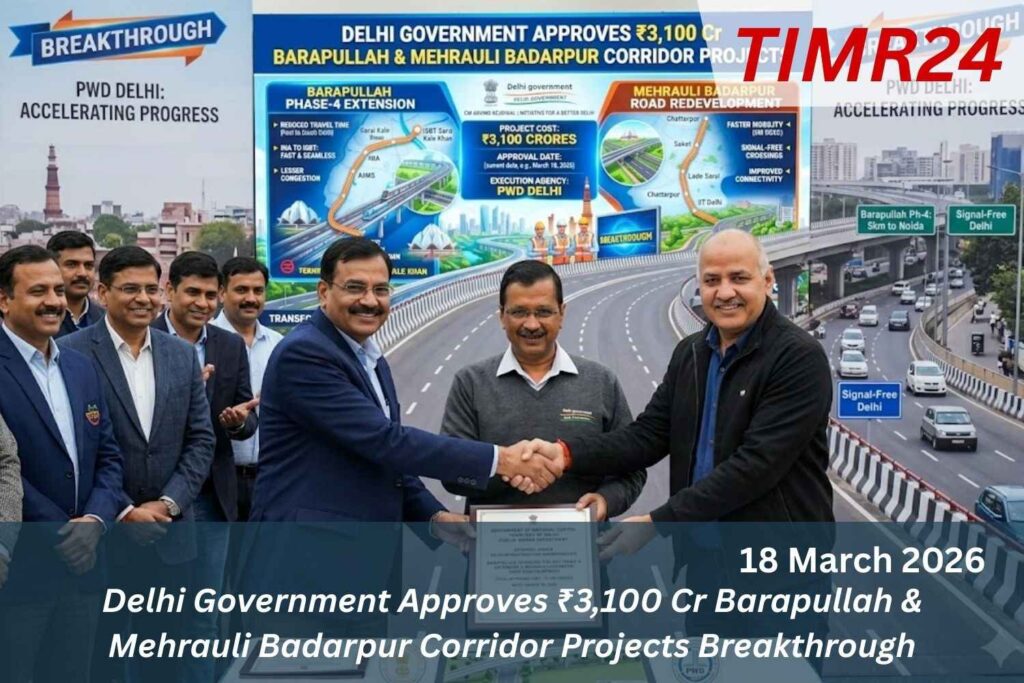
The Government of Delhi has approved two significant road infrastructure projects totaling over Rs 3,100 crore to enhance traffic flow and connectivity in the capital. The projects include Barapullah Phase III Elevated Road:** With an updated cost of over Rs 1,635 crore, this project will connect Sarai Kale Khan to Mayur Vihar, extending the existing Barapullah corridor. It aims to provide signal-free travel between east and south Delhi, reducing congestion in key areas and is scheduled for completion by June 30, 2026 Mehrauli–Badarpur Road Double-Decker Elevated Corridor:** This project, costing more than Rs 1,471 crore, involves constructing a six-lane elevated flyover and underpasses, to be executed by.
Integrating Structures To Improve Connectivity
The Delhi Metro Rail Corporation. The phased project will address traffic congestion along a major corridor in South Delhi, with a focus on integrating structures to improve connectivity The Delhi Government has taken a significant step toward improving the capital’s transportation system by approving two major infrastructure projects worth ₹3,100 crore. These include the long-awaited Barapullah Phase III extension and the Mehrauli–Badarpur elevated corridor. With increasing traffic congestion and rising population pressure, such large-scale projects are essential to ensure smoother mobility and better urban planning. These developments reflect a strong push toward modernizing.
Delhi’s road network and enhancing connectivity across key regions of the city the capital The Barapullah corridor has already proven to be one of the most important road networks in Delhi, connecting East Delhi to Central and South Delhi. The Phase III extension is expected to further strengthen this connectivity by linking previously underserved areas. This will not only reduce travel time for daily commuters but also decongest several busy roads. The extension is strategically planned to handle high traffic volumes and improve the overall commuting experience.
Crucial Development Aimed At Reducing
With better road alignment and modern construction techniques, the project aims to create a seamless travel route across multiple parts of the city On the other hand, the Mehrauli–Badarpur elevated corridor is another crucial development aimed at reducing traffic congestion in South Delhi. This stretch is known for heavy traffic jams, especially during peak hours, affecting thousands of daily commuters. The elevated corridor will provide a faster and more efficient route, bypassing congested intersections and improving traffic flow. Such infrastructure improvements are essential for a city like Delhi, where road traffic continues to grow rapidly.
One of the key benefits of these projects is the reduction in travel time. Commuters traveling between different parts of Delhi often face delays due to traffic congestion, signal stops, and road bottlenecks. With these new corridors, travel time is expected to decrease significantly, making daily commuting more convenient. Additionally, smoother traffic flow will also lead to lower fuel consumption, which in turn reduces overall transportation costs for individuals Another major advantage is the positive environmental impact. Traffic congestion contributes significantly to air pollution in Delhi. By improving traffic movement and reducing idle time on roads.
Sustainability And Environmental Responsibility
These projects will help in lowering vehicle emissions. This aligns with the government’s broader goal of creating a cleaner and greener city. Infrastructure upgrades like these are not just about convenience but also about sustainability and environmental responsibility The economic impact of such projects cannot be ignored either. Large-scale infrastructure developments generate employment opportunities during both construction and operational phases. They also boost local businesses by improving accessibility to different areas. Better roads mean easier transportation of goods and services, which ultimately supports economic growth.
From an urban planning perspective, these projects are part of a larger vision to transform Delhi into a modern and efficient city. As the population continues to grow, the demand for better infrastructure becomes even more critical. Projects like Barapullah Phase III and the (India) Mehrauli–Badarpur corridor are designed keeping future needs in mind. They are expected to support increasing traffic demands for years to come, making them long-term investments in the city’s development The government’s approval also highlights its commitment to improving public infrastructure and addressing key challenges faced by citizens. By investing ₹3,100 crore into.
Large Infrastructure Project
These projects, the administration is focusing on creating a better quality of life for residents. Efficient road networks not only reduce stress for commuters but also improve overall productivity by saving time However, like any large infrastructure project, there may be challenges during execution. Land acquisition, construction delays, and traffic diversions are some common issues that could arise. Proper planning and timely execution will be crucial to ensure that these projects are completed within the expected timeframe. Authorities will need to coordinate effectively to minimize disruptions and ensure smooth progress.
The approval of the Barapullah Phase III and Mehrauli–Badarpur corridor projects marks a major milestone in Delhi’s infrastructure development journey. These projects are expected to bring significant improvements in connectivity, reduce traffic congestion, and (India) contribute to economic and environmental benefits. As Delhi continues to evolve into a modern metropolis, such initiatives will play a crucial role in shaping its future.
Q1. What is the total cost of the approved projects?
The total estimated cost is around ₹3,100 crore.
Q2. What is Barapullah Phase III project?
It is an extension project aimed at improving connectivity between East and South Delhi.
Q3. What is the Mehrauli–Badarpur corridor?
It is an elevated road corridor designed to reduce traffic congestion in South Delhi.
Q4. How will these projects benefit commuters?
They will reduce travel time, traffic congestion, and improve road connectivity.
Q5. When are these projects expected to be completed?
Completion timelines will depend on construction progress but are expected within a few years.