













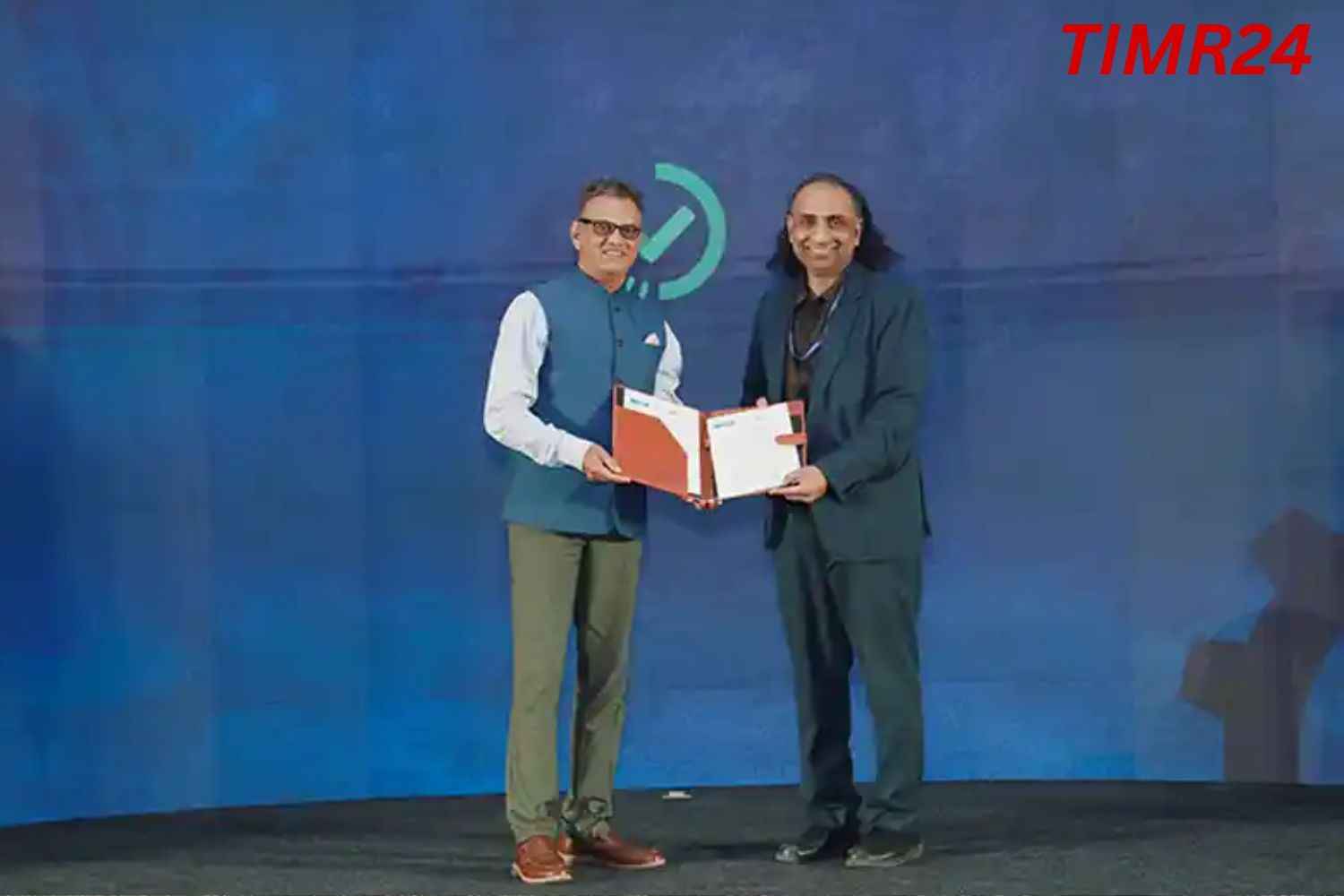




In a pivotal move for sustainable infrastructure, the Council of Scientific and Industrial Research (CSIR) organized a Technology Transfer Event for its innovative bio-bitumen technology, developed with the Central Road Research Institute and the Indian Institute of Petroleum. This technology produces bio-bitumen from agricultural residues, providing a low-carbon alternative to traditional petroleum-based bitumen and addressing pollution from agricultural waste and dependence on bitumen imports. Union Minister Nitin Gadkari emphasized its significance for India’s vision of Viksit Bharat 2047, stating that a 15% blend could save ₹4,500 crore in foreign exchange.
Reducing Environmental Pollution
The adoption of bio-bitumen aligns with India’s climate goals and offers new income opportunities for farmers while reducing environmental pollution. CSIR aims to collaborate with the Ministry of Road Transport and Highways (MoRTH) to integrate this technology into road construction, marking a key milestone in making innovative solutions available for the nation’s infrastructure needs The Council of Scientific and Industrial Research (CSIR) has taken a significant step toward transforming India’s road construction ecosystem by transferring its indigenous bio-bitumen technology for commercial adoption. This breakthrough innovation addresses one of the most pressing.
Challenges in infrastructure development reducing dependence on petroleum-based bitumen while cutting carbon emissions. As India continues to expand its road network under ambitious national programs, the introduction of sustainable alternatives such as bio-bitumen is expected to redefine how roads are built, maintained, and financed in the coming decades. The technology transfer reflects CSIR’s broader mandate to translate laboratory-scale innovations into scalable, industry-ready solutions that contribute to economic growth and environmental sustainability Bio-bitumen developed by CSIR laboratories is derived from renewable and waste-based sources.
India’s Climate Commitments
Including agricultural residues and biomass by-products. Unlike conventional bitumen, which is a fossil fuel derivative, bio-bitumen significantly lowers greenhouse gas emissions across its lifecycle. This innovation aligns closely with India’s climate commitments and the national goal of achieving net-zero emissions by 2070. By enabling industries to adopt this technology, CSIR has ensured that scientific research directly contributes to cleaner infrastructure, reduced import dependency, and better utilization of domestic resources. The technology transfer also demonstrates how public-funded research institutions can catalyze private-sector participation in sustainable development.
From a technical perspective, CSIR’s bio-bitumen has been engineered to match and, in some performance parameters, exceed the properties of traditional petroleum-based bitumen. Extensive laboratory testing and pilot-scale trials have shown that bio-bitumen offers comparable binding strength, durability, and resistance to temperature variations. These characteristics make it suitable for diverse climatic conditions across India, from high-temperature regions to areas experiencing heavy rainfall. Importantly, the material can be blended with conventional bitumen or used independently, allowing a phased transition rather than a disruptive overhaul of existing road construction practices.
Oil Requirements, And Bitumen Procurement
This flexibility is critical for large-scale adoption by contractors and state agencies The transfer of bio-bitumen technology is expected to have a substantial economic impact on the road construction sector. India imports a large portion of its crude oil requirements, and bitumen procurement contributes significantly to infrastructure project costs. By replacing a portion of petroleum-based bitumen with domestically produced bio-bitumen, project developers can reduce material costs while insulating themselves from volatile global oil prices. Moreover, the use of agricultural and biomass waste creates new revenue streams for rural communities, strengthening.
The circular economy. This aligns with the government’s focus on rural development and value addition to farm residues, which are often underutilized or burned, causing air pollution Environmental benefits form the core of CSIR’s bio-bitumen initiative. Conventional road construction materials are among the major contributors to carbon emissions in the infrastructure sector. Bio-bitumen, by contrast, has a lower carbon footprint due to its renewable feedstock and reduced energy-intensive processing. The adoption of this technology can significantly lower emissions associated with road building and maintenance, especially when implemented at scale under.
India’s Sustainable Infrastructure
National highway and rural road programs. This development complements other green construction initiatives, such as the use of recycled aggregates and warm-mix asphalt technologies, which are increasingly discussed under India’s sustainable infrastructure framework (Coal) Policy support is likely to play a crucial role in accelerating the adoption of bio-bitumen. The technology transfer by CSIR provides a strong foundation for policymakers to introduce standards, incentives, and pilot mandates for sustainable road materials. Government agencies such as the Ministry of Road Transport and Highways (MoRTH) and NITI Aayog are increasingly.
Emphasizing climate-resilient infrastructure. Bio-bitumen fits well within this policy narrative, offering a practical solution rather than a conceptual alternative. As standards evolve, bio-bitumen could be integrated into national specifications, enabling widespread deployment across highways, urban roads, and rural connectivity The technology transfer model adopted by CSIR also highlights the growing emphasis on industry-academia collaboration in India. By licensing the bio-bitumen technology to industrial partners.
Customize Production Based On Regional Biomass
CSIR ensures faster commercialization, quality control, and scalability. This approach bridges the gap between research outcomes and real-world application, a challenge that has historically limited the impact of scientific innovation. Licensed manufacturers can customize production based on regional biomass availability while adhering to performance benchmarks established by CSIR. This decentralized production model supports regional self-sufficiency and reduces transportation-related emissions In the long term, CSIR’s bio-bitumen technology has the potential to position India as a global leader in sustainable road construction materials.
As countries worldwide search for low-carbon alternatives to traditional infrastructure inputs, India’s experience with bio-bitumen could be exported to emerging and developed markets alike. This opens avenues for technology diplomacy and green exports, reinforcing India’s role in global climate solutions. The success of this initiative may also encourage further research into bio-based alternatives for cement, asphalt modifiers, and construction chemicals, creating a holistic ecosystem of sustainable materials The road ahead for bio-bitumen adoption will depend on awareness, capacity building, and performance validation at scale.
Contractors, engineers, and policymakers must be trained to understand the material’s properties and application techniques. Demonstration projects and performance monitoring will be essential to build confidence among stakeholders. However, the groundwork laid by (India) CSIR through rigorous research and transparent technology transfer significantly reduces adoption risks. As infrastructure spending continues to rise, integrating sustainability at the material level ensures that growth does not come at the cost of environmental degradation.
Q1. What is CSIR’s bio-bitumen technology?
CSIR’s bio-bitumen technology is an indigenous, eco-friendly alternative to petroleum-based bitumen developed using renewable and waste-derived biomass sources.
Q2. How does bio-bitumen support sustainable road construction?
Bio-bitumen reduces carbon emissions, lowers fossil fuel dependency, and promotes circular economy practices by utilizing agricultural and biomass waste.
Q3. Can bio-bitumen replace conventional bitumen completely?
Bio-bitumen can be used independently or blended with conventional bitumen, allowing flexible and phased adoption based on project requirements.
Q4. Who can use CSIR’s bio-bitumen technology?
The technology has been transferred to industrial partners, enabling manufacturers, contractors, and government agencies to adopt it commercially.
Q5. What is the long-term impact of bio-bitumen adoption in India?
Widespread adoption can reduce infrastructure-related emissions, lower construction costs, boost rural income, and position India as a leader in green road technologies.