



















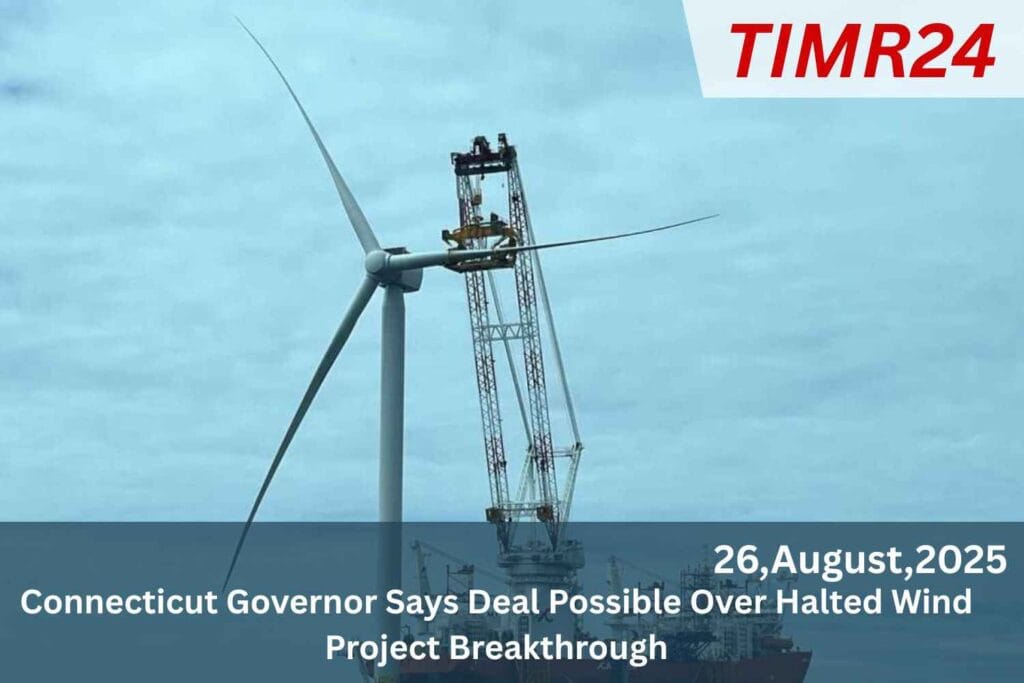
Connecticut Governor Ned Lamont has pledged to work with the Trump administration to restart construction on a major offshore wind development, despite the Interior Department’s surprise halt of the project. Lamont, a Democrat, has already discussed regional power supplies with the Interior and Energy Departments and believes an agreement on the wind farm is possible. The Revolution Wind project, backed by Denmark’s Orsted A/S, was approved by the Biden administration in 2023 and is 80% complete. The project’s halt marks a new setback for the wind industry The offshore wind industry has become a cornerstone of the United States’ clean energy ambitions, but challenges such as financial overruns, regulatory delays, and stakeholder disputes often stall progress.
In Connecticut, a high-profile offshore wind project recently faced suspension, raising concerns about the state’s renewable energy roadmap. However, Governor Ned Lamont has now suggested that a potential deal may be underway to revive the project, sparking renewed optimism (Logistics Park) The halted project, part of Connecticut’s broader plan to transition toward renewable energy, was initially designed to power thousands of homes with clean electricity. Delays arose due to rising construction costs, supply chain disruptions, and disagreements between developers and regulatory authorities. The suspension not only slowed the state’s renewable agenda but also triggered debates about the reliability of offshore wind investments.
Governor’s Statement and Negotiations
Governor Lamont’s recent remarks have offered a glimpse of hope. He indicated that discussions with developers and federal regulators are moving toward an agreement that could address financial gaps and regulatory challenges. While details remain under wraps, stakeholders believe a resolution is possible that balances economic viability with environmental protection. The halted wind project is not just about power generation it also represents job creation, community investment, and regional leadership in green innovation. Local businesses and port authorities have expressed concerns about potential losses in employment opportunities if the project is permanently cancelled.
At the same time, Connecticut’s renewable energy targets align with the Biden Administration’s nationwide offshore wind strategy. According to the (Energy), offshore wind is expected to supply 30 gigawatts of clean power by 2030, enough to power millions of homes. Public sentiment has been mixed. Environmental groups have voiced strong support for reviving the project, urging state leaders to ensure long-term sustainability commitments. On the other hand, skeptics argue that repeated delays and financial uncertainties highlight flaws in the offshore wind model.
If a deal is finalized, the project could serve as a benchmark for other states grappling with similar challenges. It would reaffirm Connecticut’s leadership in green innovation and reinforce its position as a critical player in New England’s renewable landscape. Logistics Park, to see how global infrastructure and energy projects are interconnected. Governor Lamont’s optimism comes at a pivotal moment. Connecticut’s halted wind project symbolizes both the promise and challenges of transitioning to clean energy. If negotiations succeed, it could revitalize confidence in offshore wind investments and accelerate the region’s march toward sustainable power generation. readers should follow the (Laboratory), which provides research and analysis on renewable energy technologies.
Q1. Why was Connecticut’s wind project halted?
It was suspended due to financial challenges, rising costs, and regulatory delays.
Q2. What did the Governor say about the project?
Governor Lamont stated that negotiations are ongoing and a deal could revive the project.
Q3. How will the project benefit Connecticut?
It will provide clean energy, create jobs, and support the state’s renewable energy goals.
Q4. How does this project align with U.S. climate goals?
It supports the federal target of 30 GW of offshore wind by 2030.
Q5. Could delays affect Connecticut’s renewable energy commitments?
Yes. Any prolonged suspension could hinder the state’s ability to meet its clean energy deadlines, making the revival of this project crucial.