











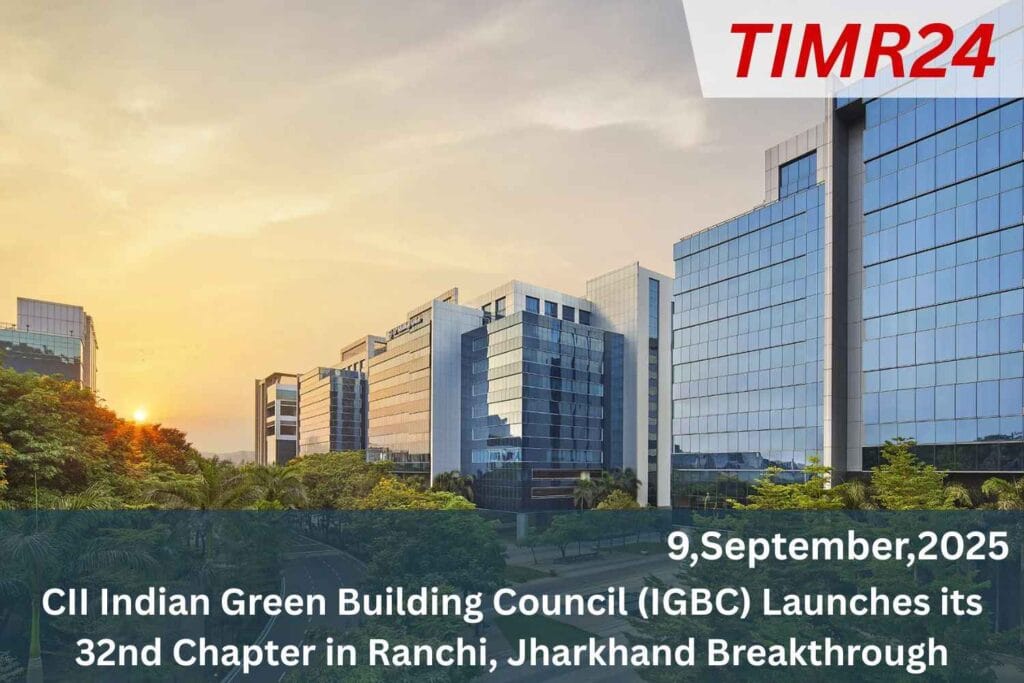
The CII Indian Green Building Council (IGBC) has launched its 32nd Chapter in Ranchi, aiming to promote sustainable building practices across the region. The chapter aims to create a future-ready built environment that prioritizes energy conservation, low-carbon materials, and healthy living spaces. The launch of the chapter marks a significant step in Jharkhand’s urban development journey, as the state is experiencing rapid growth. The government is committed to creating an enabling policy and regulatory environment that encourages green building practices, fosters innovation in construction materials and technologies, and prioritizes the well-being of citizens.
The chapter will also convert some operational government buildings as IGBC green certified, and smaller projects and affordable housing under the purview of the state government will be rated under suitable green building frameworks. The chapter will play the role of a support system and innovation hub, guiding builders, developers, and partners through the green transition. The event concluded with a technical session on “Green Building Materials, Technologies & Solutions,” featuring presentations on energy-efficient glazing systems, green steel, low-carbon cement, and IGBC certification by leading sector experts.
32nd regional chapter in Ranchi Jharkhand
The Confederation of Indian Industry (CII), through its dedicated arm Indian Green Building Council (IGBC), has officially launched its 32nd regional chapter in Ranchi, Jharkhand. This breakthrough highlights India’s growing commitment to sustainable construction, renewable energy integration, and climate-responsive infrastructure. By bringing Jharkhand into its expanding network, IGBC has opened a new chapter not only in geographical reach but also in deepening the national dialogue on how growth and sustainability can complement each other.
Jharkhand, often called the mineral-rich state of India, is also witnessing rapid urbanization and industrialization. Cities like Ranchi are expanding at an unprecedented pace, creating demand for housing, industries, and commercial complexes. While this progress brings opportunities, it also raises concerns around carbon emissions, waste management, and resource depletion. The IGBC’s entry into Ranchi provides timely guidance, bridging the gap between development and sustainable practices.
Why Ranchi Matters in India’s Green Transition
Ranchi is not only the capital city of Jharkhand but also a strategic center for industrial projects, mining operations, and public sector enterprises. This makes it a crucial site for implementing green building norms and energy-efficient design frameworks. By launching a chapter here, IGBC is signaling that sustainable growth cannot be confined to metros like Delhi, Mumbai, or Bengaluru; instead, Tier-2 and Tier-3 cities must be equally empowered to contribute to India’s Net Zero by 2070 vision The new chapter aims to bring together architects, builders, policymakers, environmental experts, and industry leaders under one umbrella.
This collective approach mirrors the way other smart cities in India have been redefining urban planning. For instance, projects such as (AURIC Smart City) in Maharashtra have already integrated sustainability benchmarks, making them role models for Ranchi and similar cities Since its inception in 2001, IGBC has championed the cause of eco-friendly infrastructure in India. Its rating systems for buildings ranging from residential complexes to hospitals and educational campuses have become the gold standard for energy efficiency, water conservation, and carbon reduction. With the launch of the Ranchi chapter, these frameworks will now be accessible to builders and industries across Jharkhand.
Developers constructing housing societies, office complexes, or industrial plants can now register their projects locally and seek IGBC certifications. This localized presence ensures quicker support, training programs, and technical assistance, creating a ripple effect where more projects voluntarily adopt sustainable measures For a sense of scale, IGBC has already registered over 10 billion sq. ft of green building footprint across India. The Ranchi chapter, therefore, becomes part of a much larger movement that connects local aspirations to national climate commitments.
Opportunities for Local Industries and Communities
The IGBC Ranchi chapter is not just for big developers; it is equally relevant to small and medium enterprises, government institutions, and educational organizations. Jharkhand’s economy, being resource-intensive, can benefit enormously from cleaner technologies, energy audits, and water-efficient solutions For industries, adopting green factory certifications could mean reduced operating costs and better compliance with environmental norms. For academic institutions, this presents a chance to integrate green architecture and design courses, preparing a new generation of professionals who understand both technology and ecology.
For citizens, the most direct benefit will be healthier, cooler, and more energy-efficient homes and workplaces This model is already visible in ports and logistics hubs, where companies are taking sustainability seriously. For example shows how even large-scale projects can balance job creation with eco-conscious planning. Ranchi, through IGBC, now has the chance to replicate such models in its own industrial landscape One of the biggest advantages of IGBC chapters is their ability to conduct capacity-building programs. The Ranchi chapter will host workshops, certification training sessions, and design competitions for engineers, students, and policymakers.
These platforms are crucial because they do not just enforce sustainability as a rule but promote it as a culture of innovation Young architects in Ranchi, for instance, can experiment with local materials, passive cooling designs, and renewable energy integration while still conforming to IGBC standards. Builders can test new methods for reducing construction waste. Industries can explore carbon-neutral operations. These activities create an ecosystem where sustainability is seen not as a burden but as a pathway to competitiveness and global relevance.
Contribution to India’s Net Zero Goals
India has pledged to achieve Net Zero emissions by 2070, a goal that requires multi-level collaboration across states, cities, and industries. Jharkhand’s inclusion in IGBC’s framework directly supports this ambition. Buildings alone account for nearly 40% of global energy consumption, which means transforming how we construct and operate them can significantly cut emissions Through the Ranchi chapter, IGBC will promote net-zero energy buildings, encourage rooftop solar adoption, and drive waste-to-energy models. These steps, though implemented locally, carry national significance. For instance, just as doubled its container capacity while focusing on efficiency.
Ranchi too can aim for growth without environmental compromise. The future of Jharkhand depends on how it balances its mineral-based economy with ecological preservation. By hosting IGBC’s 32nd chapter, Ranchi has set a precedent that development does not have to be at odds with sustainability. Instead, economic growth, environmental responsibility, and social well-being can move forward hand in hand Citizens will witness a shift in how buildings are designed and operated, industries will access new technologies, and the government will find allies in meeting climate commitments. Over time, Jharkhand could even emerge as a regional hub for sustainable.
Practices, inspiring neighbouring states to follow suit. The launch of IGBC’s 32nd chapter in Ranchi represents more than an institutional expansion it is a statement of intent. It signals that India’s green movement is moving beyond its metros into states where the need for climate-conscious infrastructure is urgent. By blending traditional wisdom with modern green technologies, the Ranchi chapter offers a vision of cities that are not only livable but also future-ready As IGBC continues to spread its wings, India inches closer to becoming a global leader in sustainable urbanization, and Ranchi stands proudly at the forefront of this transformation.
Q1 What is IGBC’s new chapter in Ranchi about?
The 32nd IGBC chapter in Ranchi promotes sustainable construction, green building certifications, and eco-friendly infrastructure development.
Q2 Why is Ranchi chosen for IGBC’s expansion?
Jharkhand’s rapid industrial and urban growth makes Ranchi a hub for adopting sustainable and energy-efficient building practices.
Q3 How will IGBC Ranchi help local businesses?
It provides green building guidelines, training programs, and certification opportunities for industries, developers, and institutions.
Q4 What role does IGBC play in India’s green transition?
IGBC fosters collaboration among architects, builders, and policymakers to meet India’s climate goals through sustainable infrastructure.
Q5 How can organizations in Jharkhand join IGBC?
Local businesses and professionals can register with IGBC Ranchi, attend workshops, and apply for certifications via the (IGBC portal)