










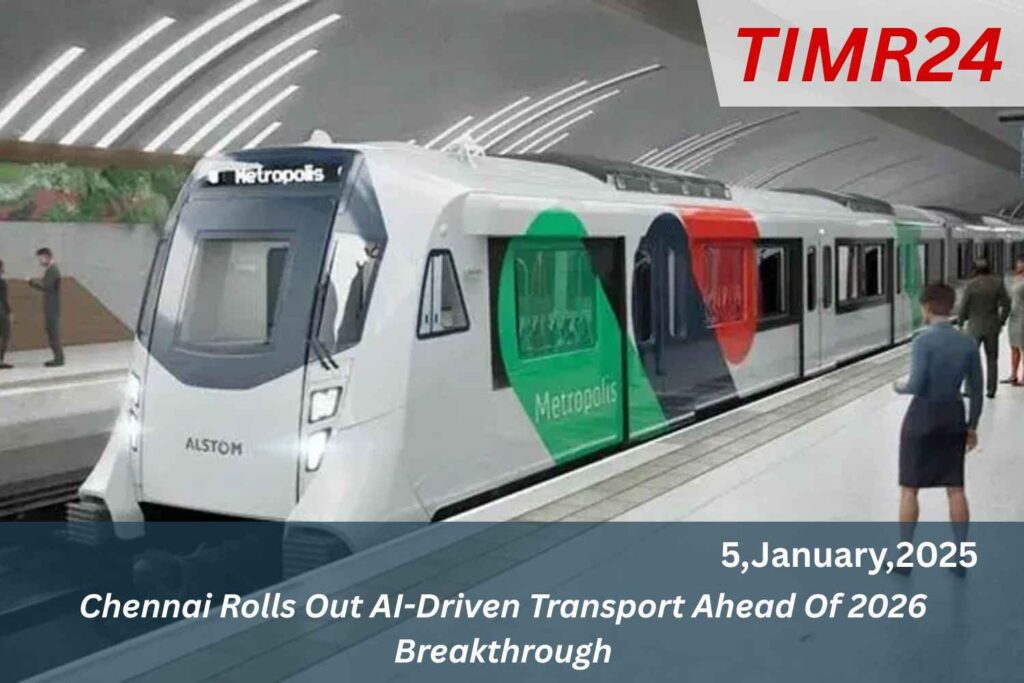
Chennai is advancing towards AI-enabled urban transport by 2026, integrating driverless metro trains, adaptive traffic signals, and digital transit platforms for improved mobility. Chennai Metro Rail Limited is set to deploy 32 automated train sets across its Phase II corridors, with a Rs 15.38 billion contract awarded to Alstom. The trains will operate using unattended train operation technology (GOA-4) for automated control, complemented by oversight from operations control centers. Alstom is also enhancing train design and maintenance through continuous optimization. Concurrently, adaptive traffic signals are being implemented by the Greater Chennai Traffic Police.
Unified Metropolitan Transport
Responding to real-time vehicle density to alleviate congestion. The Metropolitan Transport Corporation is utilizing GPS tracking for fleet management, while integrated transport systems are being developed by the Chennai Unified Metropolitan Transport Authority to streamline fare collection and route info. Despite the reliance on automation, human intervention proved crucial during challenges, such as flooding, underlining a balanced approach between and manpower. Plans for future intelligent traffic systems highlight the city’s commitment to resilient urban transport Chennai has taken a decisive step toward becoming one of India’s most technologically.
Advanced urban centres by rolling out an driven transport ecosystem well ahead of the 2026 deadline set under various smart city and urban mobility initiatives. The move reflects the Tamil Nadu government’s long-term vision to reduce congestion, enhance commuter safety, and build an intelligent transport framework capable of adapting to the city’s rapidly growing population. By integrating artificial intelligence into traffic management, public transport operations, and commuter information systems, Chennai is positioning itself as a model city for future-ready mobility in India The driven transport rollout is being implemented in phases across key traffic corridors.
Predict Congestion Patterns Optimise
Metro networks, and bus routes. Advanced algorithms are now being used to analyse real-time traffic data collected from CCTV cameras, GPS-enabled vehicles, and smart sensors installed across the city. These systems can predict congestion patterns, optimise signal timings, and recommend alternate routes to reduce delays. According to officials, this technology-driven approach is expected to significantly cut average travel time while lowering fuel consumption and emissions, aligning with India’s broader sustainability goals A major focus of Chennai’s transport initiative is intelligent traffic management. Traditional traffic signals, which operate on.
Fixed timers, are being replaced with adaptive signal control systems. These powered signals respond dynamically to real-time traffic volumes, giving priority to high-density routes and emergency vehicles. The system can also identify traffic violations such as signal jumping and lane misuse, automatically alerting enforcement teams. This has already shown promising results in pilot zones, where congestion during peak hours has reduced noticeably Public transportation is another area witnessing significant transformation. The Metropolitan Transport Corporation (MTC) and Chennai Metro Rail Limited (CMRL) have begun using AI tools to optimise.
Avoiding Underutilisation During
Scheduling and fleet deployment. By analysing passenger footfall data, weather conditions, and historical travel trends, the system adjusts bus and metro frequencies in real time. This ensures better availability during peak hours while avoiding underutilisation during off-peak periods. Commuters benefit from reduced waiting times and more predictable travel, making public transport a attractive alternative to private vehicles The rollout also includes powered commuter information systems designed to improve the overall travel experience. Digital displays at bus stops and metro stations now provide real-time arrival updates, crowd density indicators, and service alerts.
Mobile applications integrated with these systems allow commuters to plan journeys efficiently by suggesting optimal routes and modes of transport. This seamless flow of information reduces uncertainty and helps passengers make informed decisions, especially (India) during disruptions or peak travel times Safety and surveillance form a critical pillar of Chennai’s driven transport strategy enabled cameras equipped with facial recognition and anomaly detection capabilities are being deployed at major junctions and transit hubs. These systems can quickly identify accidents, stalled vehicles, or unusual crowd behaviour and alert authorities in real time.
Urban Mobility Think Tanks Environmental
Faster response times not only reduce secondary accidents but also enhance commuter confidence. Such AI-led safety frameworks are increasingly being adopted globally, as highlighted in studies published by international urban mobility think tanks Environmental sustainability is another key outcome expected from the transport rollout. By improving traffic flow and reducing idle time at intersections, the city anticipates a measurable drop in vehicular emissions. based route optimisation encourages smoother driving patterns, which directly contributes to lower fuel consumption. Additionally, data-driven insights are helping policymakers identify high-pollution.
Zones and implement targeted interventions such as dedicated bus lanes or congestion pricing. These measures support Chennai’s commitment to cleaner air and climate-resilient urban development The success of -driven transport depends heavily on data integration and governance, and Chennai has invested significantly in building a unified command and control centre. This centralised hub collects and analyses data from multiple agencies, including traffic police, transport authorities, and civic bodies. The collaborative framework ensures faster decision-making and coordinated responses during emergencies or large public events Despite its promise.
Implemented To Protect Citizen
The rollout is not without challenges. Data privacy, system interoperability, and workforce training remain key concerns. Authorities have stated that robust cybersecurity protocols and data anonymisation techniques are being implemented to protect citizen information. Simultaneously, extensive training programs are underway to equip traffic personnel and transport staff with the skills needed to manage enabled systems. These steps are crucial to ensure that technology adoption translates into real-world benefits without compromising public trust.
Chennai plans to expand integration to include autonomous shuttle pilots, smart parking management, and predictive maintenance for transport infrastructure. These (India) initiatives, scheduled to roll out progressively before 2026, will further strengthen the city’s position as a leader in intelligent urban mobility. As India’s cities grapple with congestion and sustainability challenges, Chennai’s driven transport model could serve as a blueprint for others to follow.
Q1. What is -driven transport in Chennai?
driven transport uses artificial intelligence to manage traffic signals, public transport schedules, safety surveillance, and commuter information systems in real time.
Q2. Why is Chennai rolling this out before 2026?
The early rollout helps the city prepare for future population growth, reduce congestion sooner, and align with smart city and sustainability goals.
Q3. How will commuters benefit from this system?
Commuters will experience shorter travel times, real-time updates, improved safety, and more reliable public transport services.
Q4. Is data privacy being protected?
Yes, authorities have confirmed the use of secure data handling practices, anonymisation, and cybersecurity measures.
Q5. Will this reduce pollution in Chennai?
Improved traffic flow and optimised routes are expected to lower fuel consumption and vehicular emissions significantly.