













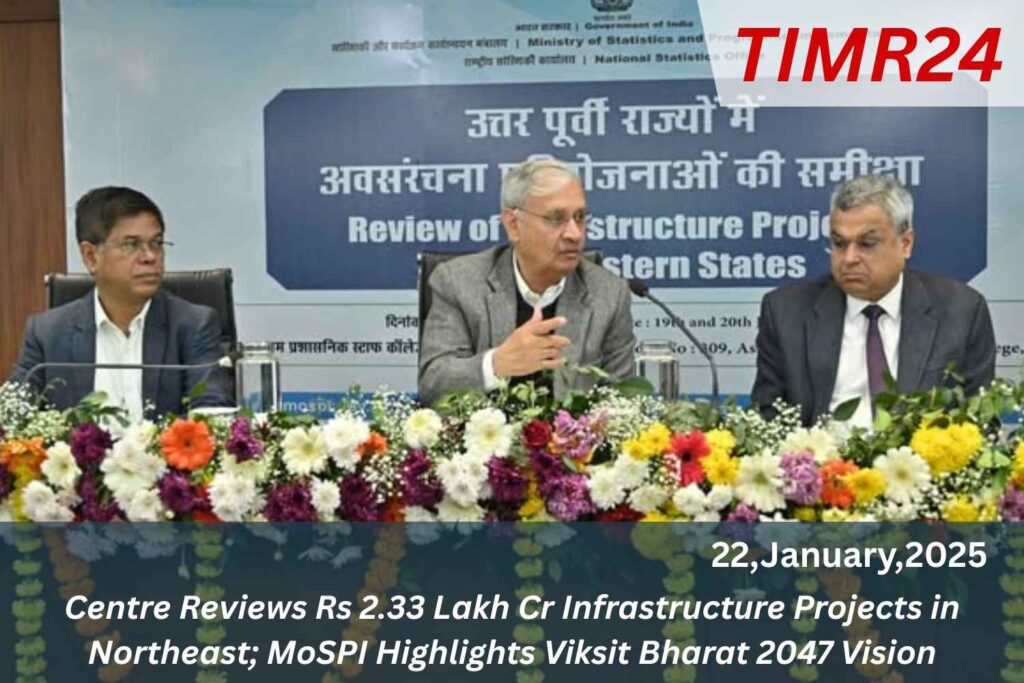
Centre Rao Inderjit Singh, Minister of State for the Ministry of Statistics and Programme Implementation, chaired a review meeting in Guwahati to evaluate Central Sector infrastructure projects in the North East. Emphasizing modern infrastructure as crucial to the Prime Minister’s Viksit Bharat vision for 2047, he stated that sustained investment is essential for enhancing India’s global competitiveness. Currently, 221 projects worth Rs 2.33 lakh crore are underway across 11 Ministries in the region. Discussions addressed challenges faced by various ministries including difficult terrain for the Ministry of Railways, contractor shortages for the Ministry of Power, and land acquisition issues for.
Institutional Monitoring And Capacity
The Ministry of Petroleum. The North East Gas Grid project requires administrative clearances, while the Ministry of Civil Aviation must tackle highway closures impacting airport redevelopment. Overall, the meeting highlighted the significance of institutional monitoring and capacity building for effective project management The Centre’s recent review of infrastructure projects worth ₹2.33 lakh crore in India’s Northeast marks a decisive moment in the country’s long-term development strategy, especially as the Ministry of Statistics and Programme Implementation (MoSPI) reiterated the broader framework of the Viksit Bharat 2047 vision This high-level review reflects not only.
The government’s growing fiscal commitment to the region but also its strategic understanding that the Northeast is no longer a peripheral geography but a central pillar in India’s economic, connectivity, and geopolitical future. As India prepares for the centenary of Independence in 2047, the Northeast is being positioned as a growth corridor linking South Asia, Southeast Asia, and the domestic hinterland through a coordinated push in roads, railways, airports, power, digital infrastructure, and logistics At the heart of this exercise lies the recognition that infrastructure is the most powerful instrument of regional transformation. Over decades, the Northeast suffered.
Toward Integrated Outcome
From connectivity gaps, difficult terrain, and limited industrial integration, which constrained both private investment and social mobility. The current review of ₹2.33 lakh crore worth of projects signals a departure from fragmented planning toward integrated, outcome-oriented execution. MoSPI’s role becomes crucial here, as it not only monitors physical and financial progress but also aligns project outcomes with national milestones under the Viksit Bharat 2047 roadmap The reviewed portfolio spans multiple sectors, including highways, rail corridors, bridges, power transmission lines, hydropower plants, digital networks, and urban infrastructure.
What distinguishes this phase of investment from earlier cycles is the emphasis on convergence. Projects are now being mapped through platforms like PM Gati Shakti, which integrates data from different ministries to avoid duplication, reduce delays, and optimize logistics efficiency MoSPI’s articulation of the Viksit Bharat 2047 vision during the review underscores that infrastructure is not being treated as an isolated engineering task but as a foundational enabler of human development. The 2047 vision document envisions a developed India with high per capita income, universal access to quality services, technological leadership, and strong regional equity.
National Highways Connecting Assam
In this context, Northeast-focused investments are not merely compensatory but transformative, aimed at unlocking trade, tourism, manufacturing, and knowledge-based industries One of the most visible outcomes of this infrastructure drive is the rapid expansion of road and rail connectivity. National highways connecting Assam, Arunachal Pradesh, Manipur, Mizoram, Nagaland, Tripura, Meghalaya, and Sikkim are shortening travel times and reducing freight costs. Rail projects extending to state capitals and border districts are integrating regional markets with the national supply chain. These corridors are expected to catalyze agro-processing, handicrafts, and MSME clusters.
Which form the backbone of the Northeast’s local economy. Complementing this, the expansion of regional airports under the UDAN scheme is improving passenger mobility and supporting tourism-driven employment Energy infrastructure is another strategic pillar of the ₹2.33 lakh crore portfolio. The Northeast holds significant hydropower potential, which, if harnessed sustainably, can provide clean energy not only to the region but also to the national grid. Transmission networks, substations, and grid interconnections are being strengthened to ensure reliability and reduce losses. This focus on clean and resilient energy aligns with India’s climate commitments and its ambition to balance growth with sustainability.
Digital Backbone Is Essential For Education
Q1. What did the Centre review in the Northeast?
The Centre reviewed infrastructure projects worth ₹2.33 lakh crore across Northeastern states.
Q2. Which ministry led the review?
The Ministry of Statistics and Programme Implementation (MoSPI) led the review process.
Q3. Why is this review important?
It ensures timely execution and alignment with national development goals.
Q4. How does this link to Viksit Bharat 2047?
These projects support India’s vision to become a developed nation by 2047.
Q5. Which sectors are covered under these projects?
Roads, railways, airports, power, digital infrastructure, and urban development.