






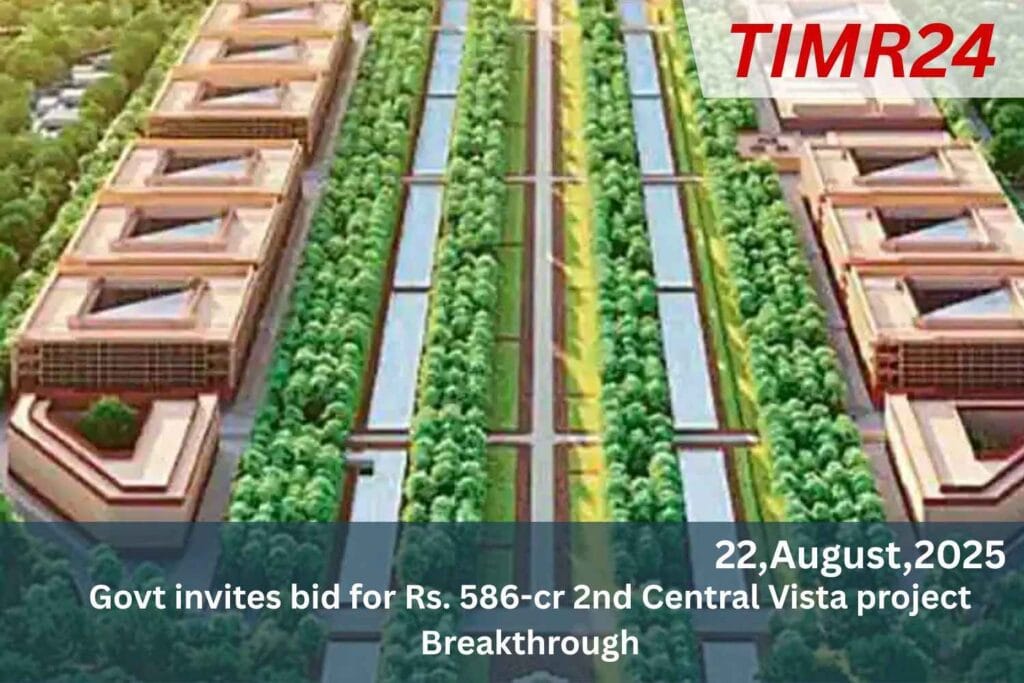
The Union Urban Affairs Ministry is inviting bids for the construction of Common Central Secretariat Building No. 13, part of the Central Vista revamp, with an estimated cost of Rs 586 crore and a 27-month completion time. The Government of India has invited bids for the Rs. 586-crore second phase of the Central Vista Redevelopment project, marking another milestone in the ongoing efforts to modernize the nation’s administrative heart in New Delhi. The Central Vista has long been regarded as the power corridor of the country, housing key government offices, cultural landmarks, and historic avenues. With the first phase already bringing major transformations.
Including the new Parliament building and the revamped Kartavya Path (earlier known as Rajpath), the second phase is expected to build upon this momentum by integrating world-class infrastructure, improved public amenities, and advanced facilities that reflect India’s vision for a (Central Vista) modern capital. At its core, the Central Vista project aims to address long-standing infrastructural challenges that have grown with the expanding administrative needs of India. Most of the existing government buildings in the area were constructed decades ago and face issues of space crunch, outdated technology, and structural fatigue. The Rs. 586-crore allocation for this phase is targeted toward.
New construction and renovation, ensuring that offices can accommodate the increasing workforce while maintaining architectural continuity with the historic environment. The redevelopment will also focus on sustainability, including energy-efficient designs, green zones, and modern mobility solutions that will make the precinct more accessible to both officials and citizens This project is not just about government offices it is also about reimagining public spaces. The earlier transformation of Kartavya Path demonstrated how infrastructure upgrades can enhance citizen engagement, tourism, and cultural expression. With the upcoming phase, additional attention is expected to be given.
To landscaping pedestrian-friendly pathways, and integration of smart city features This ensures that Central Vista does not remain only a symbol of governance but also evolves as a hub of people-centric activities where heritage blends seamlessly with modernity The bidding process, announced by the Central Public Works Department (CPWD), has already attracted significant interest from India’s leading infrastructure firms. The CPWD plays a crucial role in implementing such large-scale national projects, setting strict standards for quality, sustainability, and timelines. Once the bids are finalized, work on the ground is expected to begin swiftly, with careful planning to.
Minimize disruptions around this highly sensitive and symbolic zone. The structured approach followed by the government in the first Central Vista phase ensures that lessons learned will help streamline this upcoming development In terms of national significance, the Central Vista project aligns with India’s broader narrative of development and global positioning. By modernizing its administrative hub, India is sending a clear message of preparedness for the future. Just as the Mumbai-Ahmedabad Bullet Train project represents progress in transport.
The Delhi Metro expansions signify urban modernization, the redevelopment of Central Vista reflects the country’s aspiration to match global standards in governance infrastructure. Moreover, the initiative symbolizes a balance between preserving heritage and embracing innovation, a theme that resonates strongly in India’s developmental journey Another important dimension of the Rs. 586-crore plan is its potential to generate employment and drive ancillary industries. Large construction projects like this typically create thousands of jobs, both directly and indirectly, from skilled labor to material suppliers. The Central Vista project, located at the heart of Delhi, will also boost nearby.
Businesses, hospitality services, and transport networks. In this way, the redevelopment is not just about buildings but about catalyzing economic opportunities. For citizens, the impact of the second phase will be visible in the form of better access to public amenities, improved mobility across the Vista, and enhanced aesthetics that showcase India’s progress. The redeveloped landscape will also provide more open spaces for cultural gatherings, festivals, and public participation, echoing the transformation witnessed during the revamp of Pragati Maidan and Bharat Mandapam for international events. By focusing on citizen comfort along with administrative efficiency.
The government is ensuring that Central Vista remains relevant to the common people as much as it does to policymakers Looking ahead, the second phase of Central Vista redevelopment will play a pivotal role in shaping Delhi’s urban identity. While the Parliament building stands as a beacon of democratic strength, the extended development will ensure that supporting offices and facilities match its stature. With sustainability, smart design, and cultural sensitivity at its core, the Rs. 586-crore project is set to become another landmark achievement in India’s capital. For those tracking national infrastructure initiatives, this development stands alongside projects like
The Ganga Expressway, high-speed rail corridors, and regional connectivity upgrades, each showcasing how India is laying the foundation for a robust and future-ready nation Ultimately, the invitation of bids for the 2nd Central Vista project is not merely an administrative procedure but a statement of intent. It reflects the government’s commitment to blend tradition with transformation, to create (Cookie) a capital that is functional, people-friendly, and emblematic of India’s rising stature on the world stage. The progress of this phase will be closely watched, as it carries both symbolic and practical implications for governance, public life, and the nation’s image.
Q1. What is the 2nd Central Vista project?
It is the next phase of redevelopment under the Central Vista plan in Delhi.
Q2. What is the project cost?
The estimated cost is Rs. 586 crore.
Q3. Who invited the bids?
The Government of India through the Central Public Works Department (CPWD).
Q4. What will be developed in this phase?
Key government buildings and supporting infrastructure.
Q5. When will the work start?
Construction will begin after the bidding process is finalized.