














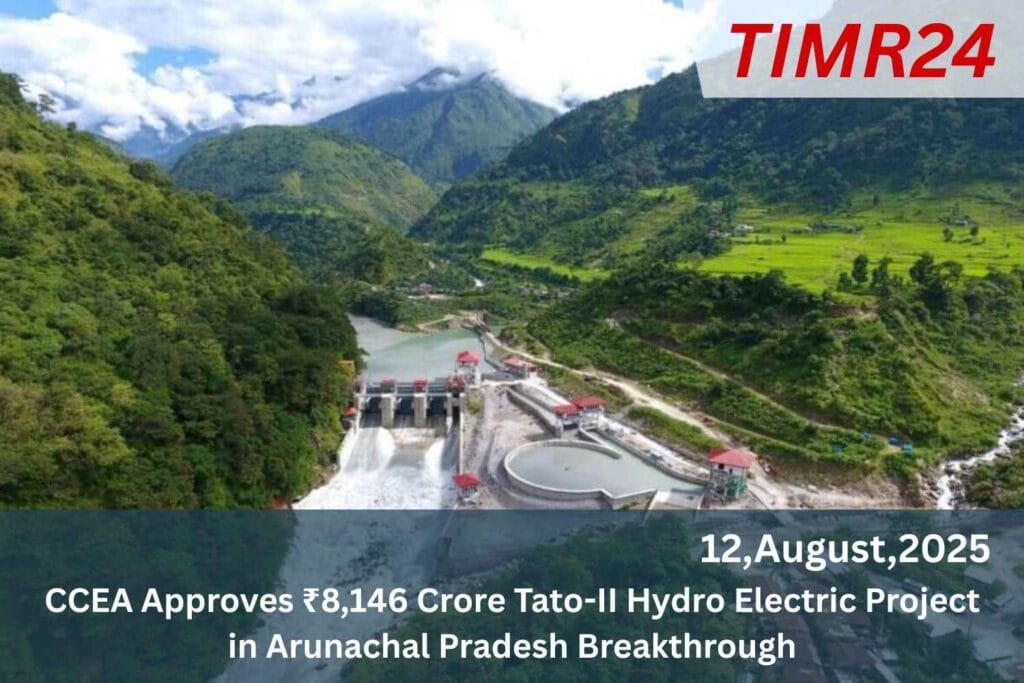
The CCEA Cabinet Committee on Economic Affairs has approved an investment of ₹8,146.21 crore for the construction of the 700 MW Tato-II Hydro Electric Project in Shi Yomi district of Arunachal Pradesh. The project, expected to generate 2,738.06 million units of energy, will improve Arunachal Pradesh’s power supply position and contribute to balancing the national grid. The project will be implemented through a joint venture between NEEPCO and the Arunachal Pradesh government, with 12% free power and 1% for the Local Area Development Fund. The Cabinet Committee on Economic Affairs has recently approved the ambitious ₹8,146 crore Tato-II Hydro Electric Project in Arunachal Pradesh, marking a significant milestone in the nation’s pursuit of sustainable energy and regional development.
This project is set to boost power generation capacity, foster economic growth, and contribute towards India’s renewable energy goals, particularly in the hydropower sector. The Tato-II Hydro Electric Project is located in the resource-rich state of Arunachal Pradesh, situated in the Northeastern region of India. Arunachal Pradesh is renowned for its abundant water resources and favourable topography, which offer immense potential for hydroelectric power generation. The project is designed as a run-of-the-river scheme harnessing the flow of the Tato River, aiming to generate clean energy while minimizing environmental impact This hydropower plant will have an installed capacity of approximately 130 MW (megawatts).
Contributing a significant addition to the state and national power grid. By utilizing the natural flow of rivers, the project aligns with India’s emphasis on clean energy and reducing carbon emissions. With an estimated investment of ₹8,146 crore, the Tato-II Hydro Electric Project represents one of the largest hydropower investments in the Northeastern region. The project is expected to create employment opportunities during its construction and operational phases, benefiting the local population directly and indirectly. Infrastructure development, such as roads and connectivity improvements associated with the project, will also catalyze overall regional development. The investment aligns with the government’s broader objective of promoting infrastructure and sustainable energy projects in the northeast, a region historically underdeveloped but rich in natural resources.
Environmental and Social Considerations
The project’s financial outlay demonstrates confidence in the region’s potential and underlines the strategic importance of hydropower in India’s energy mix. One of the key strengths of the Tato-II project is its focus on environmental sustainability. As a run-of-the-river hydropower project, it avoids large reservoir creation, thereby reducing the displacement of local communities and minimizing ecological disruption. This approach preserves the natural flow of the river while generating substantial electricity Environmental assessments have been conducted to ensure compliance with national and international standards. Measures are planned to protect the local flora and fauna, maintain water quality, and safeguard the livelihoods of indigenous communities (Energy).
The project also emphasizes engaging with local stakeholders through consultations to address social concerns and foster inclusive development. The approval of the Tato-II Hydro Electric Project is timely, given India’s ambitious renewable energy targets under its Nationally Determined Contributions (NDCs) commitments to the Paris Agreement. Hydropower plays a critical role in India’s renewable energy portfolio, offering a reliable and flexible source of clean power. The project will add significant renewable energy capacity, reducing dependency on fossil fuels and lowering greenhouse gas emissions. Additionally, hydropower’s ability to provide peaking power and grid stability complements intermittent sources like solar and wind, making it a vital component of India’s power system.
Strategic Importance for Arunachal Pradesh
For Arunachal Pradesh, the Tato-II project is not only a power generation initiative but also a strategic driver of socio-economic development. The project’s infrastructure improvements are expected to enhance connectivity in remote areas, facilitating trade and mobility. Moreover, increased power availability can stimulate industrial activities, tourism, and better public services such as healthcare and education. The government’s focus on sustainable energy development in the northeast is part of a larger strategy to integrate the region’s economy with the national mainstream while preserving its unique cultural and ecological heritage. While the Tato-II Hydro Electric Project holds immense promise, it also faces challenges typical of large infrastructure projects difficult terrain (Cabinet Committee).
These include logistical complexities, weather-related delays, and ensuring the participation and support of local communities. Continuous monitoring, transparent communication, and adaptive management will be key to addressing these challenges. Looking ahead, the project’s success will pave the way for further hydropower development in Arunachal Pradesh and the northeast. It serves as a model for balancing economic growth, environmental stewardship, and social responsibility in the energy sector.
Q1. What is the Tato-II Hydro Electric Project?
It is a 130 MW run-of-the-river hydropower project approved in Arunachal Pradesh to boost renewable energy generation.
Q2. How much is the investment for the Tato-II project?
The project involves an investment of ₹8,146 crore.
Q3. Where is the Tato-II project located?
It is situated in Arunachal Pradesh, utilizing the flow of the Tato River.
Q4. What are the environmental benefits of the project?
The project is run-of-the-river, minimizing ecological disruption and avoiding large reservoirs.
Q5. How will this project impact the local economy?
It will create jobs, improve infrastructure, and support socio-economic growth in Arunachal Pradesh.