









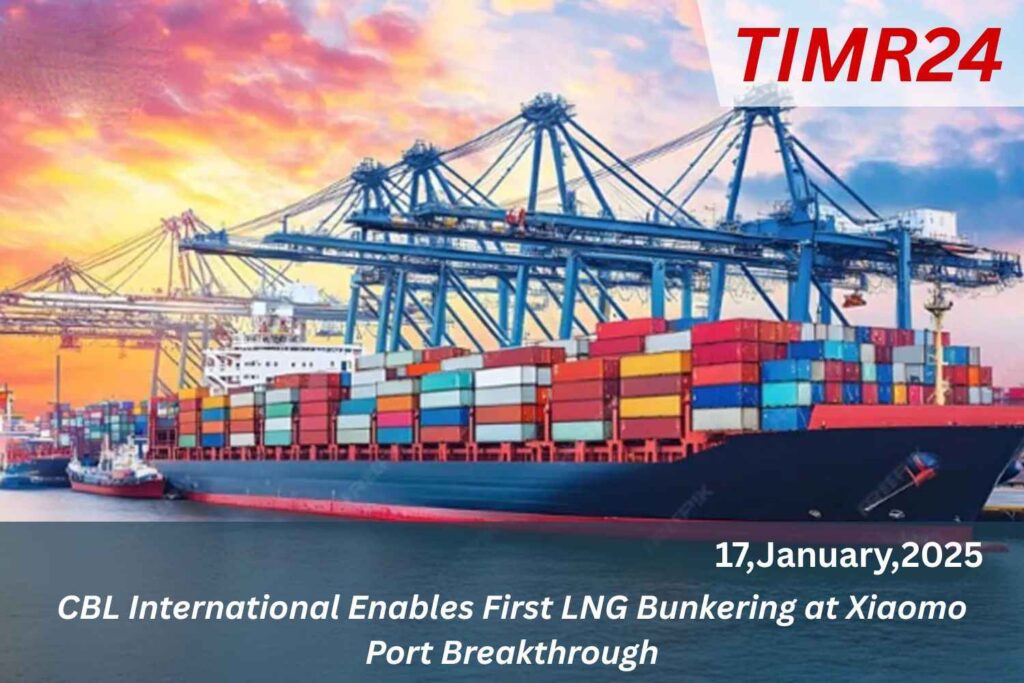
CBL International has successfully conducted its inaugural LNG bunkering operation at Xiaomo Port, providing liquefied natural gas to BYD-operated vessels as part of a maritime decarbonisation initiative. This operation, supported by China National Offshore Oil Corporation, signifies a key expansion in CBL’s sustainable fuel offerings, moving beyond biofuels and providing an alternative that can reduce greenhouse gas emissions by approximately 20%, eliminate sulphur oxides and particulate matter, and lower fuel costs by 25-30%. This development is in line with new regulatory standards aimed at achieving the International Maritime Organization’s decarbonisation targets.
LNG Bunkering Operation
CBL International’s CEO, Dr. Teck Lim Chia, emphasized the initiative’s significance in positioning the company as a comprehensive marine energy services partner, enhancing its capabilities across 65 major ports globally CBL International enabling the first LNG bunkering operation at Xiaomo Port marks a defining moment in the evolution of clean maritime fuel infrastructure in the region. As the global shipping industry accelerates its transition toward low-emission energy sources, this milestone reflects a broader commitment to sustainability, regulatory compliance, and long-term operational efficiency. LNG bunkering is increasingly being viewed as.
A practical bridge fuel that supports immediate emissions reduction while paving the way for future zero-carbon alternatives. The successful execution at Xiaomo Port positions the port as a forward-looking maritime hub and highlights CBL International’s growing influence in the global marine energy ecosystem The introduction of LNG bunkering at Xiaomo Port is particularly significant because it demonstrates how mid-sized and emerging ports can adapt to the rapidly changing fuel requirements of modern shipping. Traditionally, LNG bunkering infrastructure has been concentrated in major global ports, limiting accessibility for operators on regional trade routes.
International Maritime Organization
By enabling LNG supply at Xiaomo Port, CBL International has expanded the availability of cleaner fuel options, allowing shipowners to optimize routes without compromising sustainability goals. This development aligns closely with the objectives outlined by the International Maritime Organization, which continues to push for reduced greenhouse gas emissions across the shipping sector From a technological perspective, LNG bunkering requires precise coordination, advanced safety systems, and strict compliance with international standards. The successful operation at Xiaomo Port reflects strong collaboration between fuel suppliers, port authorities, and vessel operators.
It also signals the port’s readiness to support next-generation vessels designed to run on alternative fuels. As discussed in our earlier coverage on LNG bunkering infrastructure ports that invest early in clean fuel capabilities often gain a competitive advantage by attracting environmentally conscious shipping lines CBL International’s role in this project underscores its strategic focus on expanding sustainable fuel solutions across key maritime corridors. The company has consistently emphasized the importance of reliability and safety in LNG supply chains, ensuring that operators can transition away from conventional marine fuels without operational risk.
Period Environmental Benefits
By enabling LNG bunkering at Xiaomo Port, CBL International strengthens its portfolio while contributing to global decarbonization efforts. According to energy transition insights from the International Energy Agency, LNG is expected to play a crucial role in reducing emissions (India) from hard-to-abate sectors such as shipping during the transition period Environmental benefits are a core driver behind the adoption of LNG bunkering. Compared to traditional marine fuels, LNG significantly reduces sulfur oxide emissions, particulate matter, and nitrogen oxides, while also lowering carbon dioxide emissions. This directly supports cleaner air around port communities and helps shipping companies.
Comply with increasingly stringent environmental regulations The strategic importance of Xiaomo Port cannot be overlooked. Its growing role in regional trade makes it an ideal candidate for early adoption of cleaner fuel infrastructure. With LNG bunkering now available, the port is better positioned to serve modern LNG-powered vessels and attract new shipping routes. This enhances overall port competitiveness while supporting broader economic development. Classification societies such as DNV have consistently emphasized that ports offering LNG bunkering are more likely to become central nodes in future green shipping corridors.
Xiaomo Port Demonstrates
From an industry perspective, this milestone reflects a broader shift in mindset among port operators and fuel suppliers. Sustainability is no longer viewed as a long-term aspiration but as an immediate operational priority. LNG bunkering at Xiaomo Port demonstrates how collaboration and investment can translate policy ambitions into tangible infrastructure. It also complements ongoing discussions around future fuels such as bio-LNG, methanol, and hydroge CBL International’s initiative also sends a strong signal to shipowners evaluating fleet investments. Access to LNG bunkering infrastructure reduces uncertainty and encourages greater adoption of LNG-powered vessels.
This, in turn, accelerates economies of scale, making clean fuels more commercially viable over time. As the shipping industry navigates the complex path toward net-zero emissions, such enabling developments play a critical role in maintaining momentum the successful LNG bunkering operation at Xiaomo Port could serve as a blueprint for similar ports seeking to modernize their energy offerings. It highlights the importance of strategic partnerships, regulatory alignment, and technical expertise in delivering safe and efficient clean fuel solutions. CBL International’s leadership in this space reinforces its position as a key contributor to the maritime energy.
Resilient Maritime Industry
Transition and supports the broader vision of sustainable shipping promoted by global organizations like the IMO the first LNG bunkering at Xiaomo Port is more than a single operational achievement; it represents a meaningful step toward a cleaner, more resilient maritime industry. By (India) expanding LNG availability, enhancing port competitiveness, and supporting global emissions reduction goals, CBL International has demonstrated how targeted infrastructure development can drive real progress. As demand for sustainable shipping solutions continues to rise, such initiatives will remain central to shaping the future of global trade and maritime energy.
Q1. What is LNG bunkering?
LNG bunkering refers to the process of supplying liquefied natural gas as fuel to ships.
Q2. Why is LNG bunkering important for shipping?
It helps reduce emissions and supports compliance with international environmental regulations.
Q3. What makes Xiaomo Port significant in this development?
It becomes an emerging hub for clean maritime fuel with LNG bunkering capability.
Q4. How does CBL International contribute to sustainability?
By enabling reliable access to low-emission marine fuels like LNG.
Q5. Is LNG a long-term solution for shipping?
LNG is considered a transition fuel that supports immediate emission reductions while paving the way for future zero-carbon fuels.