













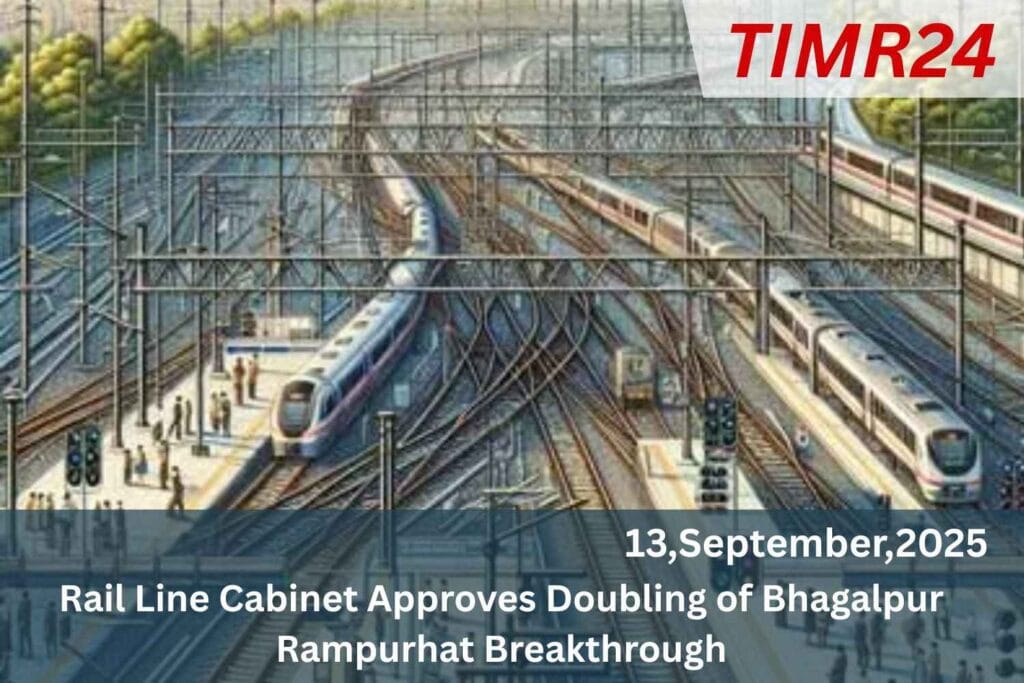
The Cabinet Committee on Economic Affairs, led by Prime Minister Narendra Modi, has approved a 177 km doubling of the Bhagalpur–Dumka–Rampurhat single railway line, costing Rs 31.69 billion. The project aims to improve mobility, operational efficiency, and provide reliable service for Indian Railways, easing congestion on the busiest section. The project aligns with Modi’s vision of a New India, aiming to make local populations more “Atmanirbhar” through expanded employment opportunities. The upgraded line will connect major destinations, benefiting a population of around 28.72 million The recent approval by the Union Cabinet for the doubling of the Bhagalpur.
Rampurhat rail line has brought a wave of optimism across Bihar and West Bengal, as this long-awaited development promises not only better railway operations but also a deeper socio-economic transformation for the entire eastern region of India. Railways have always been the backbone of connectivity in the subcontinent, and the Bhagalpur–Rampurhat corridor stands as a vital link that connects the historical silk city of Bhagalpur in Bihar to Rampurhat in Birbhum, West Bengal. Until now, this route functioned on a single track, which created a natural bottleneck for passenger and freight trains, leading to delays, congestion, and limited capacity.
Significance of the Bhagalpur Rampurhat Corridor
With the doubling now sanctioned, Indian Railways is all set to resolve these operational challenges while paving the way for economic and social development. The Bhagalpur Rampurhat line has immense importance as it connects regions that are both economically and culturally rich. Bhagalpur, often called the “Silk City of India,” is globally renowned for its Tusshar silk and textile trade, which requires efficient transport channels to reach domestic and international markets. On the other side, Rampurhat links further to Kolkata and other parts of West Bengal, providing access to one of the largest commercial hubs in India. The current single-track system has limited.
The movement of goods and passengers, often leading to long wait times and affecting the smooth functioning of the railways. With the approval of doubling, the government has addressed a long-pending demand of the region, promising smoother logistics, faster train services, and better economic opportunities for both states The most immediate benefit of the project will be visible in passenger services. Once completed, doubling the track will allow more express and superfast trains to run between Bihar and West Bengal, reducing delays caused by waiting at crossing stations. Travelers will enjoy shorter travel times and greater reliability, which is critical for students.
Professionals, and daily commuters. Moreover, long-distance trains that currently face bottlenecks on this stretch will now operate more efficiently, enhancing the experience for passengers traveling across states Freight services will also undergo a transformation. The Bhagalpur–Rampurhat line is critical for transporting silk, textiles, agricultural products, and coal, among other goods. By adding an additional track, Indian Railways can significantly expand freight capacity, ensuring faster deliveries and reduced costs. This move directly supports businesses and industries in the region, giving them access to broader markets. The development is in line with India’s larger railway.
Linking Regional Development with National Vision
Modernization plan, which includes projects like that aim to create a more efficient freight ecosystem across the country. One of the key aspects of this project is its alignment with the government’s national development goals. The doubling of the Bhagalpur–Rampurhat line not only enhances regional infrastructure but also contributes to the broader Viksit Bharat 2047 mission, which seeks to transform India into a developed nation within the next two decades. By improving connectivity between two states, the project supports balanced regional growth, reducing the urban-rural divide and bringing opportunities to semi-urban and rural communities along the route.
The Union Government has already shown its commitment to modern transport with flagship projects such as the (Mumbai Bullet Train) and new-age metro rail systems. While these represent futuristic infrastructure, projects like the Bhagalpur–Rampurhat doubling ensure that smaller but equally crucial regions are not left behind. This balanced development strategy is key to India’s long-term growth Another significant advantage of this project is its role in promoting sustainable transport. Railways are already one of the most eco-friendly modes of transport compared to roadways, and the doubling of tracks reduces idling time, congestion, and delays, which in turn lowers fuel.
Economic and Social Benefits
Consumption and emissions. By shifting more freight movement from road to rail, the government not only eases highway congestion but also makes progress toward India’s climate commitments. This approach aligns with policy directions from (NITI Aayog) which has consistently emphasized sustainable development in infrastructure planning. The Bhagalpur–Rampurhat rail doubling is not just about trains; it is about lives and livelihoods. During the construction phase, the project will generate employment opportunities for thousands of local workers, engineers, and contractors, stimulating short-term income and skills development. In the long term, businesses.
Particularly in textiles, agriculture, and small-scale manufacturing will benefit from faster logistics and lower transportation costs. This will directly impact farmers, artisans, and entrepreneurs, making the region more competitive in national and global markets. Improved rail connectivity will also boost tourism, as destinations in Bihar and West Bengal become more accessible. Pilgrimage centers, cultural towns, and eco-tourism spots will attract greater footfall, adding another layer of economic benefit Looking ahead, the Bhagalpur Rampurhat doubling project will play a crucial role in the transformation of Eastern India. Once the line is completed, Indian Railways will be able.
To schedule more trains, improve punctuality, and offer world-class facilities to both passengers and freight customers. Combined with electrification, modernization of stations, and smart ticketing initiatives, this project forms part of a larger railway upgrade that is reshaping how Indians travel the Cabinet’s approval of the Bhagalpur–Rampurhat rail line doubling represents a breakthrough for Bihar and West Bengal, delivering on long-standing demands and opening new opportunities for growth. From supporting the silk industry of Bhagalpur to enhancing the trade capacity of Rampurhat, from reducing travel times for passengers to contributing to sustainable infrastructure.
Development, this project encapsulates the vision of a modern, inclusive, and forward-looking India. As construction moves forward, stakeholders across the region can expect not only smoother journeys but also a stronger foundation for economic and social progress.
Q1 What is the Bhagalpur–Rampurhat rail line project?
It is the doubling of the existing single-track rail line to improve passenger and freight movement between Bihar and West Bengal.
Q2: Why is the project important for Bihar and West Bengal?
It enhances connectivity, supports trade, boosts the silk industry in Bhagalpur, and strengthens economic opportunities in Rampurhat.
Q3 How will passengers benefit from this project?
Reduced travel time, more trains, less congestion, and improved punctuality.
Q4 Will the project support freight movement?
Yes, it will ease logistics, reduce delays, and provide faster movement of coal, textiles, and agricultural goods.
Q5 How does this project align with India’s development goals?
It supports sustainable transport, economic growth, and the government’s vision for a modern, developed India by 2047.