















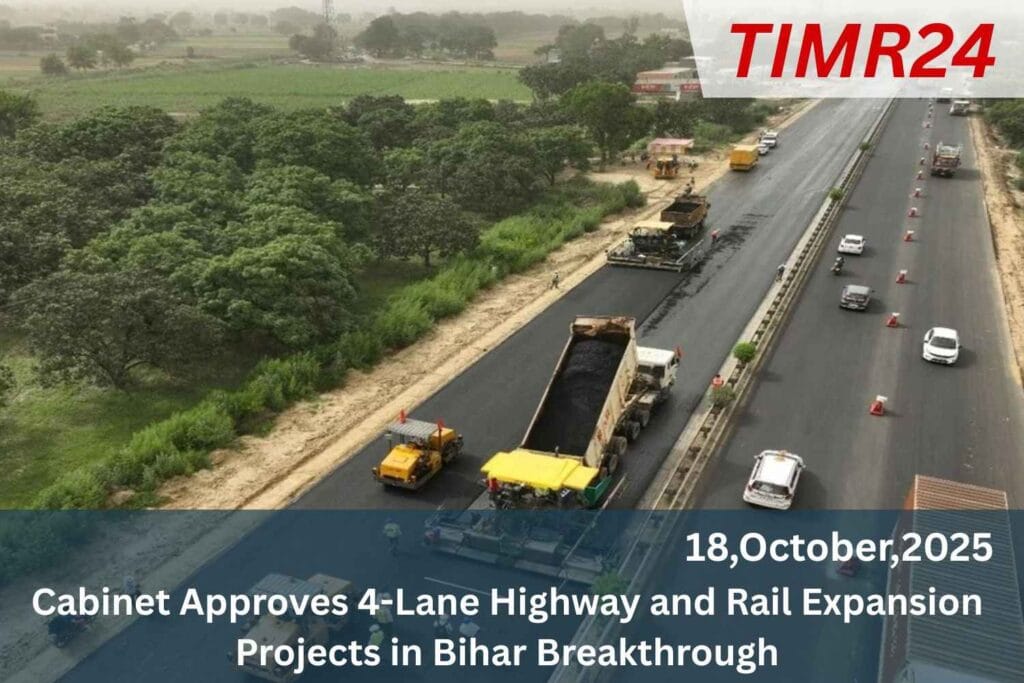
The Union Cabinet, led by Prime Minister Narendra Modi, has approved infrastructure projects in Bihar to improve connectivity, support regional development, and generate employment. The Cabinet Committee on Economic Affairs has sanctioned the doubling of the Bakhtiyarpur-Rajgir-Tilaiya single railway line, estimated to cost around Rs 21.92 billion. The project will improve access to major tourist and religious destinations, benefit 1,434 villages, and contribute to India’s energy efficiency goals. The Bihar Cabinet has recently sanctioned a major infrastructure initiative aimed at transforming the state’s transportation landscape through the development of 4-lane.
Highways and the expansion of railway networks. This move represents a significant milestone in Bihar’s economic and regional development strategy, with long-term implications for trade, mobility, and social connectivity. The approval comes at a time when Bihar is actively seeking to modernize its transport corridors, improve logistics efficiency, and provide enhanced connectivity to both urban and rural regions. With the construction of multiple 4-lane highways, the state aims to reduce travel time between key cities, improve road safety, and create seamless links between industrial hubs and agricultural markets. Highways such as these will not only facilitate smoother movement.
Of goods but also provide residents with faster access to essential services, including healthcare and education. The expansion of the road network aligns with broader national initiatives like the (National Infrastructure) and the reflecting Bihar’s commitment to integrating its regional infrastructure into nationwide development frameworks. Parallel to the highway projects, the Cabinet has also approved extensive railway expansions designed to enhance passenger and freight mobility. Upgrading existing tracks and introducing new railway lines will increase train frequency, reduce congestion on key routes, and strengthen the connectivity of Bihar’s industrial and agricultural.
Cabinet has also approved extensive
Zones to major trade corridors. Cities such as Patna, Gaya, Muzaffarpur, and Bhagalpur are expected to benefit significantly, gaining improved access to eastern and northern economic corridors. The integration of railways and roadways in these regions is projected to create a holistic transport ecosystem, allowing for efficient intermodal transfers that optimize logistics and supply chain operations. By linking industrial zones with ports and commercial centers, these projects will attract investment, encourage entrepreneurship, and bolster regional economic growth. For official updates on railway expansions, stakeholders and residents can refer to the for real-time project status and investment plans.
Infrastructure development in Bihar is also expected to bring a transformative impact on employment. The planning and execution of large-scale highway and railway projects will generate significant job opportunities in construction, engineering, logistics, and ancillary sectors. Beyond temporary construction-related employment, the completed infrastructure will facilitate the growth of small and medium enterprises, enhance market access for agricultural producers, and create long-term opportunities in tourism and commerce. Local authorities have emphasized that adherence to modern engineering standards, environmental safeguards, and timely completion of projects will be critical to realizing these benefits.
highways will improve safety and traffic flow
In addition are being explored to leverage private sector efficiency while maintaining government oversight, ensuring that these projects are financially sustainable and technologically advanced The road expansion projects are set to address several longstanding challenges in Bihar’s transport network. Congestion on major highways has historically slowed the movement of goods and passengers, while limited road quality in rural areas has impeded access to essential services. The introduction of 4-lane highways will improve safety and traffic flow, reduce travel-related accidents, and support the smooth transportation of perishable goods such as fruits, vegetables, and dairy products.
By connecting key agricultural and industrial zones, these roads will also provide a platform for regional economic integration. For insights into similar infrastructure initiatives, readers can explore to track road and highway development projects and understand investment and completion timelines On the railway front, enhancements to tracks, signaling systems, and station facilities are expected to improve operational efficiency and passenger comfort. The expansion will accommodate higher train frequencies, support freight movement, and reduce the reliance on road transport for heavy goods, thereby promoting more sustainable and environmentally friendly.
benefiting both commuters and businesses
Logistics practices. Areas like Patna, which serve as economic and administrative centers, will see considerable improvements in connectivity, benefiting both commuters and businesses. These upgrades will also facilitate inter-state trade, linking Bihar more effectively with neighboring states such as Uttar Pradesh, Jharkhand, and West Bengal, and reinforcing the state’s role as a regional transport hub. Integrating rail with road infrastructure will also make multi-modal transportation more viable, reducing costs and time for businesses and passengers alike.
The social impact of these projects is equally important. Improved highways and railways will provide residents in remote areas with better access to healthcare facilities, schools, and markets, directly contributing to higher living standards. Enhanced connectivity will enable faster emergency response, better supply of essential goods, and greater educational opportunities, particularly in rural districts that previously suffered from poor transport links. As a result, the projects are expected to support inclusive growth, ensuring that infrastructure benefits reach a broad spectrum of the population, not just urban centers. The state government has also emphasized environmentally.
Economic analysts
Responsible construction practices, ensuring that expansion projects minimize disruption to local ecosystems and maintain compliance with environmental regulations. For broader information on sustainable infrastructure practices, readers can refer to resources provided by Economic analysts view these projects as critical for Bihar’s growth trajectory. Improved transport infrastructure is a key factor in attracting both domestic and foreign investment, supporting industrial diversification, and enabling small and medium enterprises to reach larger markets. The combination of highways and railway expansion projects will allow Bihar to integrate more fully into.
National and regional supply chains, promoting trade efficiency and industrial competitiveness. As connectivity improves, the state is likely to see growth in sectors such as manufacturing, logistics, agriculture, and tourism. Additionally, infrastructure-led development will support the creation of economic clusters along transport corridors, fostering local entrepreneurship and innovation the Cabinet’s approval of 4-lane highways and railway expansion projects represents a landmark initiative in Bihar’s journey toward modern infrastructure, economic growth, and regional integration. These projects are poised to create employment, improve logistics efficiency, enhance social.
Access, and strengthen the state’s role in national and regional economic corridors. By leveraging modern engineering practices, public-private partnerships, and environmentally responsible planning, Bihar is laying the foundation for a more connected, prosperous, and sustainable future. Stakeholders, residents, and businesses alike can monitor progress and access detailed information through the and official (Indian Railways), ensuring transparency and engagement throughout the project lifecycle. As these initiatives move forward, Bihar’s transport landscape is set to undergo a profound transformation, marking a decisive step toward enhanced mobility, economic vitality, and social well-being.
Q1 What are the key highlights of Bihar’s highway and rail expansion projects?
The projects include 4-lane highway construction, railway line expansion, modernization of tracks, bridges, and logistical improvements to boost trade and travel efficiency.
Q2 Which areas in Bihar will benefit the most from these projects?
Key areas include Patna, Muzaffarpur, Gaya, and industrial corridors, ensuring better connectivity across urban and rural regions.
Q3 How will these projects impact Bihar’s economy?
Improved transport infrastructure will attract investment, facilitate trade, generate employment, and enhance access to services and markets.
Q4 Are these projects part of a larger national infrastructure plan?
Yes, these initiatives align with the National Infrastructure Pipeline (NIP), which aims to modernize India’s infrastructure nationwide.
Q5 Where can I find official updates on project progress?
Official updates are available on the (Road Transport and Highways)