








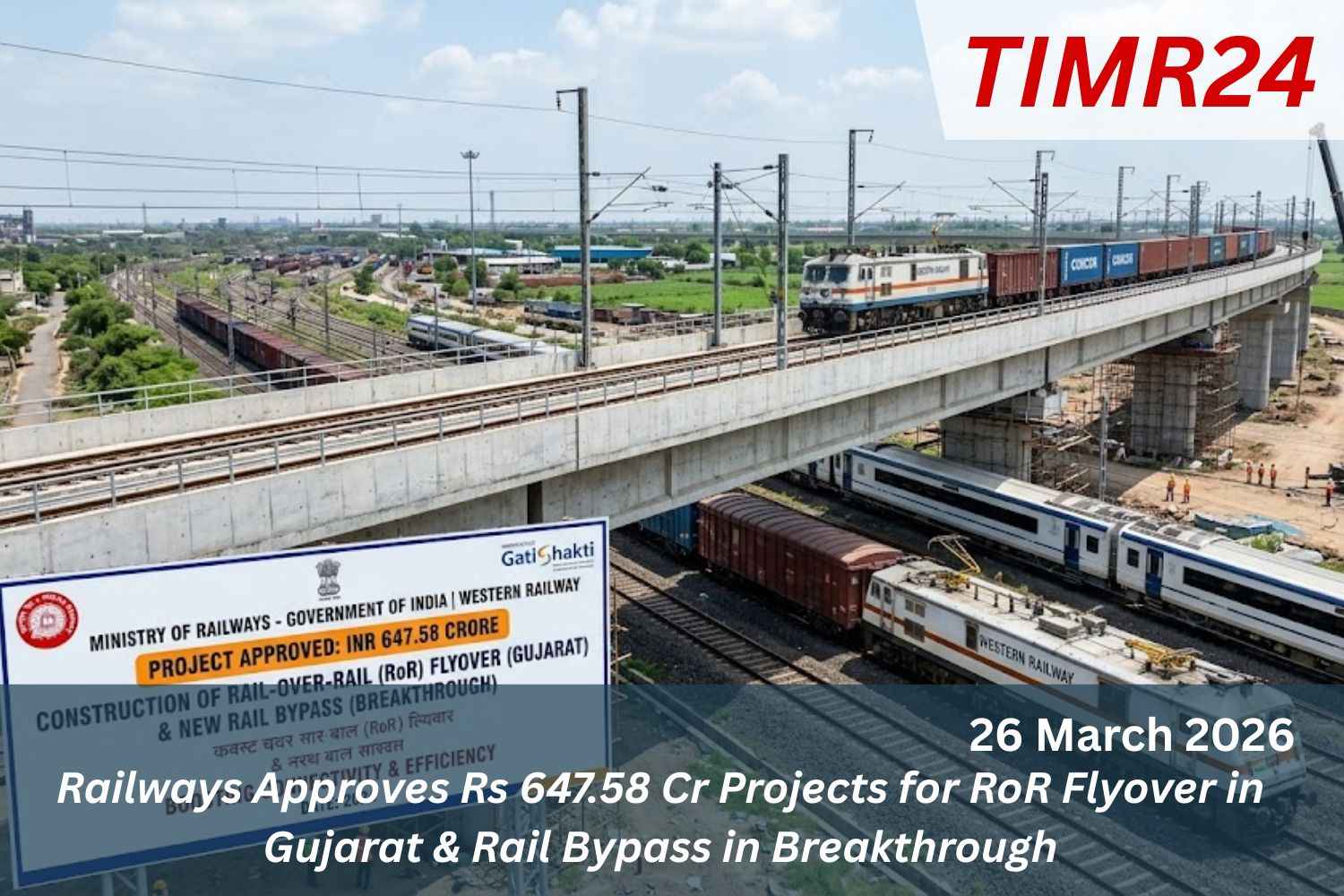






The Cabinet Committee on Economic Affairs (CCEA) has approved two railway infrastructure projects costing approximately Rs 4,474 crore. These projects involve constructing fourth railway lines on the Sainthia–Pakur and Santragachi–Kharagpur sections, aimed at enhancing line capacity and operational efficiency for Indian Railways. This expansion will facilitate smoother movement of passengers and freight, while supporting regional economic development and employment. Under the PM-Gati Shakti National Master Plan, these initiatives will link around 5,652 villages and improve connectivity to key tourist sites. Additionally, they will increase freight capacity by 31 million tonnes per annum.
India’s Railway Infrastructure Cabinet
Reduce oil imports by 6 crore litres, and lower CO2 emissions significantly, contributing to environmental sustainability India’s railway infrastructure is set to receive a major boost after the approval of new expansion projects worth ₹4,474 crore by the Union Cabinet of India. The decision reflects the government’s continued focus on strengthening railway connectivity, improving freight transportation, and supporting regional economic growth. With railway networks playing a critical role in India’s logistics and passenger movement, the expansion of important railway corridors will help reduce congestion, improve operational efficiency, and enable faster travel for both goods and passengers.
The projects focus on expanding existing rail routes and developing additional railway lines in key regions where demand for rail transport has significantly increased over the years. These initiatives are part of the larger modernization strategy led by Indian Railways to enhance network capacity and support the growing needs of the country’s economy Railway expansion has become a key component of India’s infrastructure strategy because rail transport is considered one of the most cost-effective and environmentally friendly modes of transportation. Increasing rail capacity reduces pressure on highways, lowers fuel consumption, and helps reduce carbon emissions.
Approved Projects Is To Improve Railway
These benefits are aligned with the broader development goals being pursued by the government One of the main objectives of the approved projects is to improve railway capacity in important sections where freight and passenger trains currently face delays due to limited track availability. By adding additional lines, the rail network will be able to handle more trains simultaneously, reducing bottlenecks and improving punctuality across the system. The expansion will also strengthen regional connectivity and support the development of industries that rely heavily on efficient logistics According to the government, the projects will include the development of new railway lines.
The doubling of existing tracks, and the improvement of rail infrastructure in strategic corridors. These improvements are expected to enhance the efficiency of freight movement, especially for industries such as coal, steel, agriculture, and manufacturing that depend heavily on rail transportation The railway line expansion is also expected to generate significant employment opportunities during the construction phase. Infrastructure projects of this scale typically involve a large workforce, including engineers, construction workers, technical experts, and support staff. As a result, the projects will contribute not only to infrastructure growth but also to.
Local job creation and economic development in the regions where the construction activities will take place Another major advantage of expanding railway lines is the reduction in transportation costs. When rail networks operate more efficiently, goods can be transported faster and at a lower cost. This helps industries become more competitive while also benefiting consumers through improved supply chains. Enhanced railway capacity also supports the government’s efforts to strengthen India’s logistics ecosystem and reduce overall logistics costs as a percentage of GDP The approved projects are part of a broader infrastructure development strategy.
That includes the modernization of stations, electrification of railway tracks, and the adoption of advanced technologies for train operations. Indian Railways has been actively implementing several initiatives aimed at improving safety, increasing speed, and enhancing passenger experience across the country In recent years, railway infrastructure development has accelerated under major national programs designed to transform transportation networks. Expanding railway capacity plays a crucial role in supporting these initiatives because improved connectivity enables faster movement of goods between industrial hubs, ports, and consumption centers.
This ultimately helps strengthen economic activity and promotes balanced regional development The railway expansion projects will also support India’s efforts to improve freight efficiency through the development of dedicated freight corridors and improved logistics (India) infrastructure. By integrating new rail lines with existing transportation networks, the projects will help create a more efficient and seamless logistics system across the country In addition to freight movement, passengers will also benefit from improved railway infrastructure. Reduced congestion on busy rail routes will allow trains to operate more smoothly and on schedule.
This will enhance travel convenience for millions of passengers who rely on railways for long-distance and regional travel The government has emphasized that the development of railway infrastructure remains a priority area for investment as India continues to expand its transportation network. Large-scale railway expansion projects are expected to play a critical role in supporting the country’s long-term economic growth and improving connectivity across regions information On railway development initiatives and infrastructure programs, readers can explore official resources such as.
The Ministry of Railways and the Press Information Bureau. These platforms provide updates on infrastructure approvals, railway modernization programs, and (India) government policies related to transportation development With the approval of these ₹4,474 crore railway expansion projects, India takes another step toward strengthening its transportation infrastructure and improving connectivity across the country. As construction progresses, the new railway lines are expected to deliver long-term benefits for industries, passengers, and regional economies, reinforcing the importance of railways in India’s development journey.
Q1. What railway projects were approved by the Cabinet?
The Union Cabinet approved railway line expansion projects worth ₹4,474 crore aimed at increasing rail capacity and improving connectivity.
Q2. Which organization will implement the projects?
The projects will be implemented by Indian Railways under the Ministry of Railways.
Q3. What is the purpose of these railway expansions?
The goal is to reduce congestion, improve freight movement, and strengthen rail connectivity.
Q4. How will the projects benefit the economy?
They will support industrial growth, improve logistics efficiency, and create employment during construction.
Q5. When will these projects be completed?
Implementation timelines will depend on project phases and construction progress.