












IST - Tuesday, April 7, 2026 1:22 pm
Hot News

Byculla Cable-Stayed Bridge 72% Complete Deadline May 2026 Breakthrough

Soniya Gupta

Updated on:

Byculla

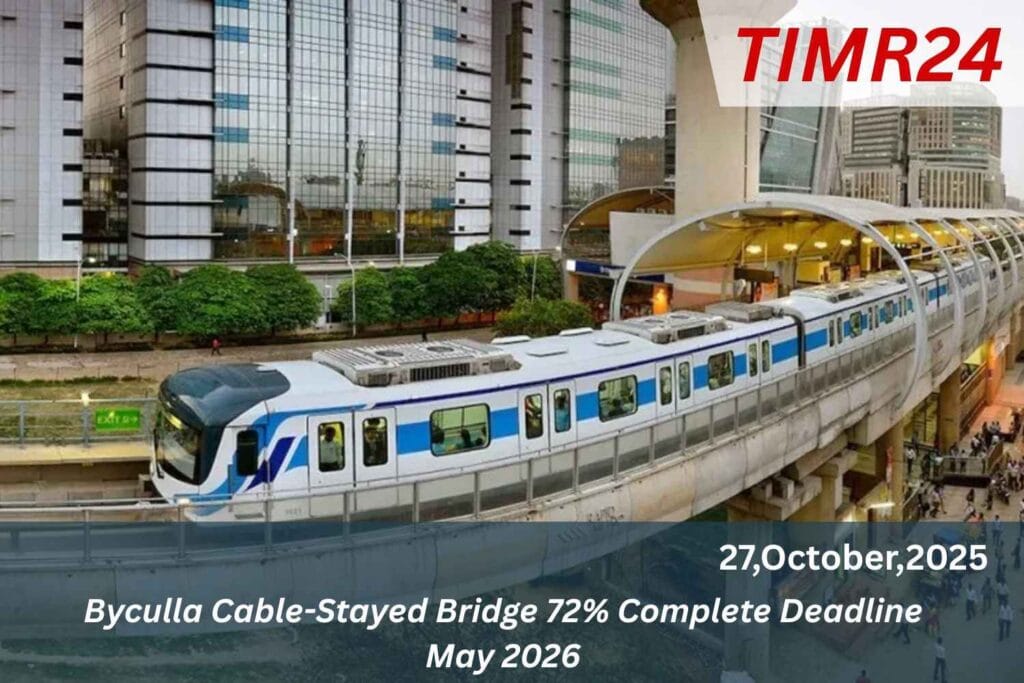
The Brihanmumbai Municipal Corporation (BMC) has announced that the construction of the Byculla cable-stayed east-west connector is 72% complete, with its completion deadline extended to May 2026. The 800-metre bridge will improve traffic flow between the city’s eastern and western corridors Mumbai’s infrastructure landscape is rapidly evolving, and one of its most ambitious urban connectivity projects the Byculla Cable-Stayed Bridge has reached a significant milestone with 72% of construction completed as of October 2025. The bridge, being constructed by the Brihanmumbai Municipal Corporation (BMC), is an essential part of the city’s long-term.

Traffic management strategy, aiming to decongest the busy routes of South and Central Mumbai. Once finished, this state-of-the-art cable-stayed bridge will not only become a critical transportation link but also a landmark addition to Mumbai’s modern skyline (Mumbai Metro’)The project’s official completion deadline is May 2026, and according to project engineers, the pace of work has accelerated following the successful completion of the primary deck and pylon structures. The Byculla Cable-Stayed Bridge has been conceptualized to provide seamless connectivity between Byculla East, Clara Swain Road, and adjoining areas leading to Mazgaon and CST. Currently, these corridors experience heavy

Traffic congestion during peak hours, particularly for commuters heading towards the Eastern Freeway and JJ Flyover. The bridge’s strategic alignment ensures smoother vehicular movement by bypassing choke points that have historically slowed down traffic across South Mumbai. Moreover, the bridge will serve as a direct route to Wadala and Dockyard Road, significantly cutting travel time for daily commuters. According to BMC’s Roads and Bridges Department, this new link will complement other major infrastructure works in progress, such as the Mumbai Coastal Road Project and the MMRC Metro Line-3. For a detailed overview of the city’s metro expansion.

Engineering Design and Technical Features

The Byculla bridge stands as a remarkable example of modern civil engineering. Designed as a cable-stayed structure, it features two massive pylons supporting a wide deck with multiple stay cables that distribute the load evenly. This design not only ensures high structural stability but also gives the bridge a sleek and futuristic look, similar to the iconic Bandra-Worli Sea Link. The total length of the bridge is approximately 2 kilometers, and it includes dual lanes for both directions, along with pedestrian pathways and safety barriers. Engineers have employed high-strength steel, corrosion-resistant cables, and reinforced concrete piers to ensure durability and longevity in Mumbai’s coastal climate.

A special highlight of the project is its intelligent lighting system, which will illuminate the bridge using energy-efficient LEDs and motion sensors, reducing power consumption while enhancing visual appeal. The lighting design will also change colours on special occasions, adding a new aesthetic dimension to the city’s skyline. The BMC has confirmed that the bridge will comply with all modern urban infrastructure standards, making it a model for future developments in the city. For more on sustainable engineering, refer to our feature.

With the project now 72% complete, most of the substructure and civil works have been finalized. The construction team is currently focused on superstructure works, including cable installation, deck alignment, and finishing touches to the pylons. According to senior officials from BMC’s infrastructure division, around 400 workers are involved in the project, working round the clock to meet the tight deadlines. The construction has been divided into multiple phases to minimize disruption to existing traffic and nearby residential areas.

The bridge’s progress has also benefited from advanced construction methods such as precast segmental erection and tower crane technology, which have significantly improved the speed and safety of operations. The civic body has further ensured strict quality control by (NHAI) deploying regular structural inspections and third-party audits. Despite challenges like the monsoon season and logistical constraints, BMC officials remain confident that the bridge will be ready for inauguration by May 2026. For comparative insights, check out the ongoing Mumbai Trans Harbour Link Project, which follows similar engineering standards and project management approaches.

Socio-Economic Importance for Mumbai

Beyond its technical brilliance, the Byculla Cable-Stayed Bridge is set to bring major socio-economic benefits. Once operational, it will reduce traffic congestion across South Mumbai and facilitate faster movement between residential zones and business districts. The time saved in daily commuting will also translate to improved productivity and reduced fuel consumption. Furthermore, the bridge will enhance property values in adjacent localities such as Mazgaon, Clara Swain Road, and Dockyard, as improved connectivity often attracts commercial development and better civic infrastructure.

Additionally, the project aligns with the Government of Maharashtra’s “Smart City Initiative”, which focuses on sustainable mobility and integrated urban development. The bridge will act as a complementary link to the Eastern Freeway, helping divert traffic that would otherwise congest the older routes like JJ Flyover and P D Mello Road. These cumulative benefits make the Byculla bridge one of the most crucial transport projects in Mumbai’s current infrastructure pipeline.

Environmental and Safety Measures

The BMC has incorporated several environmental safeguards and safety features into the bridge’s design and construction. To minimize the carbon footprint, eco-friendly materials such as low-emission concrete and recyclable metal components have been used. The construction process adheres to stringent noise and dust control standards, especially since the project passes through densely populated areas. Noise barriers, dust suppression systems, and traffic diversions are being implemented to ensure public safety and environmental protection. The bridge will also include stormwater drainage systems to prevent waterlogging during heavy rains, a recurring problem in Mumbai’s infrastructure network.

The BMC has emphasized adherence to green norms similar to initiatives like that promote sustainable construction practices across India. These steps reflect the government’s growing commitment to eco-conscious urban development and smart engineering solutions Executing a large-scale infrastructure project like the Byculla Cable-Stayed Bridge in the middle of one of India’s busiest cities comes with multiple challenges. Space constraints, underground utilities, and continuous traffic made it difficult to mobilize heavy machinery and conduct structural works efficiently. However, by implementing phased construction techniques and night-time work.

Schedules, engineers have managed to maintain progress without causing major disruptions. Coordination between multiple stakeholders including traffic police, railway authorities, and civic departments has been crucial in overcoming logistical barriers The use of digital project monitoring systems and real-time progress tracking has also enabled better decision-making and timely intervention, ensuring that the May 2026 deadline remains on schedule. The BMC’s ability to integrate such technologies highlights Mumbai’s evolution toward smart, data-driven infrastructure management.

Upon completion, the Byculla Cable-Stayed Bridge will become a defining symbol of Mumbai’s infrastructure modernization. It will not only enhance road connectivity but also improve the overall commuting experience for thousands of residents. The bridge will stand as a critical link between South Mumbai’s heritage zones and the newer, fast-developing commercial areas. Moreover, the bridge’s architectural lighting and design will likely turn it into a new tourist attraction, much like the Bandra-Worli Sea Link did for Western Mumbai.

The BMC envisions this bridge as part of a broader plan to interconnect road, rail, and metro networks across the metropolis, ensuring seamless integration for future transportation systems. This development complements projects like the MMRC Cityflo Feeder Network and Mumbai Coastal Road, which collectively aim to redefine how Mumbaikars move through their city.

Q1. What is the completion percentage of the Byculla Cable-Stayed Bridge?
The bridge is currently 72% complete as of October 2025.

Q2. What is the expected deadline for the project?
The BMC has set a May 2026 deadline for completion.

Q3. Which areas will benefit the most from this project?
Commuters in Byculla, Mazgaon, CST, and South Mumbai will experience major traffic relief.

Q4. Who is responsible for the construction?
The project is managed by the Brihanmumbai Municipal Corporation (BMC).

Q5. How will the bridge impact Mumbai’s connectivity?
It will enhance connectivity to the Eastern Freeway, reduce congestion, and improve travel efficiency across South Mumbai.