










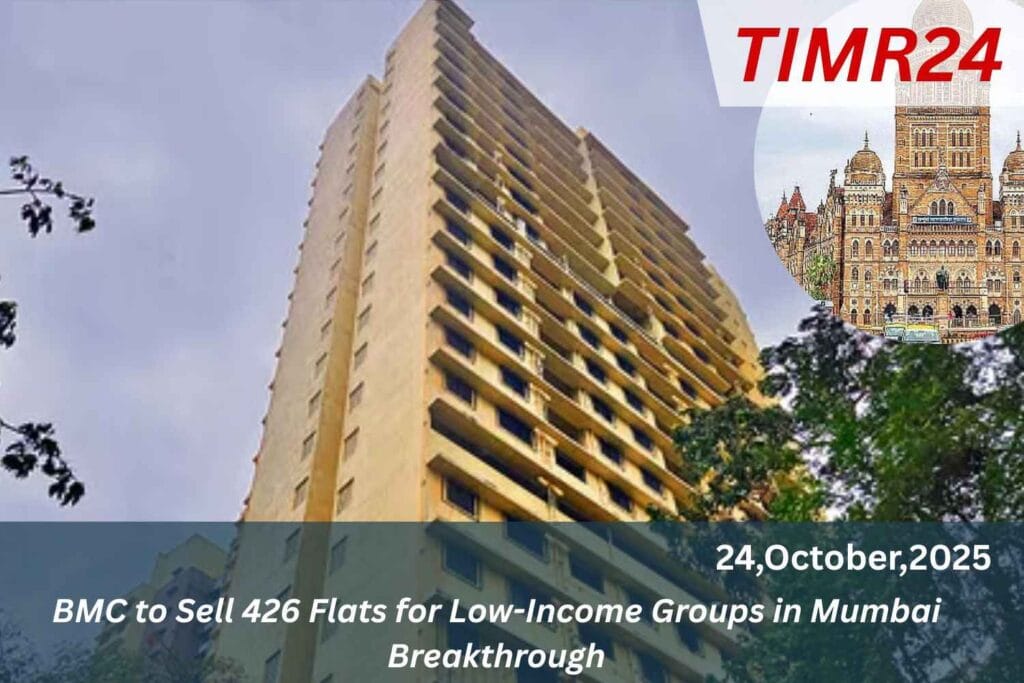
The Brihanmumbai Municipal Corporation (BMC) has announced the sale of 426 affordable flats under the Lower Income Group category in Mumbai through an online lottery system. The initiative aims to provide affordable housing options for economically weaker sections and lower-income families, promoting inclusive urban development. In a notable step towards addressing the acute shortage of affordable housing in Mumbai, the Brihanmumbai Municipal Corporation (BMC) has launched a program to sell 426 flats exclusively for the Economically Weaker Section (EWS) and Low-Income Group (LIG) categories. This initiative, which marks BMC’s first independent online lottery for.
Housing sales, is part of the civic body’s broader strategy to ensure transparency in allotments and create more equitable access to urban housing. By moving away from the traditional MHADA-controlled system, the BMC aims to reduce bureaucratic delays and streamline the application and selection process. The flats, spread across key suburban and central locations such as Kandivali, Bhandup, Byculla, Kanjurmarg, Jogeshwari, and Goregaon, are designed to offer residents not only affordability but also proximity to essential civic amenities, public transport, and educational and healthcare facilities. These areas were carefully selected to balance accessibility with cost efficiency.
Ensuring that the flats remain within reach of the target income groups while still being situated in well-connected neighbourhoods of Mumbai. The sizes of the flats range from approximately 322 sq ft to 645 sq ft, catering to small nuclear families as well as slightly larger households, and the pricing spans from ₹60 lakh to ₹1 crore depending on location and configuration. While these prices are considerably lower than typical Mumbai real estate rates, the initiative still faces scrutiny over whether such pricing will fully meet the needs of the city’s most economically vulnerable residents, given the escalating property rates in suburban areas. The eligibility criteria for applicants.
Are clear: only residents of Mumbai who fall under the EWS or LIG categories and have an annual income of up to ₹9 lakh are allowed to participate. This income ceiling ensures that the flats are allocated to those who genuinely require assistance in accessing affordable housing, preventing misuse by higher-income applicants. Applicants must also not own any other residential property in Mumbai, which further reinforces the scheme’s focus on reaching genuine beneficiaries. To facilitate ease of access and minimize procedural delays, the entire application process has been made online. Interested individuals can submit their applications through the official BMC housing portal.
Where they can upload required documents, pay the application fee, and track their application status. The application window for this lottery opened on October 16, 2025, and will remain active until November 14, 2025, with submission deadlines clearly stipulated to ensure that all entries are processed fairly. Following the closure of applications, BMC will conduct a transparent online lottery draw to determine the successful applicants, a process intended to remove any perceptions of favouritism or corruption, which has historically plagued housing allocations in Mumbai. The results of the draw will be declared publicly, with a final list of selected applicants announced on.
November 21, 2025, enabling successful applicants to proceed with formalities such as verification of documents, payment of the remaining balance, and registration. The significance of this initiative goes beyond mere housing provision; it reflects BMC’s commitment to urban inclusivity and social welfare. Affordable housing has been a persistent challenge in Mumbai, where skyrocketing real estate prices have pushed lower-income groups to the city’s peripheries, often in informal settlements lacking basic infrastructure. By strategically offering flats in well-connected areas, BMC is not only providing homes but also attempting to integrate low-income residents into mainstream urban.
Life, granting them access to public transport, markets, schools, and hospitals. The revenue generated from this initiative, estimated at approximately ₹305 crore, is expected to support ongoing civic projects, infrastructure improvements, and other municipal services, thus creating a cycle where affordable housing contributes to broader city development. While the initiative has been widely welcomed, it has also attracted critical attention. Some experts have raised concerns that despite the affordability label, the starting price of ₹60 lakh may still be a stretch for many eligible households, particularly those in the lower end of the income bracket There is also discussion around.
Whether the total number of flats 426 is sufficient to meaningfully impact the housing deficit for EWS and LIG populations in Mumbai, considering the scale of urban migration and population density. Nevertheless, the transparent lottery system and online process have been praised as progressive steps toward minimizing bureaucratic inefficiencies and promoting fair access. In terms of social impact, these flats may help reduce informal settlements by providing legal housing alternatives, which can improve safety, sanitation, and quality of life for residents. From a planning perspective, such initiatives also support the city’s long-term strategy to manage urban.
Growth, reduce congestion in informal settlements, and encourage structured neighbourhood development. The project also holds implications for broader urban policy in Mumbai. By demonstrating a successful model for affordable housing that balances accessibility, location, and transparency, BMC sets a precedent for other municipal bodies across India to adopt similar measures. Cities with comparable population densities and housing shortages can learn from BMC’s approach, particularly in leveraging digital platforms for application processing and lottery allocation. The inclusion of flats in diverse locations—from Kandivli in the western suburbs to Byculla in central.
Mumbai also highlights the civic body’s effort to provide equitable geographic distribution, ensuring that low-income residents are not concentrated in a single area but instead have opportunities across multiple parts of the city. The can provide more context on eligibility and the benefits of this classification. Additionally details step-by-step instructions to navigate the online portal, while (Real Estate) explores the broader implications for property prices and urban planning. The initiative also aligns with national goals such as the Pradhan Mantri Awas Yojana, which seeks to provide affordable housing for all by 2030. By directly implementing a localized version of this vision.
BMC is contributing to nationwide objectives of reducing homelessness, improving living standards, and fostering socio-economic inclusion. Moreover, by selling these flats at rates designed for LIG and EWS categories, the scheme addresses social equity, helping reduce disparities in access to quality housing within one of India’s most expensive cities. Overall, while challenges related to pricing, scale, and ongoing demand remain, the BMC’s sale of 426 affordable flats represents a crucial step forward in Mumbai’s urban development narrative. The initiative is not merely a housing sale; it is a demonstration of how municipal bodies can leverage technology, transparent.
Processes, and targeted policies to provide tangible benefits to the city’s economically disadvantaged residents, while simultaneously supporting broader civic and infrastructural development. It highlights a model of urban governance where housing policies are integrated with city planning, revenue generation, and social welfare, creating a replicable framework for other Indian cities grappling with similar challenges.