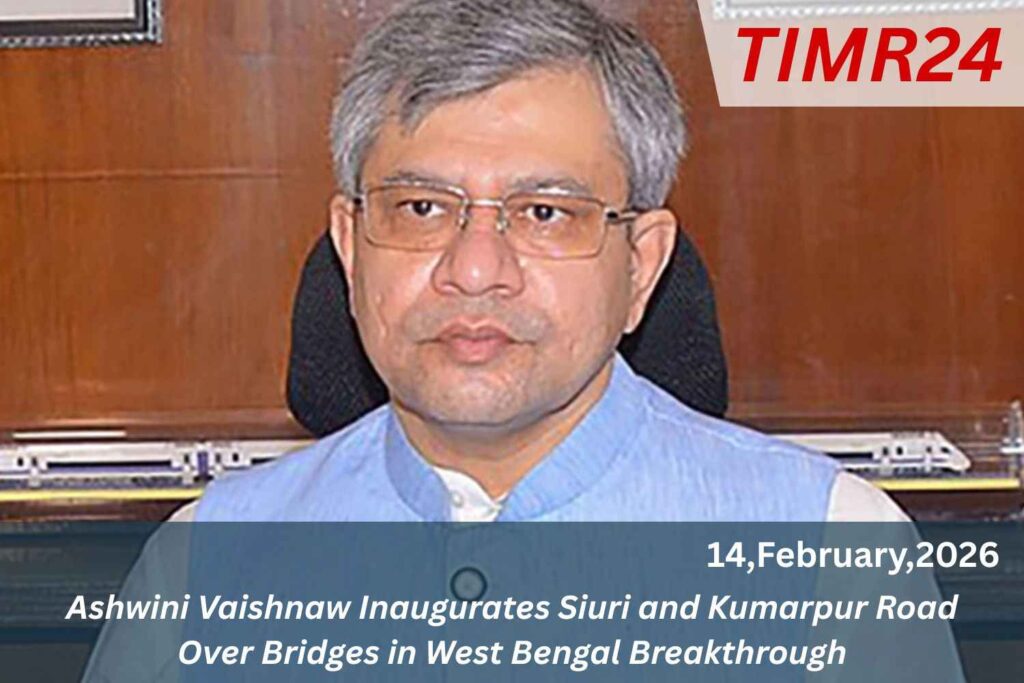
Union Minister Vaishnaw has once again underscored the Government of India’s commitment to strengthening national infrastructure by inaugurating two critical road over bridges, the Siuri Road Over Bridge and the Kumarpur Road Over Bridge, in the heart of West Bengal. This landmark event, which took place via video conferencing from New Delhi, marked a major milestone for regional connectivity and transport safety in one of the country’s most dynamic eastern states The inauguration of these bridges is part of a much larger push to modernize India’s rail and road networks from the Purvoday rail initiative to the record increase in budget.
Allocation for rail development in West Bengal Vaishnaw, who serves as Union Minister for Railways, Information & Broadcasting and Electronics & Information Technology, emphasised that both projects exemplify sustained efforts to remove traffic bottlenecks, enhance commuter safety, and encourage economic growth across urban and rural landscapes alike Situated at strategic points in the Siuri and Kumarpur road bridges replace long‑standing level crossings that for years had been choke points for local and inter‑regional traffic. The Siuri Road Over Bridge, constructed at significant investment and engineering effort, now allows vehicles and commuters to.
Students, And Emergency Services
Bypass the former Level Crossing No. 22B/T near Siuri Railway Station, bringing an end to delays that affected daily commuters, students, and emergency services alike. By Eliminating these lengthy wait times, the bridge opens a pathway for smoother, faster, and safer road movement across this bustling transit corridor Similarly, the Kumarpur Road Over Bridge stands as a Transformative Addition on the Grand Trunk Road corridor one of India’s oldest and most important long‑distance highways linking multiple states and economic zones. This bridge replaces Level Crossing No. 1Spl/E between the Barachak and Hirapur yard lines, enabling uninterrupted road movement.
Where freight trucks, passenger vehicles, and public transport previously faced dangerous traffic conflicts with rail operations. With this upgrade, communities in and around Asansol city, as well as in adjoining regions of West Bengal and Neighbouring Jharkhand, will experience significant reductions in commute times and travel hazards To appreciate the broader significance of these new overbridges, it helps to look at the national landscape of infrastructure priorities. In recent years, the Government of India has undertaken ambitious projects such as the which aims to modernize more than a thousand railway stations across the country, advancing passenger comfort and efficiency.
Inauguration Event Highlighted
These initiatives reflect an overarching focus on integrated development from enhancing passenger services to eliminating level crossings and addressing critical highway‑rail network interfaces Ashwini Vaishnaw’s speech during the inauguration event highlighted that this year’s budget for railway development in West Bengal running into over ₹14,000 crore has been significantly increased compared to previous years. This injection of capital will not only expedite ongoing projects but also lay the financial groundwork for future undertakings, including the introduction of new train services and the establishment of advanced rail corridors. Already, more than a dozen new trains have been launched.
To improve connectivity across the state, under the visionary “Purvoday” initiative, landmark developments such as the first Vande Bharat Sleeper train service have begun operations, signalling a modernization wave across the region’s rail infrastructure The benefits of the Siuri and Kumarpur bridges extend far beyond mere convenience for daily commuters. By eliminating traffic delays at level crossings, these modern overbridges improve road safety for vulnerable road users like pedestrians, cyclists, and schoolchildren. Emergency vehicles such as ambulances and fire tenders will now be able to reach their destinations without being held up at.
Local Businesses And Larger Economic
Long queues, a seemingly small improvement that can save lives in critical situations. For freight and commercial traffic, the bridges remove choke points that once slowed the movement of goods an enhancement that directly supports local businesses and larger economic supply chains connecting West Bengal to the rest of the country Inaugurations like these also play an essential role in closer integration of inter‑state infrastructure. The Kumarpur bridge, in particular, lies along key road arteries that facilitate trade and logistics between West Bengal and neighbouring Jharkhand. Efficient movement of freight across such corridors reduces transportation costs.
Encourages investment, and contributes to balanced regional development, especially in industrial hubs such as Asansol and Bokaro. On the same occasion that these bridges were dedicated, a new Asansol Bokaro train service was also flagged off, further enhancing (India) connectivity between two vital economic zones and offering reliable enhancement for commuters and industries alike The broader narrative here one that ties together the Siuri and Kumarpur bridge inaugurations with policy priorities like rail budget allocations and regional infrastructure expansion highlights a clear governmental vision. This vision seeks to empower communities, catalyse.
Constructing Road Over Bridges
Economic growth, and integrate remote areas into a thriving national transportation network. Recognizing the intrinsic link between safe road‑rail interfaces and economic opportunity, the Ministry of Railways has invested heavily in constructing road over bridges throughout India, reflecting a nationwide strategy to eliminate hazardous level crossings that historically have caused accidents and congestion these projects do not occur in isolation; they are part of a larger pattern wherein rail infrastructure upgrades dovetail with national growth goals, including the expansion of high‑speed corridors and dedicated freight routes. Plans for long‑distance freight pathways such as.
The Dankuni–Surat dedicated freight corridor underscore the accelerating pace at which India is modernizing its network to accommodate both passenger and goods movement at unprecedented scales. Such corridors promise significant improvements in transit time and logistics efficiency, bridging eastern and western markets In West Bengal, rapid growth and evolving urbanisation further elevate the importance of transportation improvements. With expanding metropolitan areas and increasing economic activity in sectors such as manufacturing, tourism, and services, efficient transport infrastructure is imperative for sustainable development. By addressing historic.
Signal To investors And Policy Planners
Bottlenecks such as the longstanding traffic jams at level crossings that the Siuri and Kumarpur bridges resolve authorities can stimulate growth while enhancing quality of life for citizens. On a symbolic level, these developments also signal to investors and policy planners that West Bengal is a priority region on India’s national development map As these overbridges begin to facilitate smoother journeys for thousands of commuters, it is clear that such infrastructure investments yield manifold benefits. They improve safety and economic mobility, strengthen inter‑regional connections, and serve as foundations upon which future development can take place.
This aligns seamlessly with ongoing initiatives such as broader rail modernization programs, rail network decongestion efforts and enhancements to passenger experience through station upgrades and new service launches The inauguration of the Siuri and (India) Kumarpur road over bridges thus represents more than just the completion of construction work; it stands as a testament to India’s evolving infrastructure landscape, where intelligent planning and strategic investment intersect to deliver tangible benefits to citizens, communities, and the nation as a whole. It is a reminder that connectivity whether by road or rail remains a central pillar of economic resilience and national progress in the 21st century.