


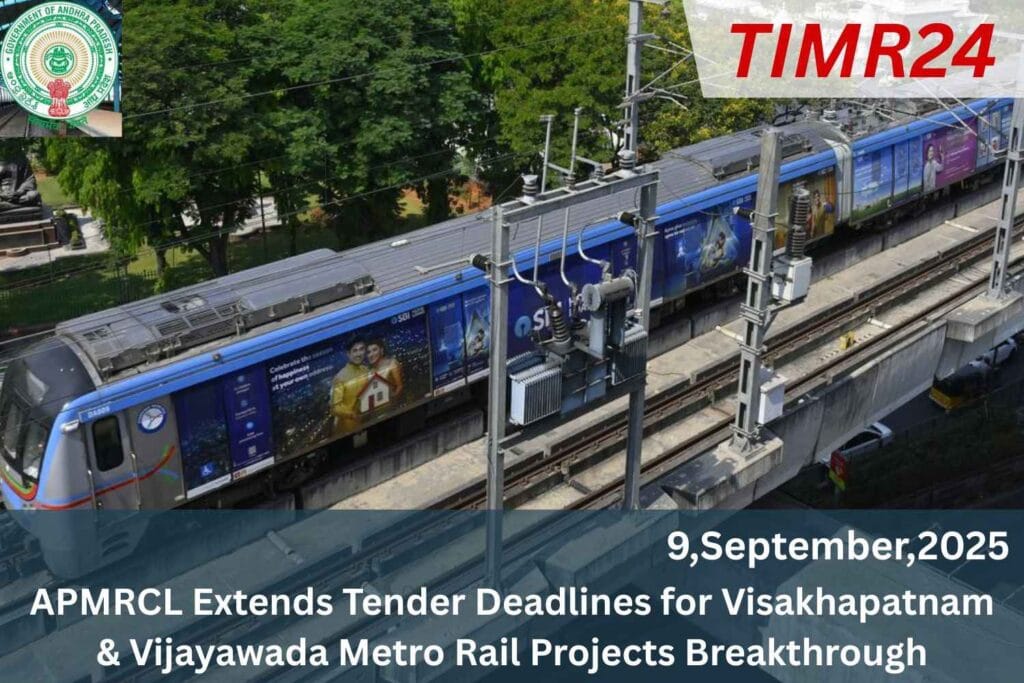
The Andhra Pradesh Metro Rail Corporation Ltd (APMRCL) has extended the deadline for tenders for the Visakhapatnam and Vijayawada metro rail projects, allowing them to be submitted until October 14 and October 7, respectively, to ensure wider participation and opportunities for more firms. The Andhra Pradesh Metro Rail Corporation Limited (APMRCL) has recently announced the extension of tender deadlines for the Visakhapatnam Metro Rail and Vijayawada Metro Rail projects, marking a significant development in the state’s urban infrastructure plans. This extension reflects the corporation’s commitment to ensuring broader.
Participation from construction companies, engineering firms, and other stakeholders involved in large-scale urban transit projects. Metro rail systems are critical for improving urban mobility, reducing traffic congestion, and promoting sustainable transportation solutions, particularly in rapidly growing cities like Visakhapatnam and Vijayawada. These projects are expected to transform the urban landscape, providing efficient, safe, and environmentally friendly transport options to citizens while fostering economic growth through better connectivity and infrastructure development The Visakhapatnam Metro Project is designed to integrate major city areas, including commercial.
Zones, industrial districts, and the international airport, providing a seamless transit solution daily commuters and tourists alike. With the tender deadline extension, potential bidders now have more time to prepare competitive proposals, ensuring high-quality construction and implementation plans. This move is especially relevant in the context of Visakhapatnam’s rapid urban expansion and the increasing demand modern public transportation systems. The metro corridors are expected to reduce travel time significantly, ease road congestion, and promote eco-friendly commuting by reducing vehicular emissions. Additionally, the project incorporates modern technological.
Solutions such as smart ticketing, automated signaling systems, and integrated commuter information platforms, which are standard in metro systems worldwide. Interested parties can access detailed tender documents on the or consult procedural guidelines and eligibility criteria On the other hand, the Vijayawada Metro Project is aimed at enhancing intra-city connectivity and linking key residential, commercial, and educational hubs. By extending the tender submission deadlines, APMRCL ensures that smaller and medium-sized enterprises, which may require more time thorough planning and documentation, can participate alongside large.
Multinational firms. Such inclusive participation often leads to competitive bidding, innovative construction methods, and cost-effective solutions. The project also plays a strategic role in easing urban mobility Vijayawada’s rapidly growing population, particularly in areas that are densely populated and have limited road infrastructure more insights into ongoing urban transportation developments in India, resources like (Urban Transport) provide updates on metro expansions, transit-oriented development, and technological innovations in public transport The decision to extend tender deadlines also underscores APMRCL’s adherence to transparent and equitable procurement.
Practices By allowing additional time for bid submissions, the corporation ensures that all interested contractors can comply with technical and financial requirements, minimizing errors in proposals and facilitating better project evaluation. Transparent tender processes are essential for large-scale projects, as they prevent disputes, enhance accountability, and ensure that taxpayers’ money is spent efficiently. Stakeholders interested in tender management and compliance can refer to the guidelines on submission protocols, bid evaluation criteria, and legal obligations in public sector contracts.
From an economic perspective, these metro projects are expected to create significant employment opportunities during both construction and operational phases. Construction activities for metro projects involve extensive civil engineering, electrical and signaling work, rolling stock manufacturing, and station design, providing jobs across multiple skill levels. Furthermore, once operational, the metro systems generate employment in operations, maintenance, administration, and customer service, contributing to the local economy. By improving connectivity, metro systems also attract commercial investments, facilitate trade, and enhance the overall quality of life for.
Residents, as businesses benefit from better accessibility and reduced transit times. The economic implications of metro projects are well-documented in studies related to which emphasize integrated transport solutions as a catalyst for urban growth Technologically, both the Visakhapatnam and Vijayawada metro systems are expected to incorporate advanced features, including energy-efficient rolling stock, intelligent signaling systems, and automated fare collection methods. These technologies not only improve operational efficiency but also enhance passenger safety and convenience.
Modern metro systems around the world, such as those in Singapore, Dubai, and Delhi have demonstrated how technology integration can transform urban mobility, making commuting faster, safer, and more reliable. APMRCL’s initiative to extend tender deadlines ensures that participating firms have sufficient time to propose innovative solutions that align with international best practices, ensuring the metro projects meet global standards. Internal updates and technical details can be tracked on which provides regular project progress reports, announcements, and tenders various metro-related services Urban planning and environmental considerations are also central to.
These projects. Metro rail systems reduce dependency on private vehicles, which in turn lowers greenhouse gas emissions and decreases urban air pollution. By promoting mass transit, these projects contribute to sustainable urban development and complement broader state-level initiatives aimed at smart city planning and environmental conservation. Green corridors, energy-efficient stations, rainwater harvesting systems, and solar-powered infrastructure are increasingly becoming part of metro projects in India, aligning with global sustainability goals. Information on eco-friendly practices and urban mobility can be explored through platforms like and urban development reports published by the government.
The Visakhapatnam and Vijayawada metro projects also demonstrate strategic foresight in urban connectivity planning. Visakhapatnam, being a major port city, requires efficient transport solutions to facilitate the movement of workers, business travelers, and tourists, while Vijayawada, as an emerging urban hub, demands robust intra-city transit to manage the challenges of increasing population density and traffic congestion. Efficient metro systems are not only a solution to urban traffic but also act as a driver of economic growth, enabling smoother movement of goods and services, reducing logistical bottlenecks, and enhancing urban liveability. Internal content on past metro project successes in India.
Such as can provide comparative insights and best practices for upcoming projects in Andhra Pradesh APMRCL’s decision to extend the tender deadlines for the Visakhapatnam and Vijayawada Metro Rail Projects is a forward-thinking move that promotes inclusivity, transparency, and efficiency in project execution. It allows for higher-quality proposals, encourages innovative solutions, and ensures equitable participation from firms of varying capacities. These metro projects are poised to transform urban transport in Andhra Pradesh by providing safe, sustainable, and technologically advanced transit solutions, while also generating economic and social benefits for the region.
By facilitating better connectivity, reducing congestion, and supporting smart city initiatives, the Visakhapatnam and Vijayawada metro systems exemplify India’s commitment to modern urban infrastructure and sustainable development. Interested stakeholders and the general public can follow ongoing updates through and related government portals to stay informed about project timelines, tender opportunities, and progress reports.
Q1. What is APMRCL?
Andhra Pradesh Metro Rail Corporation Limited (APMRCL) is responsible for planning, implementation, and operation of metro rail projects in Andhra Pradesh.
Q2. Which metro projects have the tender deadlines been extended for?
The tender deadlines have been extended for both Visakhapatnam Metro and Vijayawada Metro projects.
Q3. Why were the tender deadlines extended?
The extension provides additional time for interested contractors to submit bids and ensures broader participation in these metro projects.
Q4. How long is the extension for the tender submission?
The exact duration of the extension is specified in the official tender notices published by APMRCL on their website.
Q5. Where can I access official tender documents?
Tender documents can be accessed on the (APMRCL) and through government procurement platforms.